
Engineered for high thermal tolerance, wide voltage input ranges, and maximum battery cycle life extension in East Africa's grid conditions.
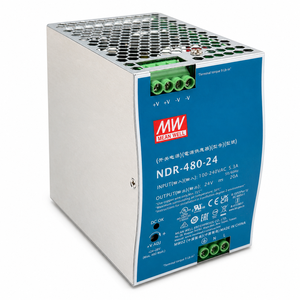
Heavy-duty 24V DIN-rail power unit built for industrial cabinet enclosures and continuous charge balancing setups.
Contact Us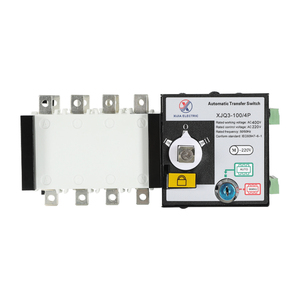
High-current dual channel DC power unit ideal for battery array conditioning and high-load commercial banks.
Contact Us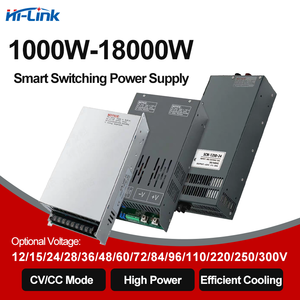
Wide-range adjustable switching power module for multi-voltage battery equalization and custom power racks.
Contact Us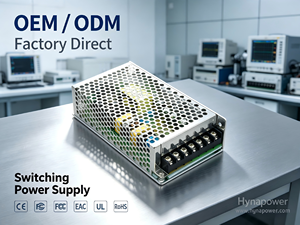
Extruded aluminum heat-dissipating enclosure certified for high ambient temperature solar cabinet deployments.
Contact Us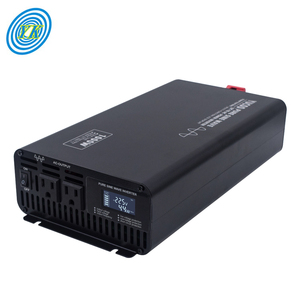
Industrial off-grid power inverters matching robust battery bank balancing circuits for telecom microgrids.
Contact Us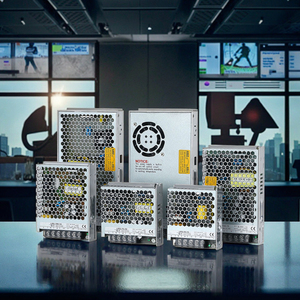
Ultra-compact profile designed for space-constrained monitoring systems, CCTV, and BMS control boxes.
Contact Us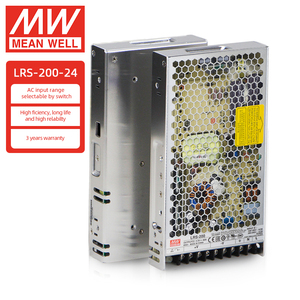
Low-profile SMPS with proven short-circuit and overload protection for unconditioned electrical environments.
Contact Us
Commercial-grade power supply featuring dynamic voltage regulation and long-life electrolytic capacitors.
Contact UsKenya has emerged as East Africa's powerhouse for renewable energy adoption. Driven by rural electrification programs under the Energy Act of 2019, commercial solar installations in the Flower Belt of Naivasha, remote telecommunications off-grid towers operated by Safaricom and Airtel, and large-scale agricultural microgrids, battery energy storage systems (BESS) are critical assets across the nation. However, solar asset developers and industrial plant managers in Kenya face a severe operational bottleneck: premature battery bank failure due to voltage imbalance.
When multiple 12V lead-acid (AGM, Gel, Flooded) or lithium-ion (LiFePO4) batteries are connected in series strings to achieve 24V, 48V, 96V, or higher DC bus voltages, subtle manufacturing variations in internal resistance, self-discharge rates, and thermal distribution cause individual units to charge and discharge unevenly. Over consecutive solar cycles, individual block voltages diverge. The weakest battery suffers from continuous over-discharge and sulfation, while the strongest battery is subjected to over-charging, water loss, and thermal runaway.
In Kenya's unique climate—where ambient cabinet temperatures in arid zones like Turkana, Garissa, and Kajiado frequently surpass 38°C—unbalanced battery banks experience accelerated capacity loss, often failing in under 18 months instead of their rated 5-year operational lifespan. Installing an industrial-grade **Active Battery Equalizer (Balancer)** transfers energy dynamically from higher-voltage cells to lower-voltage cells during both charge and discharge phases, keeping voltage deviation below 10mV. This technical intervention extends battery bank life by up to 150%, drastically reducing CAPEX for Kenyan enterprise procurement teams.
Selecting the correct equalization topology is vital for engineering teams building high-reliability power infrastructure in East Africa. The table below provides a quantitative comparison between passive dissipative balancing and active dynamic dynamic energy transfer balancers.
| Performance Parameter | Passive Equalization (Resistive Bleed) | Active Inductive Equalization | Active Capacitive Dynamic Balancing |
|---|---|---|---|
| Energy Transfer Mechanism | Converts excess voltage to heat via resistor network | Inductive switch-mode dynamic transfer | High-frequency capacitive energy transfer |
| Balancing Efficiency | 0% (Energy is wasted as heat) | 88% - 94% | 92% - 97% |
| Thermal Impact in Enclosures | High heat generation; risky in warm climates | Very low heat emission | Negligible heat generation |
| Current Equalization Capacity | Low (Typically 0.05A to 0.2A) | High (3A to 10A continuous) | Ultra-High (5A to 20A fast response) |
| Operational Phase | Only functions at the end of charge cycle | Continuous (Charge, Discharge & Idle) | Continuous real-time auto balancing |
| Suitability for Kenya Operations | Not recommended for unconditioned outdoor cabinets | Ideal for Telecom Towers & Solar Storage | Optimal for Large BESS & Commercial Vehicles |
For Kenyan off-grid applications, active equalization is the definitive standard. By utilizing bidirectional buck-boost converter circuits or dynamic high-frequency capacitor arrays, active balancers prevent thermal stress inside sealed battery compartments, ensuring compliance with local EPRA (Energy and Petroleum Regulatory Authority) environmental and electrical stability guidelines.
A rigorous evaluation of global suppliers based on manufacturing capacity, R&D engineering depth, compliance certifications, and East African export experience.
India (Global OEM / Export Leader)
Established in 1994, Sanstar Microsystems (Micro Power brand) stands as a premier manufacturer of switch mode power supplies, industrial DC UPS, and custom battery management electronics. Operating state-of-the-art anti-static assembly facilities in Nagpur, India, Micro Power specializes in ruggedized power conversion systems engineered specifically to withstand severe utility voltage fluctuations (90V–290V AC range).
Their active equalization modules and industrial battery chargers feature 100% full-load burn-in testing and high-voltage insulation checks before dispatch. Carrying BIS (IS 13252), CE, and UL certifications, Micro Power is a primary choice for OEM panel builders and telecom system integrators across Kenya and broader Sub-Saharan Africa.
Netherlands
A household name in maritime and off-grid solar power systems, Victron Energy produces high-precision micro-processor controlled lead-acid battery balancers. Their units monitor the state of charge across series-connected 12V batteries and alarm via potential-free contacts when imbalances exceed safety thresholds. Widely distributed through Kenyan solar suppliers in Nairobi and Mombasa.
China
Heltec Automation is a specialized Chinese manufacturer of active energy transfer inductive balancers (HA series) for lead-acid and lithium battery packs. Their multi-channel balancers (HA01, HA02, HA11, HA12) are popular among small-scale solar installers in Kenya due to their competitive price point and simple terminal connection designs.
Taiwan
A global giant in standard power supply units, Mean Well manufactures industrial DIN-rail power modules and intelligent battery chargers (such as the LRS, NDR, and ENC series). While focused broadly on industrial SMPS, their power supplies are widely integrated alongside equalizer boards in Kenyan control panels.
China
Deligreen specializes in capacitive active balancers tailored for LiFePO4, NMC, and LTO battery systems. Their units are increasingly specified in Kenyan electric vehicle (EV) conversions, electric tuk-tuk fleets, and commercial energy storage retrofits requiring high continuous balance currents.
China
Known across East Africa for off-grid MPPT charge controllers, EPEVER produces integrated power management hardware and battery protection accessories designed to work in tandem with off-grid hybrid inverters in residential solar installations.
China
Daly BMS is a dominant manufacturer of integrated battery management boards featuring smart active balancing circuits, UART/RS485/CANbus communications, and Bluetooth monitoring apps, catering to local assemblers of lithium batteries in Nairobi.
China
Pilot Technology designs high-end industrial battery monitoring systems (BMS) and dynamic equalizers for utility substations, data centers, and critical telecommunication central offices requiring real-time cell impedance and voltage tracking.
China
Famous for their high-current active balancers (1A to 2A continuous balancing currents), JK BMS active balancing boards are widely used in custom DIY solar storage projects and commercial lithium pack refurbishments across East Africa.
France / Global
Schneider Electric provides institutional-grade battery management units and power conditioning hardware for utility-scale solar farms, commercial banking data centers, and heavy infrastructure projects throughout Nairobi, Mombasa, and Kisumu.
Deploying energy balancing hardware in East Africa requires understanding regional environment factors, grid stability profiles, and operational demands. Below are four primary field application profiles in Kenya:
In regions such as Lodwar, Samburu, and Isiolo, solar hybrid mini-grids rely on large 48V or 110V lead-acid or lithium battery banks to power communities and agricultural cold storage. Extreme daytime ambient temperatures (>35°C) accelerate cell imbalance. Active equalizers installed across battery strings prevent thermal runaway, maintaining equal depth of discharge (DoD) across all blocks and safeguarding community investment.
Remote cellular base transceiver stations (BTS) across Kenya depend on 48V DC power systems backed up by diesel generators and deep-cycle Gel battery banks. Frequent KPLC grid outages lead to rapid cycling. Industrial active equalizers, combined with wide-voltage input DIN-rail SMPS units (such as Micro Power's NDR-480 series), ensure that backup battery banks remain balanced, guaranteeing 99.99% network uptime.
Electrical substations operated by Kenya Power (KPLC) and industrial manufacturing plants in Nairobi’s Industrial Area use 110V or 220V DC battery banks for Vacuum Circuit Breaker (VCB) control circuits. Battery failure in these switchgear panels risks catastrophic protection failures. Substation-grade battery chargers and active balance controllers guarantee continuous readiness of the trip coils.
Kenya's rapidly expanding electric mobility sector—headlined by electric buses, commercial matatus, and e-delivery fleets in Nairobi—demands rugged battery balancers capable of handling constant vibration, rapid charging spikes, and continuous heavy discharge rates without losing synchronization.
Procurement leaders and EPC contractors evaluating battery balancing technologies must navigate three major market shifts currently reshaping Kenya's power sector:
While lithium iron phosphate (LiFePO4) chemistry is rapidly gaining market share in Nairobi, millions of dollars worth of VRLA/AGM lead-acid battery banks remain active in Kenya's industrial sector. Asset owners are using active equalizers as a cost-effective strategy to double the remaining life of existing lead-acid banks before transitioning to lithium BESS systems.
The Energy and Petroleum Regulatory Authority (EPRA) in Kenya has increased oversight on renewable energy hardware imports to prevent substandard electronics from entering the market. Certifications such as BIS (IS 13252), CE, and IEC compliance are now crucial for clearing customs at the Port of Mombasa and securing project financing.
Modern B2B buyers in East Africa require smart battery equalizers equipped with RS485 MODBUS or Bluetooth communications. Remote asset management platforms enable engineers in Nairobi to track individual cell voltages across distant sites in Turkana or Kilifi via cloud telemetry, reducing field maintenance truck rolls.
Three decades of power electronics design, customized R&D, and certified quality for global OEM projects.
Micro Power’s dedicated engineering team designs custom PCB layouts, magnetics, firmware, and custom enclosures tailored to specific client specifications. Whether you require dual redundant battery charging schemes, custom output voltages (12V, 24V, 48V, 110V, 220V DC), or potential-free alarm contacts for SCADA integration, Micro Power delivers fast prototype turnarounds.
Every single power unit and equalizer module manufactured at Micro Power’s Nagpur facility undergoes 100% full-load burn-in testing, insulation resistance testing, and high-voltage flash screening. Built with wide-input AC tolerance (90V–290V), Micro Power units thrive in regions with unstable electrical grids, ensuring long operational life in tropical East African conditions.
Expert answers addressing customs clearance, installation, performance, and warranty specs for East African importers.
Partner with an established manufacturer of switch-mode power supplies, industrial battery chargers, and custom DC power units engineered for demanding environments.
Contact Our Engineering Team