
As South Korea accelerates its rollout of nationwide 5G Standalone (SA) networks, densified C-RAN hubs, and next-generation 6G architectural testbeds across Seoul, Busan, and Incheon, telecommunications operators require unyielding grid resilience. Our industrial-grade telecom rectifier modules engineered for the South Korean market provide robust AC-to-DC power conversion, maximum thermal endurance, and seamless hot-swappable compatibility with Tier-1 network enclosures.
Field-tested, hot-swappable 48V AC/DC rectifiers designed for low thermal dissipation, active power factor correction (PFC), and seamless integration into standard 19-inch sub-racks.
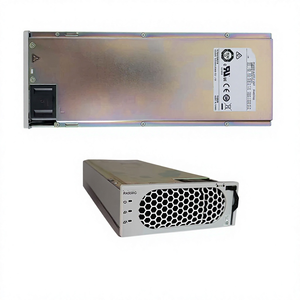
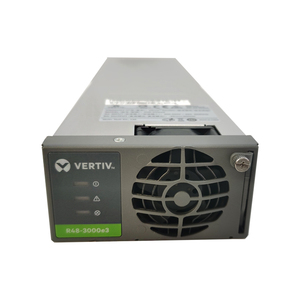
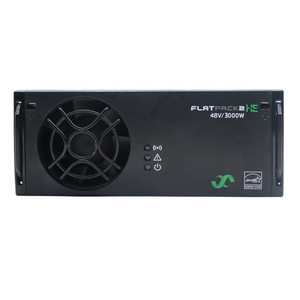
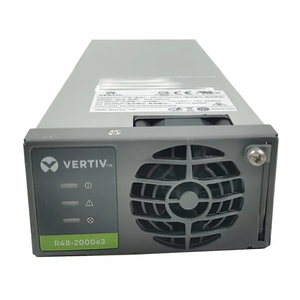
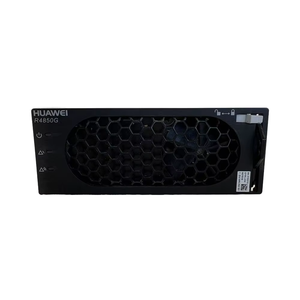
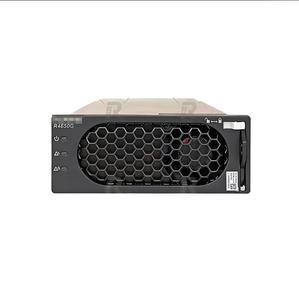
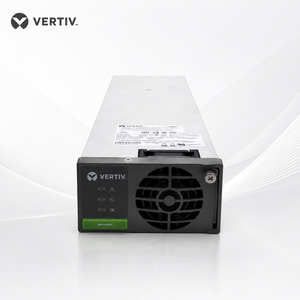
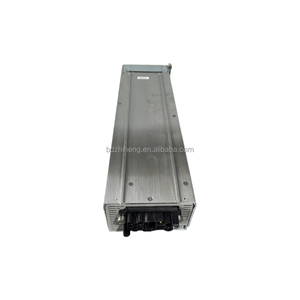
Modern telecommunications systems operate in environments where power quality directly impacts service availability and hardware longevity. South Korea’s dense urban small-cell deployments and remote mountainous base stations demand rectifiers built with cutting-edge switch-mode power supply (SMPS) topologies.
Our rectifier modules utilize zero-voltage switching (ZVS) resonant LLC power converters. By minimizing switching losses across the primary MOSFETs, conversion efficiency reaches up to 96.5% under nominal load, drastically reducing heat generation inside enclosed outdoor cabinets.
Fluctuations in commercial power grids during heavy seasonal typhoons or winter loads are compensated by an ultra-wide input window of 90V AC to 290V AC. Integrated multi-stage varistor surge suppression protects sensitive DC loads against grid transients up to 10kV.
Featuring advanced DSP-driven CAN bus protocol interfaces, multiple rectifier modules connected in parallel dynamically share DC load currents with an error margin under ±3%, ensuring system redundancy (N+1) without single-point power bottlenecks.
The following parameters outline the structural engineering compliance of our 48V telecom rectifier module line-up for system integrators serving South Korean network providers:
| Electrical / Environmental Parameter | Standard Commercial Rectifiers | Our Telecom Rectifiers (Korea Spec) |
|---|---|---|
| Peak Conversion Efficiency | 90.0% – 92.5% | 96.0% – 96.5% (Super High Efficiency) |
| AC Input Range | 180V – 260V AC | 90V – 290V AC (Full Derating Curve Protected) |
| Power Factor (PFC) | > 0.95 at Full Load | ≥ 0.99 at 50%–100% Load |
| Total Harmonic Distortion (THD) | < 8% | ≤ 3% (Complies with IEEE 519 Grid Guidelines) |
| Operating Temperature Range | -10°C to +50°C | -40°C to +75°C (Cold-Start Verified at -40°C) |
| Acoustic & Ripple Noise | < 150mV p-p | ≤ 50mV p-p (Voice & High-Speed Data Shielded) |
| System Reliability (MTBF) | 150,000 Hours | ≥ 500,000 Hours (Telcordia SR-332 Tested) |
South Korea represents one of the most technologically demanding telecommunications environments globally. Our rectifier systems are tailored to address specific geographic, operational, and architectural requirements across the peninsula.
Urban base stations in high-density districts like Gangnam, Yeouido, and Pangyo Techno Valley require compact power solutions capable of supporting peak-load spikes from 3.5GHz and 28GHz mmWave Massive MIMO radios. Our 1U hot-swappable 50A modules deliver extreme power density within existing outdoor cabinets, preventing power brownouts during ultra-high data consumption events.
Telecom towers situated along the Taebaek Mountain Range experience harsh winters with ambient temperatures dropping below -25°C, coupled with severe ice formation. Our rectifiers feature integrated cold-start algorithms, conformal-coated printed circuit boards (PCBs), and automatic thermal derating to guarantee uninterrupted DC power to remote transmission equipment.
Subsea fiber landing stations and coastal tower nodes face extreme airborne salt fog and relative humidity exceeding 95%. Our rectifiers are subjected to rigorous salt mist testing (ISO 9227 compliant) and employ anti-corrosive stainless-steel/aluminum alloy structural frames, securing prolonged service life for coastal communications links.
With South Korea leading global fiber-to-the-home (FTTH) penetration, central offices operating optical line terminals (such as MA5680T series) require seamless retrofitting. Our modular rectifiers directly interface with legacy Huawei ETP48200, Vertiv NetSure, and Eltek Flatpack2 sub-racks, enabling operators to upgrade network efficiency without altering structural cabling.
Navigating the next phase of South Korea’s digital transformation involves aligning power infrastructure with national decarbonization mandates and evolving network architectures.
Korean carriers (SK Telecom, KT, LG U+) are actively replacing legacy rectifiers operating below 91% efficiency with super-high-efficiency (>96%) modules. A 5% efficiency improvement across tens of thousands of base station sites yields gigawatt-hour energy savings annually, aligning with national scope 1 and scope 2 emissions targets.
The shift from VRLA lead-acid batteries to high-density Lithium Iron Phosphate (LiFePO4) storage systems mandates rectifiers with programmable, multi-stage charge profiles. Our power units offer precise voltage control and CAN-bus BMS handshake options to optimize LFP battery life and prevent thermal runaway.
As telecom edge data centers are deployed across South Korean cities to support autonomous driving and real-time AI processing, power demand per rack is surging. High-power density rectifiers (3000W+ per 1U module) are essential to maximize available rack space for compute servers.
With over three decades of specialized power electronics design, our manufacturing infrastructure guarantees high reliability for critical telecommunication links.
Every single rectifier unit undergoes a rigorous 100% burn-in testing cycle under maximum thermal load prior to dispatch. All incoming raw semiconductors, capacitors, and magnetic cores are pre-screened to eliminate early-life field failures.
Manufactured in fully anti-static ESD-controlled environments following stringent ISO 9001 quality management procedures. Our standardized manufacturing guarantees consistent performance across batch orders for OEM contractors.
Our engineering team collaborates directly with Korean telecom equipment vendors to customize output voltage ranges, mechanical enclosure latching, backplane pinouts, and custom alarm signaling contacts.
Specifically designed to tolerate extreme low-voltage sags or high-voltage line swells caused by grid switching, eliminating unnecessary switching to battery backup modes and preserving battery health.
Partner with an established telecom rectifier manufacturer serving South Korea. Request detailed technical datasheets, request OEM sample units, or consult with our senior application engineering team.
Contact Us