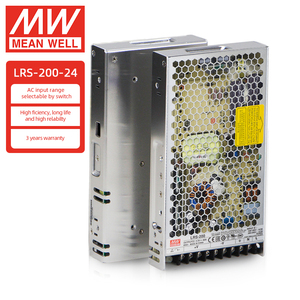
Engineered for high power efficiency, rugged durability, and seamless integration into Bulgarian industrial automation and energy management systems.
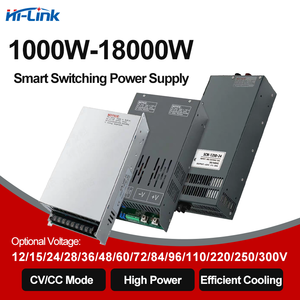
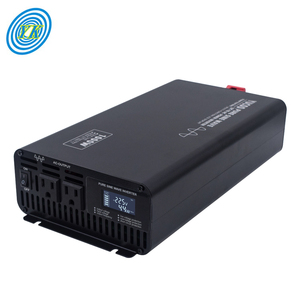
Bulgaria’s rapid positioning as an industrial, logistical, and renewable energy hub in Southeastern Europe has created specific technical demands for electrical conversion equipment. Power inverters and switching supplies serving this market must combine high thermodynamic tolerance, compliance with European Union grid connectivity codes (EN 50549), and immunity to voltage transients commonly encountered in heavy manufacturing corridors.
The high solar irradiance in Southern Bulgaria has driven large-scale agricultural and commercial PV installations. Inverters deployed in these microgrids face severe thermal swings, ranging from freezing winter nights (-15°C) to intense summer ambient heat (+40°C).
Substation automation requires uninterruptible DC and AC auxiliary supplies. Vacuum Circuit Breaker (VCB) switchgear panels rely on dual-channel DC power units and diode-ORing redundancy to prevent single-point failures.
Coastal and maritime operations present aggressive salt-mist corrosion hazards and erratic load spikes caused by crane winch drives and dockside power stations.
| Application Sector | Typical Input Voltage | Recommended Topology | Key Protective Certifications | Target MTBF (Hours) |
|---|---|---|---|---|
| Solar Microgrid BESS | 48V / 96V / 220V DC | High-Frequency Pure Sine Wave Inverter | CE, EN 62109-1, IEC 61000-6-2 | > 120,000 Hrs |
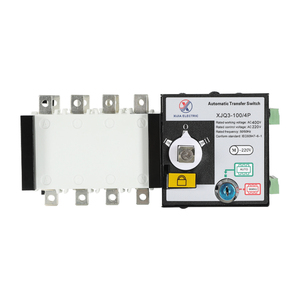
| Substation Switching | 110V / 220V DC or AC | Dual Channel SMPS + Battery Charger | UL508, CE, IEC 60950, IS 13252 | > 150,000 Hrs |
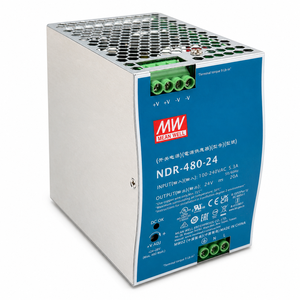
| Industrial Automation (PLC) | 90–264V AC Universal | DIN Rail Mounting SMPS (Slim Case) | CE, BIS, EN 55032 Class B | > 100,000 Hrs |
| Telecommunications / Edge Node | 48V DC / 230V AC | Diode OR-ing Redundant Module | FCC Part 15, CE, UL Certified | > 180,000 Hrs |
Procuring power conversion equipment for projects in Sofia, Plovdiv, Varna, or Ruse requires strict adherence to European Union directives and Bulgarian national grid integration standards. As Bulgaria accelerates its green transition in accordance with the EU Climate Law and the Bulgarian National Recovery and Resilience Plan (NRRP), electrical OEMs and system integrators face dual requirements: maximizing conversion efficiency while guaranteeing electrical safety under harsh grid conditions.
1. EN 50549-1 / EN 50549-2 Compliance: Power inverters connected to the Bulgarian low-voltage or medium-voltage distribution networks (operated by Electrohold, EVN Bulgaria, and Energo-Pro) must comply with fault ride-through (FRT) capabilities, active power response to frequency increases, and anti-islanding protections.
2. CE Marking & Low Voltage Directive (LVD 2014/35/EU): Equipment imported into Bulgaria must bear valid CE declarations supported by accredited laboratory test reports (covering EN 62109-1/2 for inverters and EN 61558 / EN 62368 for switching power supplies).
3. Electromagnetic Compatibility (EMC 2014/30/EU): Industrial environments in Bulgarian heavy industrial zones require Class A or Class B electromagnetic immunity to withstand electromagnetic interference caused by high-voltage arc furnaces and variable frequency drives (VFDs).
Bulgarian procurement managers are increasingly moving away from low-cost, uncertified power supplies due to the long-term total cost of ownership (TCO) penalties. Micro-downtimes in automated production lines—such as automotive component manufacturing around Sofia and pharmaceutical synthesis in Razgrad—can cost thousands of Euros per hour. Consequently, buyer criteria have shifted toward:
Backing our product lines is over 30 years of continuous power electronics research, design, and precision manufacturing heritage. Founded under the rigorous engineering standards of Sanstar Microsystems Pvt. Ltd. (Micro Power), our production operations combine rigorous quality assurance protocols with flexible OEM/ODM custom development capabilities.
Unlike assemblers who outsource critical components, we design and wind custom high-frequency transformers in-house. This gives us absolute control over thermal margins, creepage distances, and core saturation limits.
Every single inverter, SMPS, and battery charger leaving our factory floor undergoes full-load elevated-temperature burn-in testing and high-voltage dielectric isolation screening prior to final export packaging.
We work directly with European equipment builders to supply customized output voltages, modified enclosure geometry, specific mounting brackets, custom branding, and specialized potential-free diagnostic telemetry.
Addressing the technical, regulatory, and logistical questions most commonly asked by system integrators and panel builders serving Bulgaria.
Our industrial product ranges carry comprehensive CE compliance declarations, including EMC directive test reports and Low Voltage Directive (LVD) documentation. Furthermore, select product series are UL certified and BIS approved under IS 13252 standards, facilitating smooth customs clearance and acceptance by Bulgarian technical inspection authorities.
All industrial units feature heavy-duty industrial grade components certified for cold-start performance at temperatures as low as -25°C. High-grade electrolyte capacitors and thermal-compensated circuit designs ensure soft-start voltage ramp-up without output overshoot or protective tripouts during extreme winter cold spells.
Yes. Our in-house R&D team regularly develops non-standard output voltages (such as 36V, 72V, 110V, or 150V DC), customized multi-stage battery charging profiles (for AGM, Gel, SLA, or LiFePO4 chemistry), dual redundant charging schemes, and customized mechanical enclosures tailored to your panel geometry.
Standard catalogue items are kept in continuous buffer stock for immediate air dispatch (typically 5 to 7 business days to Sofia or Varna Airports). For bulk container shipments or specialized OEM/ODM production runs, standard factory lead times range between 2 to 4 weeks, with full export documentation and HS tariff coding provided.
Our diode OR-ing redundancy modules isolate connected power supply units on a shared DC bus. If one power supply unit suffers an internal short circuit or component degradation, the redundancy module instantly decouples the failed unit without causing voltage drops on the main DC bus, preventing system resets on connected PLCs and safety sensors.
Connect directly with our application engineering team to receive detailed engineering datasheets, customized OEM quotes, or technical guidance for your Bulgarian projects.
Get a Quote