Explore our high-efficiency standard and custom OEM/ODM DC-DC converter modules engineered for rigorous Japanese market compliance, ultra-low ripple performance, and extreme temperature tolerance.
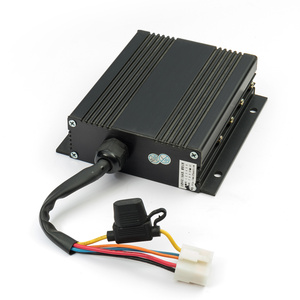
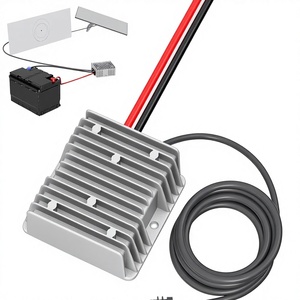
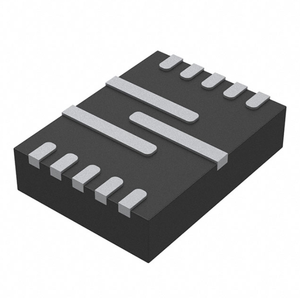
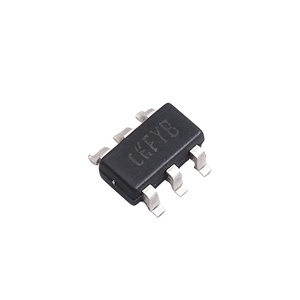
In Japan's hyper-advanced manufacturing ecosystem—spanning Kanto's automation hubs to Kansai's robotics integrators—electrical power conversion demands strict operational stability, ultra-low electromagnetic interference (EMI), and maximum power density. As leading custom OEM Boost Converter Manufacturers and Suppliers serving Japanese industrial OEMs, our engineering architecture is designed around the relentless mitigation of thermal stress and noise pollution in step-up DC-DC converters.
DC-DC boost converters (step-up regulators) are crucial in stepping up lower system voltages—such as 12V automotive rails, 24V industrial control buses, or single-cell lithium-ion battery banks—to elevated DC voltage thresholds (such as 48V, 57V, or higher DC rails). However, off-the-shelf step-up modules often fail under the severe environmental conditions required by Japanese industry standardizations (JIS), lacking appropriate transient absorption, EMI containment, and long-term operating life (MTBF > 500,000 hours).
To deliver measurable Information Gain for power engineers, selecting the optimal boost converter topology requires a deep breakdown of switching dynamics, conductive losses, and thermal envelope management:
Utilizing an internal power MOSFET paired with an external Schottky catch diode (e.g., XL6019, MT3608L series), non-synchronous architectures are cost-effective and highly robust for low-to-medium current demands. However, the continuous forward voltage drop across the catch diode introduces conduction losses ($P_{loss} = V_F \cdot I_{out}$), making heat sinking critical when operating in compact enclosures common to Japanese control panels.
By replacing the Schottky diode with a low $R_{DS(on)}$ high-side MOSFET switch (e.g., MP3431GL-Z, SY7072AABC series), synchronous rectification reduces switching losses significantly. Controlled by microsecond-level dead-time logic, efficiency profiles frequently surpass 95%–97%, eliminating active forced-air cooling and satisfying VCCI Class B EMC radiation specifications.
Built upon over three decades of advanced power electronics engineering from our parent brand, Sanstar Microsystems Pvt. Ltd. (Micro Power), our custom step-up converter design framework provides unparalleled reliability for international OEMs.
Every single OEM boost converter module undergoes rigorous anti-static ESD assembly and full-load thermal burn-in testing prior to shipment. We maintain complete batch traceability to guarantee zero-defect field installation in critical Japanese infrastructure.
Whether your system requires fixed step-up voltages (e.g., 10-36V input to 57V 4.5A output for Starlink Gen 3 field routers) or multi-channel isolated outputs, our in-house magnetics and PCB R&D team builds bespoke layouts tailored to your mechanical envelope.
Designed to absorb harsh industrial grid fluctuations, mobile vehicle line noise, and battery drain spikes, our converters feature integrated over-voltage, over-current, reverse polarity, and thermal cut-off safety circuits.
As Japanese industrial sectors pivot toward autonomous mobile robots (AMRs), high-speed satellite communications, next-generation electric vehicles (EVs), and edge AI compute boxes, specialized boost converters play an indispensable role in voltage elevation and power conditioning.
In Japanese automotive manufacturing hubs (such as Aichi and Shizuoka prefectures), vehicle electronics are shifting from legacy 12V networks toward 48V auxiliary systems. OEM step-up power supplies—such as our DC-DC Waterproof Boost Converters (72V to 12V / 12V to 48V variants)—provide IP67-rated sealed voltage stabilization for LiDAR sensors, infotainment clusters, and drive-by-wire sub-modules under demanding engine bay vibration profiles.
Deploying satellite telecommunications across mountainous regions (Hokkaido, Nagano) and maritime installations requires stable DC power. Custom solutions like our Gen 3 Conversion 12V (10-36V) to 57V 4.5A Boost Converter allow emergency responders, telecom carriers, and off-grid utility stations to run high-draw satellite routers directly off battery power packs or solar arrays without inverter efficiency losses.
Inside automated warehouses and semiconductor fabrication facilities (Tokyo, Osaka, Kyushu), battery-powered Automated Guided Vehicles (AGVs) rely on compact SMT synchronous boost ICs (e.g., MP3431GL-Z, MT3608L) to step up 3.7V/7.4V Lithium-ion cell outputs to 12V/24V to drive logic control boards, sensor arrays, and pneumatic valves continuously.
Japan's growing microgrid and disaster-resilience infrastructure relies on high-efficiency step-up boards capable of cold-starting from low voltage inputs. Compact boost controllers capable of handling down to 0.85V input (e.g., SY7072AABC) extract maximum energy from depleted battery cells, powering backup sensors, emergency lighting, and telemetry nodes during power interruptions.
Compare key electrical performance specifications across our standard OEM converter range serving Japanese procurement and engineering teams:
| Model / Module Series | Input Voltage Range | Output Voltage / Current | Switching Frequency | Peak Efficiency | Primary Japanese OEM Application |
|---|---|---|---|---|---|
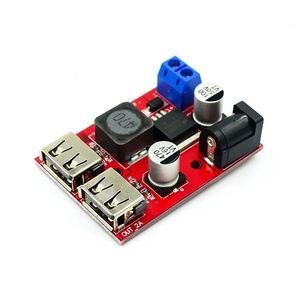
| Dual USB Buck Module | 9V – 24V DC | 5V DC / 3A Continuous | 150 kHz PWM | 92% | In-Vehicle USB Charging & Dashcam Power Supply |
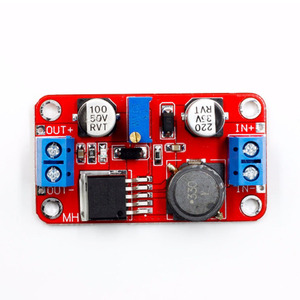
| XL6019 5A Boost Module | 5V – 32V DC | 12V – 35V DC Adjustable (5A) | 220 kHz Current-Mode | 94% | Industrial Panel Power Boost & Relay Drivers |
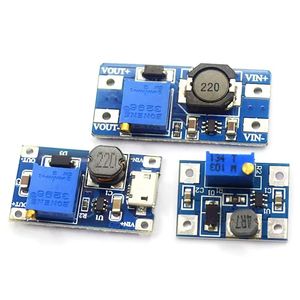
| 2A Compact Step-Up Board | 2V – 24V DC | 5V – 28V DC Adjustable (2A) | 1.2 MHz High-Freq | 93% | Compact Enclosure IoT Sensors & Embedded Logic |
| IP67 Waterproof Converter | Fully Customized (e.g. 72V-12V) | Stabilized DC Output | Internal Fixed PWM | 95% | Automotive, Marine & Outdoor Telecom Enclosures |
| Starlink Gen 3 Converter | 10V – 36V Wide Input | 57V DC / 4.5A Continuous | Optimized Synchronous | 96.5% | Remote Satellite Router & Off-Grid Power Packs |
| MP3431GL-Z QFN13 IC | 0.8V – 13V Ultra-Wide | Up to 16V DC / 21A Switch | Programmable PWM | 97% | High-Density Edge Computing & Drone Power Rails |
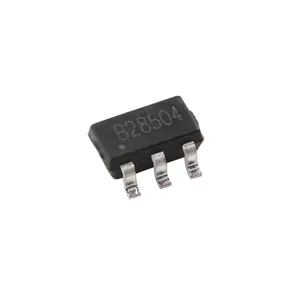
| MT3608L SOT-23-6 IC | 2.0V – 24V DC | Up to 28V DC / 2.5A Switch | 1.2 MHz Fixed | 93% | High-Volume SMT Consumer Electronics & Wearables |
| SY7072AABC SOT-23-6 IC | 0.85V – 5.5V Ultra-Low | 1.8V – 5.5V Adjustable | Synchronous Step-Up | 95% | Single-Cell Li-ion / NiMH Battery Powered Nodes |
Find direct, authoritative technical answers regarding compliance, customization lead times, quality management, and international logistics.
Whether you require low-power SMT boost ICs, rugged waterproof car converters, or custom 57V satellite power supplies, our senior engineering team is ready to evaluate your schematic, mechanical constraints, and delivery schedules.