Export & OEM Desk: +91 9765557595 [email protected] Manufactured in Nagpur, India

Battery Management Manufacturer & Factories Serving the Russia Market

Industrial High-Voltage BMS | Sub-Zero Energy Storage PCBA Assembly | Turnkey SMT Manufacturing

Industrial Battery Management System (BMS) Product Line

High-reliability BMS controllers, smart balance PCBA assemblies, and high-current protection boards tailored for energy storage systems (ESS), light electric vehicles (LEVs), and industrial backup power in cold-climate operational environments.
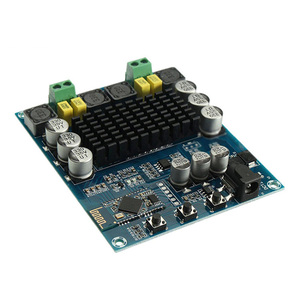
PCBA Assembly for ESS Battery Management Systems ISO9001 Certified Quality

PCBA Assembly for ESS Battery Management Systems with ISO9001 Certified Quality & Fast Mass Production

Contact Us
Daly Smart BMS H Type Li-ion LifePO4 4S 12V 16S 48V

Daly Smart BMS H Type Li-ion LiFePO4 4S 12V 16S 48V For Electric Bike & Car 3S-16S 40A 60A System

Contact Us
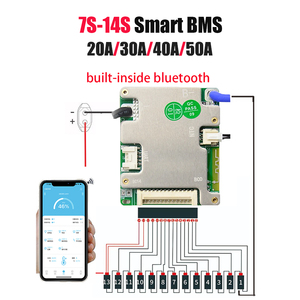
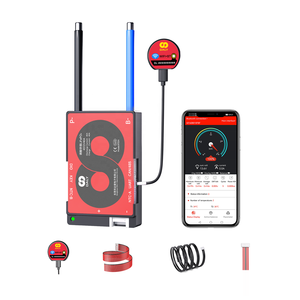
JBD BMS Smart 10S 36V 48V 14S BMS 13S 20A 30A 40A 50A

JBD BMS Smart 10S 36V 48V 14S 13S 20A-50A Battery Management Systems For 18650 Electric Vehicles

Contact Us
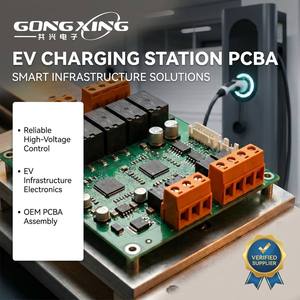
Custom BMS PCBA Assembly Service EV Charging SMT Factory

Custom BMS PCBA Assembly Service | Controller Board Manufacturing For EV Charging Equipment SMT Factory

Contact Us
20S 64V 80A LiFePO4 BMS Adjustable Overcurrent Protection

20S 64V 80A LiFePO4 BMS with Adjustable Overcurrent Protection for High-Current 64V Battery Systems

Contact Us
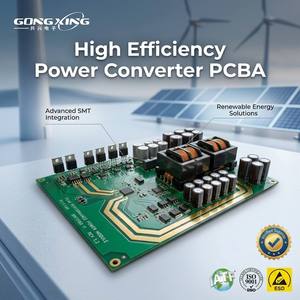
BMS PCBA Assembly Service High Efficiency Renewable Energy

BMS PCBA Assembly Service, High-Efficiency Management Board Mfg For Renewable Energy Turnkey SMT

Contact Us
High Voltage 500A BMS RS485 CAN Communication ESS

High Voltage 500A BMS RS485 CAN Communication Management System for 15kWh-50kWh Energy Storage Pack

Contact Us
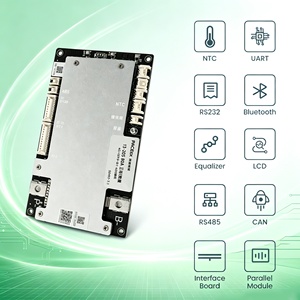
XJ Smart BMS 4S to 20S 40A to 120A LiFePO4 NMC Sodium Ion

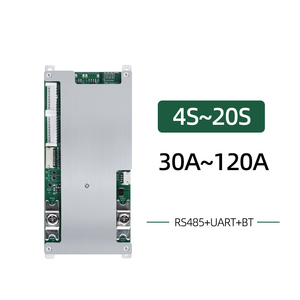
XJ Smart BMS 4S-20S 24V-48V 40A-120A LiFePO4 NMC Sodium-Ion Battery Management System Board

Contact Us
30+
Years R&D & Power Electronics Manufacturing Expertise
100%
High-Voltage & Thermal Burn-In Tested PCBA
-40°C
Sub-Zero Low-Temp Heating Matrix Integration
ISO9001
Certified Automated High-Precision SMT Lines

Industrial-Grade Battery Management Architectures for Severe Climates

Modern electrical infrastructure and lithium battery energy storage systems (ESS) across Eastern Europe and the Eurasian continent demand robust hardware resilience, high-precision thermal control algorithms, and fault-tolerant firmware. As an established OEM/ODM battery management manufacturer and high-capacity SMT assembly factory, we engineer targeted electronic solutions designed to preserve cycle life, ensure operational safety, and maintain cell balancing under intense environmental stress.

Managing high-density energy storage arrays—whether utilizing Lithium Iron Phosphate (LiFePO4), Nickel Manganese Cobalt (NMC), or emerging Sodium-Ion chemistry—requires advanced controller topologies. Standard commercial protection circuit boards frequently fail when subjected to deep thermal cycling, severe ambient temperature swings (from -40°C arctic winter conditions to +50°C enclosed container environments), and heavy electromagnetic interference (EMI) typical of industrial switchgear installations. Our specialized BMS design framework integrates multi-tier hardware protection alongside intelligent MCU-driven telemetry to guarantee operational continuity.

Through our dedicated Surface Mount Technology (SMT) production lines and ISO9001-certified manufacturing protocols, we supply tier-1 energy integrators, electric vehicle manufacturers, and commercial power backup pack assemblers serving the Russian federation and greater Eurasian region. From 3S compact handheld battery setups to 500A high-voltage grid-tie ESS banks, our engineering methodologies focus on maximize Information Gain in cell health diagnosis, passive and active balancing efficiency, and low-latency safety shutoffs.

Technical Specifications Matrix: BMS Architecture vs. Cold Climate Operational Demands

To assist procurement managers and system integration engineers, the matrix below details the structural differences and mitigation strategies built into our custom BMS control boards for Russian commercial applications.

BMS Category Target Chemistry Voltage & Current Range Communication Protocols Cold Climate (-40°C) Adaptation
Smart LEV / E-Mobility BMS Li-ion / LiFePO4 (3S to 20S) 12V – 80V | 20A – 120A Continuous UART, RS485, Bluetooth, CAN 2.0B NTC Multi-Point Temperature Cutoff, Pre-Charge Limiting
High-Voltage Containerized ESS BMS LiFePO4 / NMC Stack (100S to 300S+) 100V – 800V | 100A – 500A Peak Dual RS485, Industrial CAN-BUS, Modbus-RTU Integrated Heating Film Relay Driver, Dynamic SOC Re-calibration
Sub-Zero Sodium-Ion BMS Sodium-Ion (Na+) Cells 12V – 48V | 40A – 100A Continuous RS485, Isolated CAN communication Ultra-Low Internal Resistance FET Switching, Zero-Volt Discharge Support
Custom Industrial SMT PCBA Tailored (OEM Specific) Custom Rated Power & Footprint Modbus, Ethernet TCP/IP, Telemetry GSM Silicone Conformal Coating, Heavy Copper PCB Traces (3oz-6oz)

Localized Application Scenarios in the Russian Market & CIS Region

Deploying energy storage hardware in northern latitudes demands engineered solutions tailored to specific regional operational profiles. Our BMS controller boards and custom SMT assemblies power mission-critical installations across key economic sectors:

1. Sub-Zero Residential & Commercial ESS

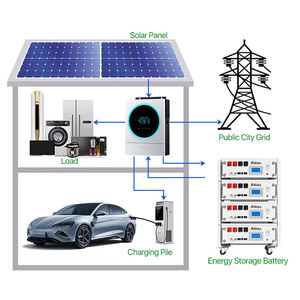
In rural and suburban regions experiencing severe winter power disruptions, solar-plus-storage microgrids and diesel generator hybrid systems rely on 48V (16S LiFePO4) and high-voltage battery banks. Our BMS hardware features dedicated low-temperature charge control, automatically engaging internal heating pads prior to enabling current flow into frozen lithium cells.

2. Mining, Forestry & Heavy Utility Vehicles

Industrial electrification in Siberia and the Far East requires ruggedized e-mobility powerpacks. Heavy electric loaders, underground mining carts, and urban delivery e-trikes utilize our 20S 64V 80A and high-current 500A CAN-bus management boards built with solid-state MOSFET switches capable of resisting extreme mechanical vibration and thermal shock.

3. Remote Telecom Base Stations & Substation DC Auxiliary

Cellular towers and electrical substations situated along vast transport corridors require uninterruptible DC power packs. Our RS485 and Modbus-compliant BMS PCBA units integrate directly with centralized SCADA systems, enabling remote monitoring of Cell State of Health (SOH), State of Charge (SOC), and differential voltages across distributed cell groups.

Localized Market Trends & Regulatory Evolution

The battery energy landscape within the Russian market is undergoing a rapid transition toward localized pack assembly, modular ESS integration, and heightened regulatory compliance standards. Key growth vectors influencing system designs include:

  • Expansion of Domestic Pack Manufacturing: Russian battery integrators are shifting from imported complete battery packs toward sourcing high-grade LiFePO4 cells and pairing them with high-reliability external BMS controllers. This operational shift demands customizable PCBA layouts, adaptable software firmware, and flexible mounting options (DIN Rail, Rackmount, or Direct Busbar attachment).
  • Rigorous EAC & TP TC 004/020 Compliance Needs: Electronic safety controllers imported into the Eurasian Customs Union must satisfy strict Electromagnetic Compatibility (EMC) and Low Voltage Directive mandates. Our ISO9001-certified factory utilizes certified component supply chains and ESD-safe SMT lines to ensure imported boards seamlessly pass local technical audits.
  • Adoption of Sodium-Ion Technologies for Arctic Storage: Due to the severe capacity degradation of standard NMC/LiFePO4 chemistries at sub-zero temperatures, Sodium-Ion batteries are gaining rapid market share for cold-region storage. Our R&D engineering team has designed specialized multi-chemistry BMS boards (such as the XJ Smart BMS series) configured specifically for low-voltage sodium cell discharge profiles.
  • Demand for High-Current Active Balancing: As stationary storage systems scale from small 15kWh residential units up to 50kWh+ industrial banks, passive balancing (dissipating energy as heat) becomes inefficient. Market demand has pivoted toward active balancing topologies capable of transferring up to 2A-5A of balancing current between individual cells, substantially extending overall pack operational lifespan.

Enterprise Advantages: Why Leading Tier-1 OEM Brands Choose Our BMS SMT Factory

With over three decades of core power-electronics engineering heritage (operating under our parent manufacturing group Sanstar Microsystems Pvt. Ltd.), our facility combines deep circuit design expertise with modern high-speed surface-mount assembly automation. We don't just supply standard catalogue boards; we deliver robust technical advantages to our global procurement partners:

Turnkey Custom SMT & PCBA OEM

From schematic capture, component sourcing, and PCB layout to high-speed SMT assembly, wave soldering, and conformal coating application—we provide complete turnkey board manufacturing. Our custom engineering department easily handles custom dimensions, specialized connector types, and multi-layer thermal PCB designs.

Rigorous Quality Assurance & Testing

Every single BMS board leaving our facility undergoes 100% automated optical inspection (AOI), high-voltage isolation breakdown testing, short-circuit protection verification, and full thermal burn-in cycling. We maintain complete component batch traceability under ISO9001 quality management guidelines.

Hardware-Level Firmware Flexibility

Our engineering team assists client software teams in integrating custom communication protocols. Whether you require specific RS485 Modbus registers for local Russian inverter brands, customized CAN-bus matrix IDs, or tailored low-temperature shutdown logic, our firmware engineers support your deployment.

Frequently Asked Questions by Industrial Buyers & Pack Assemblers

Detailed technical answers addressing common engineering, procurement, and logistical inquiries regarding battery management system implementation in cold-climate industrial projects.

1. How do your BMS boards handle charging lithium batteries in sub-zero ambient temperatures (-20°C to -40°C)?
Charging standard LiFePO4 cells below 0°C without thermal mitigation causes lithium plating on the anode, resulting in permanent cell degradation and potential short-circuit hazards. Our specialized low-temperature BMS units incorporate multi-channel NTC thermal sensor arrays and dedicated high-current relay outputs. When low ambient temperatures are detected, the BMS restricts charging current while routing power to internal heating elements (silicone heating pads or PTC film). Once the internal cell core reaches a safe threshold (typically +5°C), the BMS firmware automatically opens the main charge MOSFET pathway.
2. Can your BMS products be integrated with commercial solar off-grid and industrial inverters?
Yes. Our Smart BMS family (including High-Voltage 500A CAN/RS485 models and Daly/JBD series) supports flexible protocol configuration. We supply standard Modbus-RTU, CAN2.0B, and RS485 communication maps compatible with leading international and regional inverter protocols. Custom protocol handshakes can be programmed into the BMS controller firmware during PCBA production to guarantee seamless parameter synchronization (voltage, SOC, current limits, temperature warnings) with central inverter control heads.
3. What quality certifications and manufacturing standards apply to your BMS PCBA assemblies?
All our manufacturing plants operate under strict ISO9001:2015 Quality Management Systems. Printed circuit board assemblies (PCBA) utilize UL-94V0 rated flame-retardant FR4 substrates, top-tier MOSFET power switches, and automotive-grade MCU controllers. Select product series also meet CE, BIS, and UL compliance criteria. For clients importing boards into Eurasian Customs Union countries, we provide complete technical dossiers, bill of materials (BOM) validation, and schematics to facilitate local EAC (TP TC 004/2011 & TP TC 020/2011) certification filings.
4. What is the difference between passive and active balancing in high-capacity energy storage packs?
Passive balancing bleed-off systems dissipate excess charge energy from higher-voltage cells as heat via precision resistors (typically balancing at 30mA to 100mA). This approach is cost-effective for small battery packs (e.g., e-bikes or small 12V backup modules). Active balancing, conversely, utilizes inductive or capacitive energy transfer circuits to move charge directly from high-voltage cells to lower-voltage cells with minimal loss (supporting 1A to 5A balancing currents). For large 15kWh–50kWh+ stationary ESS batteries, active balancing drastically reduces thermal stress and balances large cell imbalances much faster during high-rate charging cycles.
5. Can your factory produce custom-shaped or multi-board stacked BMS solutions for tight enclosures?
Absolutely. As a direct manufacturer with in-house hardware engineering, component procurement, and SMT assembly lines, we regularly design custom form-factor PCBAs. Whether your system envelope requires ultra-slim rectangular boards for rackmount chassis, curved boards for cylindrical battery housings, or split Master-Slave architecture for high-voltage multi-pack systems, our engineering team can produce rapid prototypes and transition directly into scalable volume production.
6. What protection mechanisms are integrated directly into the hardware layer?
Beyond software-level MCU monitoring, our boards feature fast-acting hardware protection circuits. These include ultra-fast short-circuit response times (<200 microseconds), hardware cell over-voltage shutdown, cell under-voltage lock-out (protecting against deep discharge damage), charge/discharge over-current cut-off with adjustable delay parameters, ESD protection on communication lines (RS485/CAN), and dual-point high-temperature cut-offs across power FETs and cell balancing banks.

Ready to Scale Your Battery Pack Manufacturing or ESS Project?

Connect directly with our senior power-electronics engineering team. We offer technical schematic reviews, sample board customization, and reliable mass-production scheduling tailored to your regional market requirements.

Contact Us