
Explore our certified switch mode power supplies, DC-DC step-up converters, and industrial battery chargers designed for uninterrupted mission-critical automation.
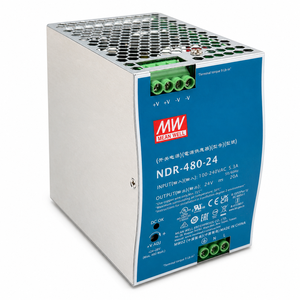
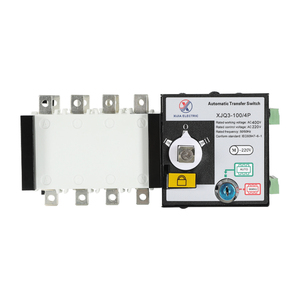
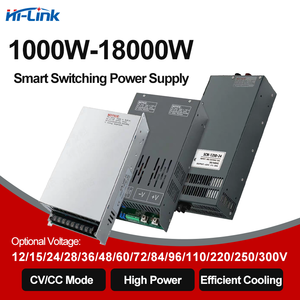
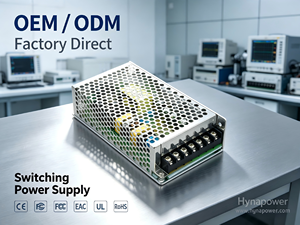
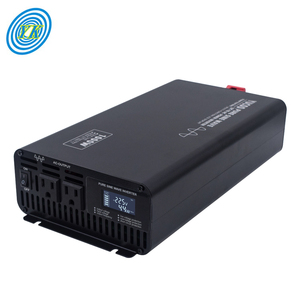
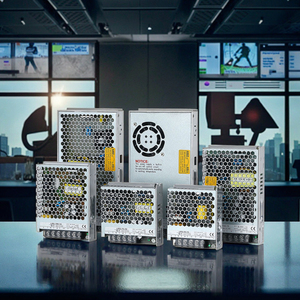
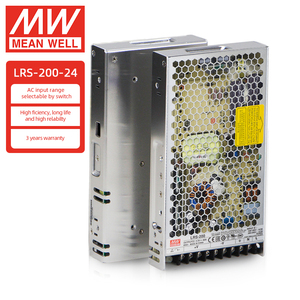

An in-depth technical analysis on step-up topologies, power density optimization, and reliability benchmarks for modern industrial automation ecosystems.
In contemporary power electronics, a Step-Up (Boost) Converter serves as a fundamental building block when electrical loads demand higher operational voltage than the available direct current (DC) or alternating current (AC) source supplies. Operating via high-frequency pulse-width modulation (PWM) combined with energy-storing inductors and fast-recovery switching transistors (such as MOSFETs and GaN/SiC FETs), modern step-up systems convert low-level input potentials to tightly regulated high-level outputs with thermal efficiencies routinely exceeding 94%.
As industrial automation systems incorporate distributed sensors, programmable logic controllers (PLCs), high-resolution CCTV head-ends, and switchgear trip circuits, the requirement for robust step-up converting electronics has accelerated dramatically. Industrial plants frequently experience input line sags, long cable runs resulting in resistive voltage drops, or localized power outages. A dedicated step-up power supply compensates for input degradation by boosting fluctuating inputs to stable DC rails (such as stepping up 12V to 24V, 24V to 48V, or 110V AC to 125V/220V DC), preventing costly controller resets, false sensor triggers, or unexpected equipment trips.
Selecting the appropriate power converting topology requires evaluated matching against system operational requirements. Below is an engineering comparison matrix detailing structural differences between legacy linear supplies, standard buck SMPS, and advanced industrial Step-Up/Boost converters.
| Performance Criterion | Legacy Linear Power Supply | Standard Buck SMPS | Industrial Step-Up (Boost) Converter |
|---|---|---|---|
| Typical Conversion Efficiency | 45% – 60% (High heat dissipation) | 82% – 89% | 92% – 97.5% (Wide-bandgap optimized) |
| Input Voltage Tolerance | Narrow (±5% nominal rating) | Wide (90V – 264V AC) | Ultra-Wide Sinks (90V – 290V AC / 10V – 30V DC) |
| Voltage Stepping Capability | Step-Down Only | Step-Down Only | Bi-directional Boost & Step-Up Regulated |
| Thermal Derating Threshold | High thermal throttling at >40°C | Linear derating from 50°C | Full power operation up to +60°C ambient |
| Protection Protocols | Basic fuse & thermal cutout | Short-circuit, overload, OVP | Fold-back current limit, OVP, Reverse-polarity & TVSS |
Procurement directors and system integrators face evolving challenges driven by global supply chain restructurings, stringent energy codes, and increasing demands for embedded telemetry. Key procurement trends dominating the industry include:
Factories are phasing out legacy silicon switches in favor of Silicon Carbide (SiC) and Gallium Nitride (GaN) devices. This shift allows step-up converters to operate at multi-megahertz switching frequencies, shrinking magnetic components by up to 40% while raising efficiency curves above 96%.
Mission-critical installations—such as substation control panels, oil & gas facilities, and continuous process plants—increasingly specify dual redundant step-up power architectures. Built-in active diode OR-ing enables seamless N+1 hot-swapping without bus disturbance.
Global enterprises require verified third-party compliance. Power hardware must carry valid BIS (IS 13252), CE (EMC/LVD), and UL certifications to guarantee safe cross-border deployment without incurring regulatory delay or site rejection.
Off-the-shelf power units often fail to meet exact physical dimensions or proprietary electrical profiles. Procurement teams are partnering directly with step-up manufacturers offering custom PCB layout, tailored voltage steps, and potential-free alarm contacts.
As smart factories transition into Industry 4.0 standards, power converters are moving beyond passive electricity conversion to become intelligent nodes within industrial Internet of Things (IIoT) networks. Future product roadmaps focus heavily on three major pillars:
Built upon 30+ years of dedicated power electronics manufacturing by Sanstar Microsystems Pvt. Ltd. under the Micro Power brand in Nagpur, India.
From custom magnetics winding, transformer design, and multilayer PCB layout to thermal modeling and firmware development, our engineering team manages the complete lifecycle within our MIDC Hingna Zone facility.
Our manufacturing excellence is powered by a trained, 100% women assembly workforce and an all-ladies incoming component screening team, executing precision soldering, ESD control, and assembly with unmatched meticulousness.
Zero defect tolerance: every single step-up converter, SMPS, and charger unit undergoes 100% full-load elevated-temperature burn-in testing and dielectric withstand high-voltage screening prior to final factory dispatch.
Addressing the technical, regulatory, and commercial inquiries most frequently raised by electrical engineers and purchasing managers.
Our products carry valid BIS certification (IS 13252), CE compliance (EMC Directive 2014/30/EU and Low Voltage Directive 2014/35/EU), and selected product lines maintain UL certification. Complete test reports and conformity documentation are supplied to OEM partners upon request.
When transmitting low-voltage DC power across extended field cables (such as perimeter CCTV or remote sensor lines), resistive wire losses cause severe terminal voltage sags. Installing a localized step-up boost converter boosts sagging voltage back to a stable 24V or 48V DC rail at the device end, eliminating equipment rebooting or functional failure.
Yes. With dedicated in-house R&D, we regularly customize boost ratio parameters, dual-channel charging profiles, potential-free alarm contact outputs (for BMS interfacing), specialized aluminum housing profiles, and private-label branding for OEMs worldwide.
Our industrial step-up units feature heavy-duty extruded aluminum casings and thermal-conductive potting compounds. They are engineered to deliver 100% continuous rated power up to +50°C to +60°C ambient temperatures without artificial fan cooling, ensuring silent and reliable operational longevity.
Standard catalog models (including 12V, 24V, and 48V DIN rail step-up units and SMPS) are maintained in inventory for rapid dispatch. Custom OEM production runs typically ship within 2 to 4 weeks depending on component specifications and custom enclosure requirements.
Consult directly with our power electronics application engineers to select, customize, or evaluate samples of our step-up power supplies and battery chargers.
Contact Us