
Engineered for high availability, thermal resilience, and clean double-conversion power delivery across global infrastructure networks.
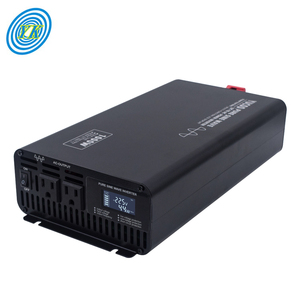
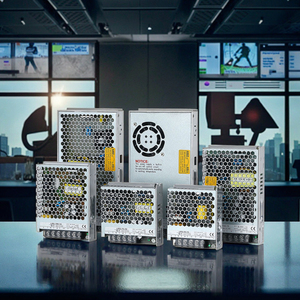
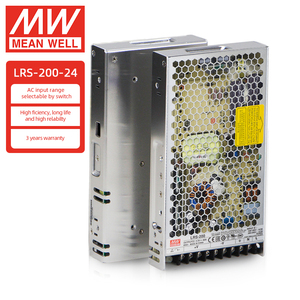

An exhaustive whitepaper on double-conversion topology, grid disturbance mitigation, and total harmonic distortion reduction in mission-critical environments.
In high-availability industrial contexts—such as PLC control panels, SCADA RTUs, sub-station switchgear (VCB panels), and optical network heads—any voltage drop or transfer latency can trigger catastrophic system resets. True Online Double Conversion UPS Systems continually rectify incoming raw AC power into a clean intermediate DC bus, which simultaneously float-charges connected battery banks and feeds an internal high-frequency inverter.
This design ensures absolutely zero millisecond (0ms) switching time during utility blackout events, completely isolating sensitive microprocessors from sags, surges, brownouts, frequency variations, and switching transients common in unstable industrial grids.
Modern power conversion units demand aggressive Active Power Factor Correction (PFC) stages. Traditional linear topologies exhibited power factors as low as 0.65, injecting destructive total harmonic current distortion (THDi) back into facility transformers and diesel generator sets.
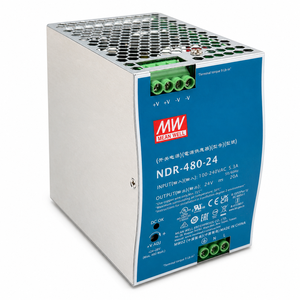
Our engineered SMPS, DIN Rail, and Online UPS systems incorporate active power factor correction circuits reaching Power Factor > 0.98 with THDi controlled below 3%. This optimization eliminates harmonic overheating in supply cables, reduces utility power tariffs, and ensures flawless synchronization when transitioning to emergency stand-by generators.
| Performance Metric | Off-Line / Standby UPS | Line-Interactive UPS | Online Double Conversion UPS | Micro Power Industrial DC UPS |
|---|---|---|---|---|
| Transfer Time (ms) | 6 – 10 ms | 2 – 4 ms | 0 ms (Zero Transfer) | 0 ms (Seamless DC Bus) |
| Output Waveform | Square / Modified Sine | Simulated Sine | Pure Sine Wave (<2% THD) | Pure Regulated DC Line |
| Input Voltage Window | ±15% Rated Voltage | ±25% via AVR Buck/Boost | Wide 90V – 290V AC | 90V – 290V AC (Extended) |
| Battery Galvanic Isolation | No | No | Yes (Transformer Opt.) | Yes (Internal Diode OR-ing) |
| Target Application | Commercial PCs, Office IT | Peripherals, Telecom Routers | Data Centers, Medical Imaging | PLC, SCADA, VCB, CCTV, Fire Panels |
Key technological shifts altering how enterprise system integrators, electrical OEMs, and infrastructure contractors source power backup systems.
The transition from silicon MOSFETs to Gallium Nitride (GaN) and Silicon Carbide (SiC) switches is revolutionizing thermal density. Higher switching frequencies reduce inductors and transformer volumetric footprint by over 40% while raising energy conversion efficiency beyond 97.5%.
Global procurement teams are phasing out legacy Sealed Lead-Acid (VRLA) cells in favor of Lithium Iron Phosphate (LiFePO4). Integrated BMS modules provide over 3,500 lifecycle charge loops, active cell balancing, remote SMBus/Modbus diagnostics, and superior operational stability up to 65°C ambient temperatures.
Future-proof power installations require real-time telemetry over SNMPv3, Modbus-TCP, and MQTT. Systems now output dynamic health indexes—monitoring internal capacitor ESR degradation, ambient thermal stress, and actual battery health—allowing maintenance teams to intervene prior to power failures.
Why Tier-1 Automation Integrators and Global Defense Contractors specify Micro Power (Sanstar Microsystems Pvt. Ltd.).
Established in 1994 in Nagpur, India (EL-15, Electronic Zone, MIDC Hingna Road), Micro Power has engineered over 1,000 standardized and custom power models. Our complete vertical integration covers magnetic core winding, automated PCB assembly, firmware development, thermal design validation, and EMI/EMC compliance testing under one roof.
Zero-defect reliability is mandatory when power supplies drive railway signalling, diesel generator AMF panels, fire alarm hooters, and security cameras. Every single unit leaving our shop floor undergoes rigorous 100% full-load thermal burn-in screening, high-voltage flash testing, and automated parameter verification, supported by a skilled precision manufacturing workforce.
Addressing engineering challenges, customization options, and global standards compliance.
A standard Switching Mode Power Supply (SMPS) converts AC grid voltage into a fixed DC output (e.g., 24V DC) but lacks battery charging logic or backup control. An industrial battery charger provides regulated current/voltage profiles (Float/Boost stages) designed specifically to charge batteries without overcharging. A true industrial DC UPS integrates both functions into a single module: it powers the DC load continuously, keeps a backup battery bank floating, and switches the battery directly to the load with 0ms transfer time upon utility mains interruption.
Our industrial DIN rail power supplies and DC battery chargers feature an ultra-wide AC input range of 90V to 290V AC. Designed specifically to withstand unpredictable electrical grids, line spikes, and neutral failures, they incorporate primary-side surge suppressors, active over-voltage cut-offs, short-circuit latch protection, and thermal derating protection up to +70°C ambient temperatures.
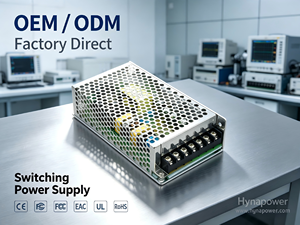
Depending on the product series selected, our range carries comprehensive global regulatory approvals including BIS (IS 13252 for safety compliance in India), CE markings (EMC Directive 2014/30/EU and Low Voltage Directive 2014/35/EU), UL safety certifications (such as our 60W UL-certified SMPS cum battery charger), and RoHS environmental standard compliance. Detailed test certificates and batch records are provided for OEM integration clearance.
Yes. Our in-house R&D engineering team specializes in custom OEM design services. We regularly build specialized dual-redundancy diode OR-ing modules, dual-channel battery chargers for diesel generator AMF panels, high-current VCB switchgear tripping power packs, customized IP65 NEMA-rated outdoor enclosures, and custom voltage rails ranging from 12V DC up to 220V DC high-voltage industrial battery systems.
In redundant power architectures (N+1), connecting two power supplies in parallel without decoupled protection can lead to total system failure if one unit suffers a short-circuit fault across its secondary rectifiers. A specialized Redundancy Module (featuring ideal MOSFETs or Schottky barrier diode OR-ing) completely isolates the faulted supply from the operational DC bus, preventing system shutdown and signaling an alarm via potential-free relay contacts.
Whether you require standard DIN Rail power supplies, custom OEM battery chargers, or mission-critical Online DC UPS systems, our application engineering team is ready to evaluate your schematics and deliver high-reliability solutions.
Get Catalog