
Explore high-performance surge arresters, discharge counter testers, silicone-housed high-voltage units, and DIN-rail solar DC protectors certified for demanding global utility grid environments.
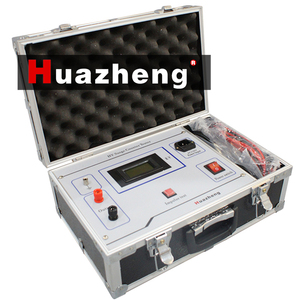
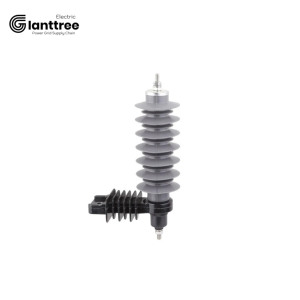
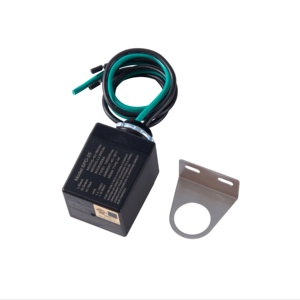
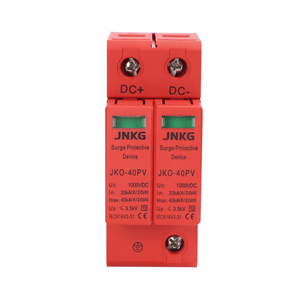
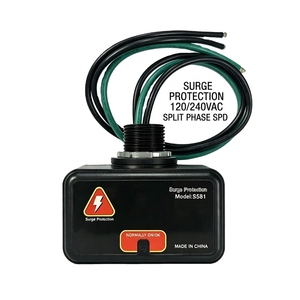
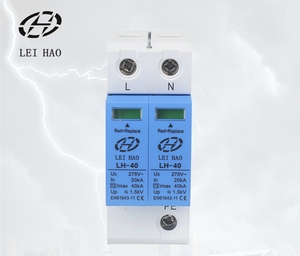
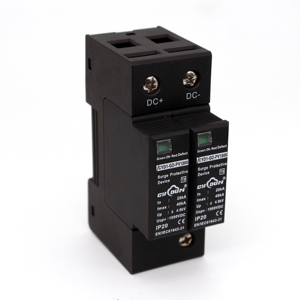
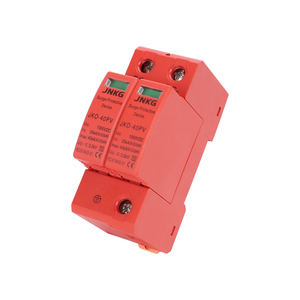
Industrial facility reliability and energy transition infrastructures (such as utility-scale solar PV installations, commercial HVAC systems, and MV substations) depend heavily on robust transient overvoltage protection. Surge arresters and Surge Protective Devices (SPDs) serve as primary guardians against atmospheric lightning strikes, grid switching surges, and electrostatic discharge events.
When selecting a tier-1 supplier or exporter, specification compliance must be validated across electrical parameters. The table below outlines key benchmark metrics across common industrial surge arrester topologies:
| Application Segment | Protection Class | Nominal Voltage ($U_c$) | Surge Current ($I_n$ / $I_{max}$) | Response Time ($t_A$) | Primary Internal Core |
|---|---|---|---|---|---|
| HV Grid & Substation (15–36kV) | Class I / Station Class | 15kV – 36kV AC | 10kA – 20kA ($I_{imp}$) | < 100 ns | Zinc-Oxide (ZnO) Blocks in Silicone Rubber |
| Solar PV Strings (500V–1500V) | Type 1 / Type 2 DC | 500V – 1500V DC | 20kA / 40kA ($I_n / I_{max}$) | < 25 ns | Heavy-Duty MOVs with DC Arc Extinguisher |
| Industrial HVAC & Motors | Type 1 / SPD-25 | 120V / 240V AC | 10kA / 25kA ($I_{max}$) | < 25 ns | Thermally Protected Metal Oxide Varistors |
| Low Voltage Main Distribution | Type 2 / Class II AC | 275V – 440V AC | 20kA / 40kA ($I_n / I_{max}$) | < 25 ns | Pluggable MOV + Gas Discharge Tube (GDT) |
As smart grids, distributed renewable generation, and IoT automation expand, surge arrester engineering is undergoing rapid technological evolution. Global buyers are prioritizing several critical capabilities.
Legacy passive arresters are quickly being superseded by smart monitoring systems. Advanced discharge counter testers (such as Huazheng systems) and integrated sensors allow substation managers to log impulse frequency, peak leakage currents, and MOV degradation in real time over RS485 or LoRaWAN networks.
High-voltage utility procurement has decisively shifted from porcelain housings to polymeric silicone rubber. Silicone offer superior hydrophobicity, resistance to atmospheric pollution, reduced explosion risk under internal arc failure, and significantly lower transport weights for international exporters.
With utility solar installations migrating from 1000V DC to 1500V DC architectures, modern DC SPDs must handle higher short-circuit withstand ratings ($I_{scwp}$) and incorporate specialized DC arc-extinguishing chambers to suppress high-energy DC arcs during MOV thermal disconnection.
Behind every resilient power distribution grid and mission-critical panel is an uncompromising commitment to electrical design integrity. Building on 30+ years of manufacturing heritage (operating from Sanstar Microsystems Pvt. Ltd. in Nagpur, India), Micro Power sets the industry benchmark for industrial power electronics, battery chargers, DC UPS, and transient surge protection assemblies.
Unlike automated mass-assemblers relying on statistical sampling, 100% of our power modules and surge assemblies undergo rigorous high-voltage insulation tests, thermal stress screening, and functional burn-in before dispatch.
Our product portfolios maintain strict alignment with global standards, including BIS (IS 13252), CE EMC/LVD directives, and UL certified ranges (such as our UL 60W SMPS-charger and UL 1449 compliant HVAC surge units).
From custom non-linear ceramic varistor selection and magnetic component design to specialized metal enclosures and IoT counter integration, our engineering team tailors power solutions precisely to your panel envelope.
Direct technical answers to common queries raised by electrical consultants, utility contractors, and global buyers.
Type 1 SPDs (Class I) are designed for installation at the main service entrance to protect against direct or partial lightning strikes, evaluated using the high-energy 10/350μs impulse current ($I_{imp}$). Type 2 SPDs (Class II) are installed at sub-distribution panels to shield equipment from indirect lightning strikes and switching transients, tested with an 8/20μs waveform ($I_n$/$I_{max}$). Type 3 SPDs (Class III) provide point-of-use protection right at sensitive terminal equipment (e.g., PLCs, HVAC controls) for fine voltage clamping.
Over time, repeated transient discharges degrade the non-linear resistance profile of Metal Oxide Varistors (MOVs), increasing continuous leakage current. A discharge counter tester verifies whether the physical counting mechanism functions properly during an actual discharge event and checks for internal MOV deterioration without requiring full dismounting of the high-voltage station arrester.
Unlike AC power, direct current (DC) does not pass through a zero-crossing point, making electrical arcs self-sustaining and hazardous. Solar DC SPDs feature specialized internal thermal disconnectors integrated with mechanical arc shields or gas discharge suppression chambers. When an MOV reaches end-of-life status due to overvoltage stress, the disconnector physically isolates the faulty module while extinguishing the resulting DC arc.
Global B2B procurement teams must check compliance with IEC 61643-11 (for low-voltage power distribution), IEC 60099-4 (for metal-oxide surge arresters without gaps for AC systems), UL 1449 5th Edition (North American safety certification), and CE / BIS marks for regional grid connectivity.
Yes. Our engineering R&D department in Nagpur, India specializes in customizing output voltage profiles, dual-redundant charging circuits, potential-free alarm contact logic, custom mounting brackets, and branded metal enclosure designs for global OEMs in automation, security, telecommunications, and railway utilities.
Connect directly with our application engineers for comprehensive datasheets, CAD dimension drawings, high-voltage test certificates, and volume wholesale pricing.