
Comprehensive 2025 B2B Benchmark for Commercial OEM Sourcing & Supply Chain Evaluation
The global demand for portable solar chargers, off-grid photovoltaic power generators, and integrated solar energy storage systems (BESS) has entered an unprecedented era of technological transformation. Driven by the expansion of outdoor recreational activities, emergency preparedness requirements, commercial overland transport, and off-grid industrial automation, global procurement teams are shifting away from commoditized legacy solar panels toward high-efficiency, multi-protocol integrated charging solutions.
For international buyers, system integrators, and brand owners, identifying a high-tier solar charger factory requires evaluating core competencies beyond simple watt-per-dollar ratios. Modern procurement intent demands rigorous analysis of photovoltaic conversion cell technology (e.g., N-Type TOPCon vs. Monocrystalline PERC), lamination materials (ETFE vs. PET), integrated Max Power Point Tracking (MPPT) electronics, thermal dissipation mechanisms, and stringently validated ingress protection (IP67/IP68).
This technical whitepaper analyzes the Top 10 Solar Charger Factory & Exporter criteria, showcases market-leading product architectures, evaluates future procurement vectors, and details the rigorous R&D and testing standards required to build resilient off-grid solar power hardware.
Engineered for high solar yield, rugged environmental resistance, and seamless power station compatibility.
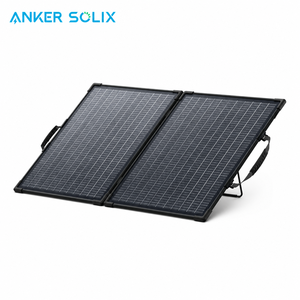
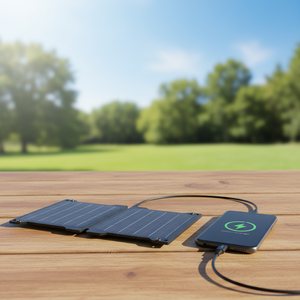
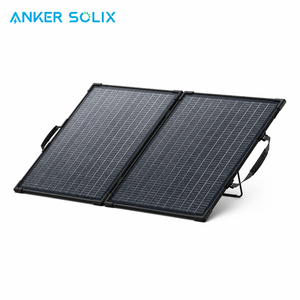
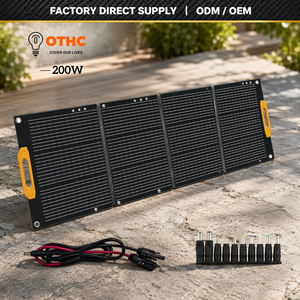
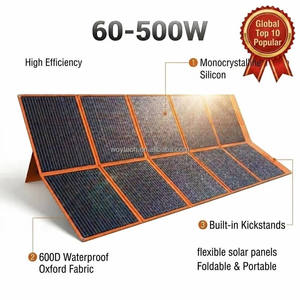
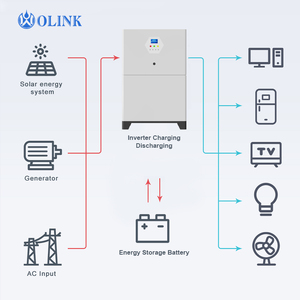
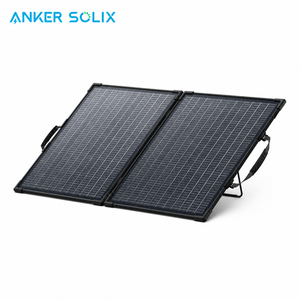
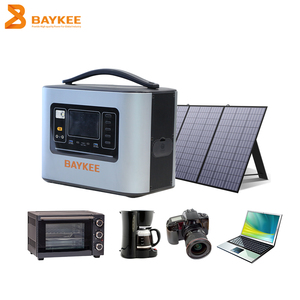
Analyzing cell efficiency jumps, encapsulation durability, and embedded intelligent power electronics.
Legacy P-type PERC cells (capped around 21.5% efficiency) are rapidly being superseded by N-Type TOPCon (Tunnel Oxide Passivated Contact) and Heterojunction (HJT) technologies. Reaching laboratory efficiencies exceeding 25.5%, N-type architecture offers a significantly lower temperature coefficient (-0.30%/°C) and virtually eliminates Light-Induced Degradation (LID). Furthermore, bifacial panel structures capture indirect rear-side irradiance, adding up to 30% additional energy yield on reflective surfaces such as sand, snow, or light-colored canvas.
Traditional PET (Polyethylene Terephthalate) lamination degrades rapidly under intense ultraviolet exposure, suffering yellowing and delamination within 12–18 months. Leading factories are now standardizing on Ethylene Tetrafluoroethylene (ETFE) polymer coatings featuring honeycomb surface textures. ETFE increases light absorption by reducing reflection while offering superior heat resistance and self-cleaning properties. Paired with ultrasonic injection-molded IP68 junction boxes, modules survive full water immersion and harsh marine environments.
The integration of high-frequency Maximum Power Point Tracking (MPPT) micro-controllers directly into solar charger junction boxes represents a quantum leap over passive PWM regulation. Modern MPPT algorithms scan the IV curve of photovoltaic arrays hundreds of times per second, dynamically harvesting maximum energy during partial shading or overcast conditions. Advanced units feature auto-negotiating USB-C Power Delivery (PD 3.0 up to 100W) and wide DC voltage regulation for seamless LiFePO4 battery charging.
A rigorous engineering evaluation for procurement managers selecting OEM component specs.
| Evaluation Parameter | Legacy PET Folding Panels | Standard ETFE Monocrystalline | Premium N-Type TOPCon Bifacial |
|---|---|---|---|
| Cell Efficiency Rating | 17.0% – 19.5% | 21.5% – 23.0% | 24.5% – 25.8% |
| UV Degradation Lifespan | 1 – 2 Years (Prone to delamination) | 5 – 8 Years (High UV resistance) | 10+ Years (Industrial polymer laminate) |
| Rear-Side Gain (Bifaciality) | 0% (Opaque Backsheet) | 0% (Standard Backsheet) | +15% to +30% Yield Boost |
| Temperature Coefficient | -0.44% / °C | -0.38% / °C | -0.30% / °C (Lower thermal output loss) |
| Ingress Protection Rating | IP63 – IP65 (Splash-proof only) | IP67 (Dust-tight, water spray) | IP68 (Hermetically sealed / Submersible) |
| Recommended B2B Application | Low-cost promotional consumer gifts | Standard outdoor gear & portable power | Mission-critical, RV overland, marine & military |
How global trade policies, ESG mandates, and technological convergence are redefining supplier selection.
Procurement teams no longer source solar panels and lithium battery power stations as isolated SKUs. Leading global buyers require bundled, plug-and-play ecosystems where solar chargers are natively matched with Power Station Battery Management Systems (BMS). Proprietary communication protocols (CAN-bus, RS485, or Bluetooth Mesh) between the panel's MPPT controller and the storage station optimize charging speeds, monitor cell temperatures, and prevent over-voltage tripping.
With the enforcement of global supply chain acts (such as the EU Corporate Sustainability Due Diligence Directive and US customs regulations), solar factories are audited strictly on raw material provenance. Top exporters must provide full silicon chain traceability—verifying that quartz sand, polysilicon ingot, wafer, and cell production meet ethical labor and environmental standards. Carbon footprint certifications per watt are rapidly becoming mandatory for European tenders.
The market is bifurcating into ultra-lightweight wearable solar fabrics for personal electronics and heavy-duty, expandable multi-fold panels (300W to 500W) for off-grid RVs, mobile clinics, and disaster relief. Exporters offering modular quick-connect architectures—allowing users to string multiple panels in series or parallel without extra combiner boxes—are seeing the highest growth in commercial contracts.
As high-power USB-C PD and fast DC charging circuits are embedded directly into solar junction boxes, electromagnetic compliance (CE-EMC, FCC Class B) and safety certifications (UL 2703, IEC 61215, BIS IS 13252) have become non-negotiable. Importers are requiring factories to provide 100% batch-level testing documentation to mitigate liability and custom clearance delays.
Direct technical answers to common queries raised by OEM procurement teams and brand managers.
PET coatings use cheap polyester film that is vulnerable to UV radiation, causing yellowing, micro-cracking, and efficiency drops of up to 30% within a single year of outdoor exposure. ETFE (Ethylene Tetrafluoroethylene) is an industrial fluoropolymer with high light transmittance (95%), superior chemical resistance, self-cleaning anti-reflective properties, and a design life exceeding 8 to 10 years without yellowing.
N-Type TOPCon cells offer three vital engineering advantages for portable panels: higher conversion efficiency (245%+ vs ~21.5% for PERC), a significantly better temperature coefficient (-0.30%/°C), meaning less power drop under harsh desert heat, and negligible Light-Induced Degradation (LID). This ensures higher daily power harvesting in compact folded dimensions.
Yes. Our in-house R&D team can customize the MPPT micro-controller circuit board to deliver specific DC voltage ranges (e.g., 18V, 24V, 36V, 48V, or high-voltage 120V DC series outputs). We can integrate dual USB-C Power Delivery (PD 60W/100W), QC 3.0, and proprietary communication protocols to sync directly with your battery management system.
Standard IP65 protects against low-pressure water jets. IP67 ensures total dust tightness and resistance to immersion up to 1 meter for 30 minutes. Premium IP68 units feature fully encapsulated junction boxes filled with optical-grade thermal silicone gel and ultrasonically welded fabric seams, tested under continuous water pressure immersion.
Every single batch undergoes incoming raw material screening (IQC), EL (Electroluminescence) flash testing of solar cells to detect invisible micro-cracks, 100% high-voltage isolation checks, and full-load dynamic burn-in testing under controlled thermal conditions. Final products are IV-curve flashed to guarantee rated power output tolerance (+3%).
For standard catalogue models with custom logo branding and packaging, production lead times are typically 15 to 25 days. For complete custom ODM projects (requiring new plastic injection tooling, custom canvas cutting dies, and tailored PCB controller design), initial working prototypes are delivered within 21–30 days, with full mass production following authorization.
Key audit criteria for international buying offices during factory site visits and supplier assessments.
Verify if the supplier manufactures their own PCB controller boards in-house or relies on outsourced third-party sub-assemblies which introduce quality variability.
Ensure the factory utilizes Electroluminescence (EL) testers before and after lamination to catch micro-cracks that cause hotspots and premature field failures.
Confirm that sample panels undergo environmental stress testing (-40°C to +85°C damp heat tests) in accordance with IEC 61215 standards.
Contact our engineering and export desk today to request technical datasheets, request OEM sample builds, or discuss custom power conversion requirements.