
In automated industrial facilities, telecommunications hubs, switchgear substations, and high-density surveillance networks, electrical power conversion serves as the vital backbone of operational uptime. Selecting from top line-interactive factories and specialized Switch Mode Power Supply (SMPS) manufacturers requires evaluating engineering compliance beyond catalog parameters. This guide details the essential technical metrics, production standards, and global compliance benchmarks necessary to secure uninterrupted power flow for sensitive control systems.
Review engineered power solutions built for extreme industrial grid instability, featuring wide input tolerances, active PFC, and robust galvanic isolation.
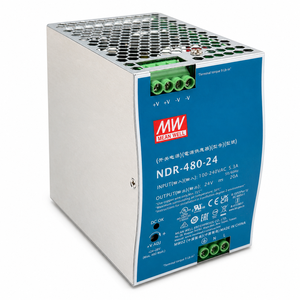
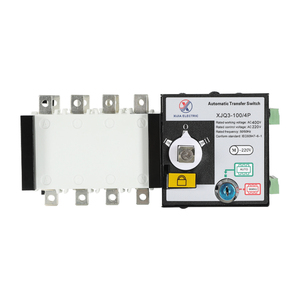
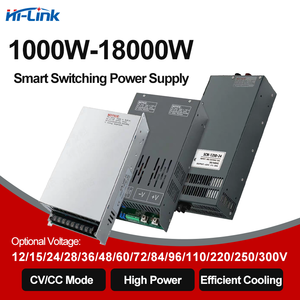
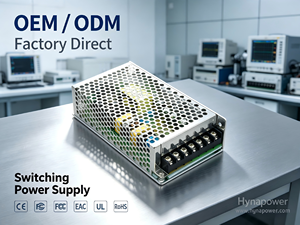
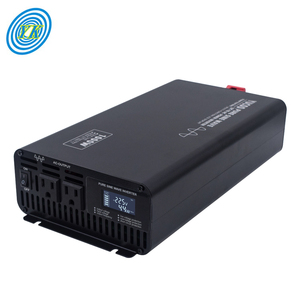
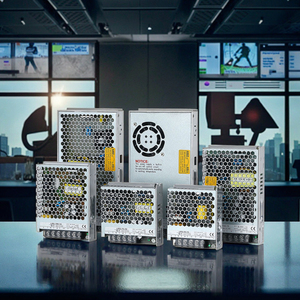
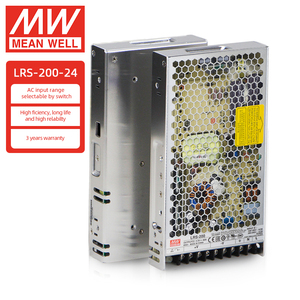

A rigorous technical evaluation matrix for procurement teams inspecting OEM/ODM power supply vendors.
Industrial manufacturing hubs routinely experience voltage sags, neutral shifts, and severe voltage swells. Top suppliers design SMPS topologies with wide 90–290 V AC operating range, ensuring output regulation without thermal overload during continuous low-line conditions.
Continuous full-load operation in control panels requires superior thermal dissipation. Premium SMPS units utilize double-sided PCB layout with high-thermal-conductivity copper layers, high-grade 105°C electrolytic capacitors, and full load delivery up to 50°C ambient temperatures without forced-air cooling.
Industrial environments present electromagnetic interference (EMI) and transient spikes. Quality manufacturers incorporate minimum 3000VAC isolation between input and output, compliance with EN 55032 Class B for EMI, and integral surge protection up to 4kV.
| Evaluation Parameter | Commercial Grade SMPS | Industrial Grade SMPS | Micro Power Line-Interactive Standard |
|---|---|---|---|
| AC Input Voltage Range | 180–240 V AC (Narrow) | 90–264 V AC (Universal) | 90–290 V AC (Wide Grid Tolerance) |
| MTBF Reliability (Hours) | < 50,000 Hours | 100,000 – 250,000 Hours | > 350,000 Hours (MIL-HDBK-217F) |
| Operating Temperature | 0°C to 40°C | -10°C to 60°C (Derating) | -20°C to +70°C (Full rating up to 50°C) |
| Safety & EMC Compliance | Basic CE | CE / UL508 | BIS (IS 13252), CE, UL Certified Ranges |
| Battery Charging Architecture | Single-stage trickle | 2-Stage CC/CV | 3-Stage Temp-Compensated Float/Boost |
Strategic shifts shaping industrial power component specification over the next decade.
Industrial power supply manufacturers are aggressively integrating Gallium Nitride (GaN) and Silicon Carbide (SiC) switches into high-wattage SMPS designs. These materials allow higher switching frequencies (>500kHz), reducing magnetic component size by up to 40% while raising energy conversion efficiency above 94%. Procurement managers must target suppliers investing in planar transformer topology and SiC Schottky diodes to achieve higher power density in 1U and slim DIN-rail footprints.
Traditional separate AC UPS units are increasingly replaced by integrated DIN Rail DC UPS solutions. By feeding 24V or 48V DC directly to industrial controllers (PLCs, HMIs, and field sensors), double conversion losses are eliminated. Modern line-interactive factories incorporate microcontrollers capable of communicating over Modbus-RTU or CANbus to deliver real-time state-of-health (SoH) metrics for attached Lead-Acid or LiFePO4 batteries.
Mission-critical operations (such as power generation AMF panels and railway switchgear) demand zero-downtime architecture. Sourcing trends reflect an increased mandate for dual-redundant DC power rails paired with active MOSFET OR-ing redundancy modules. Unlike traditional Schottky diodes, active decoupling modules minimize forward voltage drop and power loss, reducing panel thermal load substantially.
Global supply chain security requires strict compliance with regional certification bodies. In India, BIS certification under IS 13252 is mandatory for IT and power equipment, while UL508 / UL62368-1 remain non-negotiable for North American exports. Leading factories maintain comprehensive in-house compliance laboratories to rapidly qualify customized OEM power supply chassis.
Direct technical answers to common questions asked by system integrators and OEM engineers.
A standard SMPS simply converts AC grid power to a regulated DC output. If mains power drops, the output immediately ceases unless backed up by external equipment. A Line-Interactive DC power system (or DC UPS) contains internal switching and charging control circuits that simultaneously power the connected load and maintain a standby battery bank. When mains power fails, the unit transfers the load to the battery seamlessly (0ms transfer time), keeping control circuits, fire panels, or security cameras operational without rebooting.
Industrial power grids—especially in developing regions or heavily loaded manufacturing zones—experience severe voltage drops when large electric motors start, and extreme overvoltages when heavy industrial loads trip offline. Standard power supplies rated for 220V ±10% shut down or fail under these thermal and electrical stresses. A wide 90V–290V AC input ensures continuous output voltage regulation, preventing unexpected PLC resets and control component destruction.
Prioritize certifications based on the destination market and application sensitivity: BIS (IS 13252) is mandatory for Indian compliance. CE Marking confirms European Union safety and EMC compliance (EN 55032 / EN 61000). UL Listed / UL Recognized (UL508 & UL62368-1) is vital for North American industrial panels. Micro Power units undergo 100% high-voltage isolation and full burn-in testing to guarantee compliance with these global benchmarks.
Lead-acid and AGM battery chemistry is highly sensitive to ambient operating temperatures. In hot control cabinets, standard constant-voltage charging causes thermal runaway and electrolyte drying. Temperature-compensated chargers automatically adjust the float voltage (typically dropping voltage by -3mV/°C/cell as temperature rises), preventing overcharging in high ambient heat and ensuring full charge restoration during cold conditions.
Yes. Sanstar Microsystems maintains dedicated in-house R&D engineering teams capable of modifying output voltage levels (such as dual 12V/24V outputs), adding potential-free alarm contact relays, engineering custom PCB footprints for space-restricted enclosures, and building custom metal work for OEM partners globally.
Connect with our application engineers to determine the ideal power supply topology, DC UPS configuration, or battery charger specification for your upcoming panel build or OEM integration project.