Export & OEM Desk: +91 9765557595 [email protected] Manufactured in Nagpur, India
Engineering Whitepaper & Procurement Hub

OEM/ODM Battery Management Factories & Supplier Solutions

Tier-1 Custom BMS PCBA Design, Turnkey SMT Manufacturing & Multi-Chemistry Energy Systems

Industrial Grade BMS Hardware & PCBA Assemblies

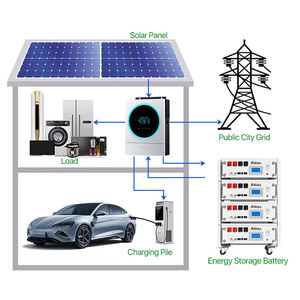
Explore our flagship OEM/ODM Battery Management Systems manufactured under ISO9001 and IATF16949 compliant facilities, optimized for ESS, E-Mobility, and Heavy Industrial Power Packs.
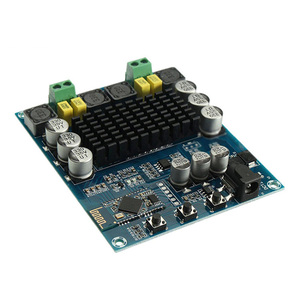
PCBA Assembly for ESS Battery Management Systems with ISO9001 Certified Quality and Fast, Reliable Mass Production

PCBA Assembly for ESS Battery Management Systems with ISO9001 Certified Quality and Fast, Reliable Mass Production

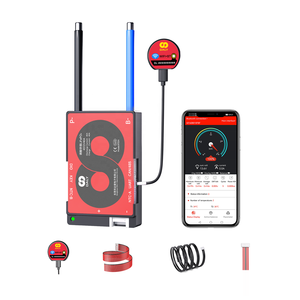
Daly Smart BMS H Type Li-ion LifePO4 4S 12V 16S 48V For Electric Bike Car 3S-16S 40A 60A Lithium Battery Management System

Daly Smart BMS H Type Li-ion LifePO4 4S 12V 16S 48V For Electric Bike Car 3S-16S 40A 60A Lithium Battery Management System

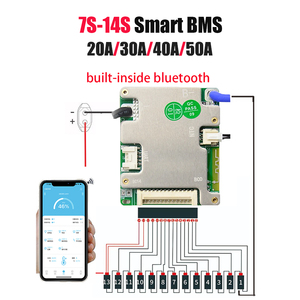
JBD BMS Smart 10S 36V 48V 14S BMS 13S 20A 30A 40A 50A BMS 7S 24V 8S 11S 12S Battery Management Systems For 18650 Electric Bike

JBD BMS Smart 10S 36V 48V 14S BMS 13S 20A 30A 40A 50A BMS 7S 24V 8S 11S 12S Battery Management Systems For 18650 Electric Bike

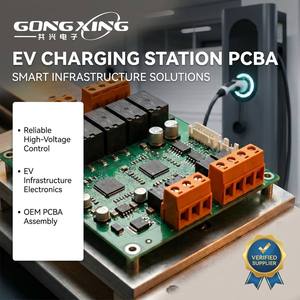
Custom BMS PCBA Assembly Service | Battery Management Controller Board Manufacturing For EV Charging Equipment SMT Factory

Custom BMS PCBA Assembly Service | Battery Management Controller Board Manufacturing For EV Charging Equipment SMT Factory

20S 64V 80A LiFePO4 BMS with 20S 64V 80A Adjustable Overcurrent Protection for High current 64V Battery Systems

20S 64V 80A LiFePO4 BMS with 20S 64V 80A Adjustable Overcurrent Protection for High current 64V Battery Systems

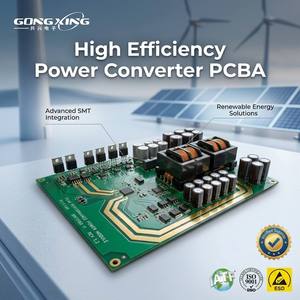
BMS PCBA Assembly Service, High Efficiency Battery Management Board Mfg For Renewable Energy System, Turnkey SMT Assembly

BMS PCBA Assembly Service, High Efficiency Battery Management Board Mfg For Renewable Energy System, Turnkey SMT Assembly

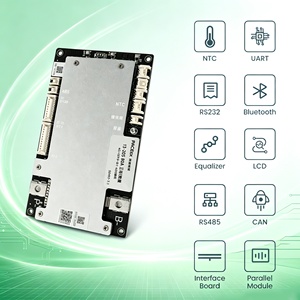
High Voltage 500A BMS RS485 CAN Communication Battery Management System for 15Kwh-50Kwh Energy Storage Battery Pack

High Voltage 500A BMS RS485 CAN Communication Battery Management System for 15Kwh-50Kwh Energy Storage Battery Pack

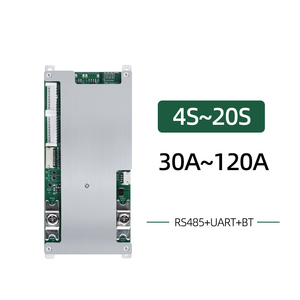
XJ Smart BMS 4S 6S 8S 13S 16S 17S 20S 24V 36V 48V 40A 60A 80A 100A 120A LifePO4 LFP NMC Sodium-Ion BMS Battery Management System

XJ Smart BMS 4S 6S 8S 13S 16S 17S 20S 24V 36V 48V 40A 60A 80A 100A 120A LifePO4 LFP NMC Sodium-Ion BMS Battery Management System

30+ Years
Power Electronics Heritage
100%
Automated Burn-in & Testing
1000+
Custom PCBA Topologies
ISO/IATF
Certified SMT Plant

1. Strategic Overview: The Evolution of Industrial OEM/ODM Battery Management Systems

In the rapidly accelerating landscape of global electrification, the Battery Management System (BMS) serves as the neural center of modern energy storage systems (ESS), electric vehicles (EVs), light electric transport (LEV), and critical industrial backup power infrastructure. As lithium-ion (NMC, LFP), LTO, and emerging Sodium-Ion (Na-Ion) battery chemistry topologies push the boundaries of energy density, the demand for high-reliability, custom OEM/ODM BMS hardware and software has shifted from off-the-shelf basic protection boards to multi-tiered, intelligent control units.

For original equipment manufacturers (OEMs) and systems integrators, selecting the right ODM manufacturing partner is no longer just a supply chain consideration—it is an essential safety and performance imperative. Advanced battery packs require custom-tailored Analog Front-End (AFE) IC integration, precise Coulomb counting State of Charge (SOC) algorithms, dynamic State of Health (SOH) telemetry, and robust hardware fault isolation capable of enduring extreme thermal, electrical, and mechanical stress.

Multi-Tier Architecture

From centralized 3S-16S low-voltage boards to distributed Master-Slave topologies supporting up to 1500V high-voltage megawatt containerized ESS installations.

Active & Passive Balancing

Precision cell balancing up to 5A active transformer transfer or heat-dissipating passive shunt networks engineered to maintain individual cell parity under heavy duty cycles.

Industrial Protection Protocols

Hardware-level short-circuit detection under 200 microseconds, multi-point thermistor monitoring, adjustable overcurrent limits, and reverse polarity clamping.

2. Enterprise Engineering Advantage & Manufacturing Capabilities

Building upon over three decades of advanced industrial power electronics design, our manufacturing framework delivers turnkey OEM/ODM solutions tailored precisely to global engineering specifications. Our facility integrates automated Surface Mount Technology (SMT) lines, high-precision optical inspection (AOI), In-Circuit Testing (ICT), and full Functional Circuit Testing (FCT) under rigorous ESD-controlled environments.

Unlike standard assembly shops, our engineering philosophy treats power electronics as the operational heart of the overall system. If the control board or protection module fails, the entire mission-critical asset—be it a utility-scale solar energy storage array, a telecom tower back-up unit, or a commercial EV fleet—comes to an abrupt halt. This operational risk dictates every aspect of our manufacturing protocol:

  • Comprehensive Component Screening: 100% incoming inspection of active AFE chipsets, automotive-grade MOSFETs (featuring low Rds(on)), current sense shunts, and microcontroller units (MCUs) sourced directly from tier-1 silicon vendors (TI, ADI, NXP, STMicroelectronics).
  • Automated SMT & Conformal Coating: Dual-track High-Speed Pick and Place equipment delivering IPC-A-610 Class 3 assembly standards. Selective robotic conformal coating ensures moisture, salt spray, and vibration resistance for harsh field environments.
  • Full-Load Thermal & Electrical Burn-in: Every production batch undergoes automated high-voltage isolation checks and 100% dynamic burn-in testing under simulated charge/discharge loads prior to final packing.
  • Strict Governance & Quality Assured Logistics: Backed by centralized ERP tracking, serial-number-level traceability, and a specialized technical team trained for zero-defect quality delivery.

BMS OEM/ODM Technical Capability & Specification Matrix

Engineering Parameter Standard OEM Specifications Advanced Custom ODM Capabilities
Supported Cell Chemistries LiFePO4 (LFP), LiNiCoMnO (NMC), LiCoO2 Sodium-Ion (Na+), LTO, Solid-State, Hybrid Banks
Series Configuration (Cell Count) 3S to 24S Centralized Hardware Up to 416S (1500V DC) Master-Slave Distributed Architecture
Continuous Discharge Current 20A – 150A Solid-State MOSFET Switching 200A – 1000A Contactors / High-Power Solid-State Relays
Communication Interfaces UART, RS485, Bluetooth Low Energy (BLE) Dual CAN 2.0B, CANopen, Modbus RTU, Ethernet/IP, SMBus
Current & SOC Sensing High-side / Low-side Precision Shunt Resistors Isolated Hall-Effect / Fluxgate Sensors + Extended Kalman Filter (EKF)
Environmental Protection Standard PCB Lacquer Coating IP67 Encapsulated Aluminum Heat-sink Enclosures / Conformal Coating
Regulatory Standards ISO9001, CE, RoHS Compliance UL1973, UL9540A, IEC62619, UN38.3, IATF16949 Standards

3. Industry Trends & Future Sourcing Roadmap for Battery Management Systems (2025–2030)

As the global market transitions toward higher voltage architectures, decentralized energy networks, and intelligent battery diagnostic platforms, procurement teams must align with factories capable of supporting next-generation BMS technologies. Key trends reshaping procurement include:

A. Adoption of Wireless BMS (wBMS) Architecture

Traditional high-capacity battery packs suffer from complex wiring harnesses, which introduce points of mechanical failure, increased weight, and manufacturing assembly bottlenecks. Future ODM procurement is moving toward wireless BMS platforms where sub-modules communicate cell telemetry via secure 2.4 GHz ultra-low latency protocols to a central pack manager. This dramatically simplifies pack assembly, reduces thermal risk, and boosts volumetric energy density.

B. AI-Powered Cloud Telemetry & Predictive SOH Analytics

Smart BMS modules are no longer isolated circuit boards. OEM integration demands onboard microcontrollers equipped with Edge AI capable of calculating real-time battery degradation, dendrite formation risks, and thermal runaway indicators. By pairing RS485/CAN communication modules with IoT gateways, system operators can stream data to cloud platforms for real-time fleet analytics and predictive maintenance scheduling.

C. High-Voltage Megawatt-Scale ESS Integration (1000V - 1500V)

Utility-scale energy storage is rapidly migrating from traditional 400V/800V setups to 1500V DC bus architectures to maximize inverter conversion efficiency and minimize copper cable sizing. Factories must possess specialized high-voltage testing infrastructure, reinforced dielectric isolation engineering, and advanced arc-fault detection technology to fulfill OEM contracts in this domain.

D. Sodium-Ion Chemistry Adaptation

Given the supply volatility of Lithium and Cobalt, Sodium-Ion (Na-Ion) batteries are emerging as a cost-effective alternative for stationary energy storage and light vehicles. However, Sodium-Ion cells exhibit distinct non-linear discharge curves and unique voltage profiles requiring specialized AFE calibration, modified Coulomb counting algorithms, and custom over/under-voltage trip points.

The Technical Procurement Checklist for OEM/ODM Buyers

When evaluating potential BMS manufacturing partners and SMT factories, engineering and procurement heads must audit critical operational metrics to guarantee product field reliability:

1. Thermal Dissipation Engineering

Verify that high-current MOSFET paths feature multi-layer 2oz/3oz copper PCBs, thermal vias, and integrated aluminum heatsinks to prevent thermal throttling during maximum continuous discharge.

2. Firmware Customization & Protocol Stack

Ensure the supplier provides native protocol customization (Modbus, CANopen, custom CAN frames) to seamlessly handshake with off-grid inverters, motor controllers, and vehicle VCU units.

3. Automated Traceability & Testing

Confirm that 100% of PCBA units undergo automated optical inspection (AOI), functional voltage/current calibration, and serial barcode logging for lifetime quality tracking.

Frequently Asked Procurement & Technical Questions

Clear answers to common questions regarding OEM/ODM customization lead times, technical validation, and manufacturing capabilities.

What is the typical lead time for a fully customized ODM BMS design project?
For custom ODM projects, the typical engineering cycle spans 3 to 5 weeks for initial schematic design, Gerber layout, thermal modeling, and prototype sample fabrication. Once prototype bench testing and customer sign-off are completed, mass production pilot runs take approximately 2 to 3 weeks, depending on component procurement lead times.
How do your factories ensure accurate SOC (State of Charge) estimation across varying temperatures?
Our smart BMS hardware utilizes high-precision low-drift shunt resistors combined with multi-channel 16-bit or 24-bit Analog Front-End (AFE) ADCs. The embedded firmware employs dynamic temperature-compensated Coulomb counting algorithms paired with open-circuit voltage (OCV) lookup tables, maintaining SOC accuracy within ±2% across operating temperatures from -20°C to +65°C.
Can your OEM/ODM hardware communicate directly with commercial inverters (Victron, Growatt, SMA, Deye)?
Yes. Our smart BMS models feature configurable RS485 and CANbus communication ports. We maintain an extensive library of pre-programmed communication protocols compatible with major market-leading energy storage inverters, off-grid chargers, and vehicle control units (VCUs). Custom protocol mapping is available upon request.
What is the difference between Passive and Active Balancing in your BMS offerings?
Passive balancing bleeds off excess energy from higher-voltage cells as heat through power resistors (typically 35mA to 200mA balancing current), making it ideal for compact, cost-sensitive battery packs. Active balancing transfers energy from higher-voltage cells to lower-voltage cells using capacitive or inductive transformer circuits (ranging from 1A to 5A), maximizing total usable capacity and minimizing heat generation in high-capacity energy storage banks.
What quality control standards and certifications govern your manufacturing line?
Our SMT production facilities operate under ISO9001 and IATF16949 quality management systems. Individual BMS units are manufactured to meet CE, FCC, RoHS, and UN38.3 requirements, with design support for customer pack-level compliance under UL1973, UL2580, and IEC62619 standards.
What is the Minimum Order Quantity (MOQ) for custom branded or tailored PCBA designs?
We offer flexible sourcing structures. Standard product customization (e.g., custom firmware thresholds, branded silkscreen, specific wire harness lengths) typically carries a low MOQ of 100 to 500 units. Fully custom ODM PCB hardware developments are structured with sample evaluation phases prior to scaling into full production.

Partner with a World-Class OEM/ODM BMS Factory

Whether you require custom SMT manufacturing for high-voltage ESS projects, smart Bluetooth/CAN enabled mobile battery management, or rapid prototyping for next-generation chemistries, our application engineering team is ready to review your schematics.