
Explore our certified industrial AC-DC converters, adjustable DC power modules, DIN rail supplies, and OEM battery charging solutions.
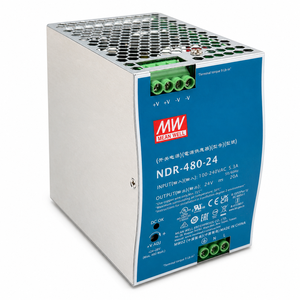
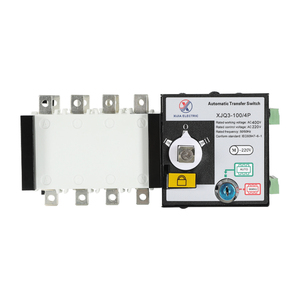
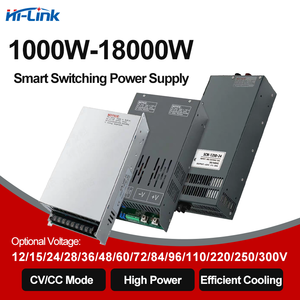
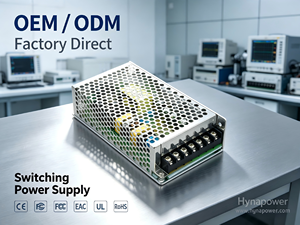
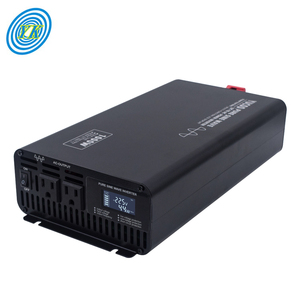
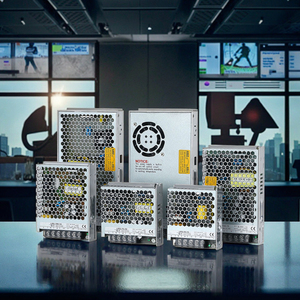
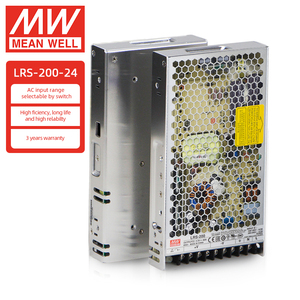

In modern industrial automation, telecommunications, security networks, and electrical switchgear, the Switch Mode Power Supply (SMPS) functions as the critical power infrastructure spine. A momentary voltage drop, unmitigated electromagnetic interference (EMI), or thermal degradation inside a control panel can cause catastrophic downtime across automated assembly lines, security monitoring head-ends, or substation control circuitry. As a specialized OEM/ODM switching power manufacturer backed by over three decades of advanced power electronics development (founded under Sanstar Microsystems Pvt. Ltd.), our engineering team designs and manufactures robust AC-DC converters, DIN rail power supplies, DC UPS systems, and battery chargers tailored to non-standard electrical grid environments.
Unlike standard off-the-shelf commercial power modules built for benign office environments, our industrial-grade power supplies are engineered specifically to tolerate extreme grid fluctuations—operating seamlessly across wide input bands of 90V AC to 290V AC. This structural resilience protects downstream sensitive programmable logic controllers (PLCs), human-machine interfaces (HMIs), surveillance recorders, and fire alarm control units against line surges, neutral breaks, and severe brownout conditions.
Our vertically integrated manufacturing facility in Nagpur features dedicated surface-mount technology (SMT) lines, automated transformer coil winding machinery, anti-static assembly zones, and environmental stress screening chambers. With an engineering-driven operational matrix, we provide global OEM buyers, electrical panel builders, and defense contractors with full parametric customization—ranging from custom pin-out geometries and extended thermal operating boundaries (-40°C to +70°C) to dual redundant battery charging schemes with potential-free relay alarm contacts.
Why system integrators and equipment manufacturers partner with us for mission-critical power conversion.
Custom ferrite core transformer design, planar magnetics, and inductor winding engineered in-house to optimize volumetric power density, minimize core losses, and achieve up to 94% conversion efficiency.
100% incoming component screening, automated Optical Inspection (AOI), high-voltage dielectric isolation testing (up to 3KV AC), and continuous elevated ambient burn-in testing under full rated load.
Products engineered to satisfy strict safety and EMC benchmarks including BIS (IS 13252), CE (EN 62368-1 / EN 55032 Class B), UL 508 / UL 62368-1 standards, and RoHS compliant eco-friendliness.
A technical white paper overview on next-generation power electronics design and topology innovations.
The industrial switching power supply sector is undergoing a fundamental shift from traditional silicon MOSFETs to Wide Bandgap (WBG) power semiconductors, specifically Gallium Nitride (GaN) high-electron-mobility transistors (HEMTs) and Silicon Carbide (SiC) Schottky diodes. GaN devices offer significantly higher electron mobility and lower gate charge (Qg), enabling switching frequencies to scale from standard 65kHz-100kHz limits up to 500kHz and beyond. This dramatic increase in switching frequency allows electrical engineers to reduce the physical volume of passive magnetic components (transformers and output chokes) by 40% to 60%, driving ultra-high power densities exceeding 25 Watts per cubic inch.
Furthermore, Silicon Carbide MOSFETs are becoming the standard choice for high-power industrial converters (1000W to 5000W) due to their superior thermal conductivity and zero reverse recovery charge (Qrr). In high-voltage DC-DC and off-grid inverter applications, SiC devices reduce switching losses by up to 75%, allowing convection-cooled enclosures to operate reliably in harsh ambient environments up to +70°C without requiring noisy active cooling fans that introduce mechanical failure points.
Legacy hard-switched PWM flyback and forward converters are rapidly being superseded in mid-to-high power applications by soft-switched LLC Resonant and Phase-Shifted Full-Bridge (PSFB) topologies. Zero Voltage Switching (ZVS) on the primary side combined with Zero Current Switching (ZCS) or Synchronous Rectification (SR) on the secondary side eliminates turn-on switching losses almost entirely. This topology design yields overall power conversion efficiencies exceeding 94%, significantly lowering thermal dissipation inside sealed industrial NEMA and IP65/67 control enclosures.
| Power Converter Topology | Typical Power Range | Peak Efficiency | Primary Advantages | Target Industrial Application |
|---|---|---|---|---|
| Single-Ended Flyback | 5W - 150W | 82% - 88% | Low component count, cost-effective, multi-output simplicity | Auxiliary bias supplies, CCTV camera power, slim DIN modules |
| Two-Transistor Forward | 100W - 400W | 88% - 91% | Low output ripple current, moderate complexity, robust isolation | Panel-mount SMPS, fire alarm panels, security access control |
| Half-Bridge LLC Resonant | 200W - 1200W | 92% - 95% | ZVS soft switching, high power density, extremely low EMI EMI/RFI | High-end PLC racks, industrial automation, telecommunications |
| Phase-Shifted Full Bridge (PSFB) | 1000W - 5000W+ | 93% - 96% | High power handling, wide load ZVS range, scalable architecture | Substation battery chargers, high-power DC sources, VCB panels |
With stringent global utility regulations such as EN 61000-3-2 Class D, industrial OEM power supplies rated above 75W must integrate active Power Factor Correction (PFC) circuits. Modern power supplies utilize interleaved boost PFC controllers that maintain a power factor greater than 0.98 across wide AC input voltage ranges while simultaneously suppressing Total Harmonic Distortion (THD) below 5%. This clean utility draw prevents harmonic overheating in distribution transformers and neutral conductors. Integrated multi-stage differential and common-mode EMI filter networks ensure compliance with CISPR 32 / EN 55032 Class B limits, protecting surrounding wireless sensors and delicate measurement instrumentation from conductive and radiated electromagnetic noise.
Essential criteria for procurement managers and design engineers evaluating custom switching power supply suppliers.
Evaluating initial unit cost versus long-term operational costs. High-efficiency SMPS modules reduce continuous electrical energy consumption and heat generation inside cabinets, extending the operational lifespan of internal electronics and minimizing service callouts.
Mitigating component risk through dual-sourced critical semiconductors and 100% traceable electrolytic capacitors (tier-1 Japanese brands rated for 105°C / 5,000+ hours). Reliable OEMs maintain safety buffers for long-lead ICs to guarantee uninterrupted batch deliveries.
Eliminating assembly bottlenecks by specifying plug-and-play wiring harnesses, conformal coating (acrylic or silicone) for humid/corrosive industrial environments, and specialized mounting brackets (DIN rail, open-frame, or IP65 sealed enclosures).
When entering long-term supply agreements for custom switching power supplies, procurement teams must ensure that suppliers possess agile R&D teams capable of managing component end-of-life (EOL) engineering changes without invalidating product agency safety certifications. A competent OEM manufacturing partner will issue Form-Fit-Function (FFF) guarantees, providing drop-in replacement designs with updated BOM structures whenever legacy ICs are discontinued.
In addition, global trends emphasize eco-design compliance under frameworks such as the EU ErP Directive (No 278/2009) for no-load standby power consumption (requiring less than 0.15W to 0.5W idle loss). Partnering with a manufacturer capable of integrating intelligent microcontrollers for automatic sleep/wake states and digital power management protocol (PMBus) telemetry equips equipment builders to satisfy evolving green procurement guidelines across North America, Europe, and Asia-Pacific markets.
Technical guidance regarding certifications, custom specifications, MTBF calculations, and environmental stress protection.
Mean Time Between Failures (MTBF) is calculated in accordance with MIL-HDBK-217F Notice 2 standards or Telcordia SR-332 guidelines at a reference ambient temperature of 25°C under full rated electrical load. Reliability calculations incorporate component stress analysis, thermal derating factors (utilizing Japanese 105°C-rated long-life electrolytic capacitors), and worst-case junction temperatures for all power semiconductors. Typical MTBF figures for our industrial DIN rail and panel-mount SMPS series exceed 300,000 to 500,000 hours.
Our product lines are certified or designed in strict accordance with major global regulatory standards: BIS (IS 13252 Part 1) for the Indian market, CE marking under Low Voltage Directive (EN 62368-1) and EMC Directive (EN 55032 Class B, EN 61000-4-2/3/4/5/6/8/11 immune tests), and UL recognized compliance (UL 508 for industrial control equipment and UL 62368-1 for ICT equipment). Fully documented test reports and certificates of conformity are supplied with OEM contracts.
Yes. Our in-house R&D engineering team designs custom multi-stage charging algorithms tailored for Sealed Lead-Acid (SLA), VRLA, Gel, Lithium-Iron-Phosphate (LiFePO4), and Lithium-Ion battery banks. We can integrate automatic temperature-compensated charging, deep-discharge battery cut-off circuitry, reverse polarity protection, and potential-free relay contact signals (Form C) for remote AC Mains Failure and Low Battery alarms directly into your control system.
Standard commercial power supplies fail prematurely when exposed to wide voltage swings and severe brownouts. Micro Power units feature a wide universal AC input topology (typically 90V AC to 290V AC continuous operation) with integrated transient voltage surge suppressors (TVSS) and metal oxide varistors (MOVs) capable of absorbing high-energy spikes (up to 4KV/8KV surge withstand). This ensures unbroken regulated DC output even during severe utility grid disturbances.
Our industrial SMPS designs utilize multi-layered thermal defense architectures: aluminum extrusion heat sinks with high thermal interface material (TIM) contact, automatic over-temperature protection (OTP) via thermal thermistors that trigger auto-recovery shutdown if internal heatsink temperature exceeds 85°C, and conservative power component derating curves (delivering 100% continuous power at +50°C and linear derating up to +70°C ambient).
For semi-custom modifications (such as custom output voltage tuning, non-standard wire harness attachment, or custom enclosure labeling), MOQs start at modest volume levels (typically 100 to 500 units) with zero to minimal Non-Recurring Engineering (NRE) fees. Fully custom turn-key ground-up power supply developments undergo schematic capture, PCB layout, rapid 3D-printed enclosure prototyping, and compliance pre-testing under transparent NRE and batch production agreements.
Partner with an experienced industrial power supply manufacturer. Send us your electrical parameters, load characteristics, mechanical constraints, and target target compliance standards—our senior application engineers will respond within 24 hours.