
As a specialized OEM Rectifier Module Factory and Tier-1 Industrial Supplier, Sanstar Microsystems (Micro Power) delivers advanced power electronic architectures engineered to operate reliably under extreme grid instability, high thermal stress, and stringent electromagnetic requirements. Our end-to-end design, surface-mount manufacturing, transformer magnetics winding, and automated testing guarantee zero-defect integration for critical telecommunications, smart grid sub-stations, automated machine tools, and diesel generator control architectures.
Fully compliant with BIS (IS 13252), CE EMC/LVD directives, and UL specifications. Built to satisfy international isolation and safety creepage clearances.
Engineered to handle severe grid voltage spikes and brownouts (90V–290V AC input window) with integrated transient surge protection devices (SPD).
Integrated active diode OR-ing modules and hot-swappable bus architectures ensuring continuous uninterrupted operational uptime for mission-critical systems.
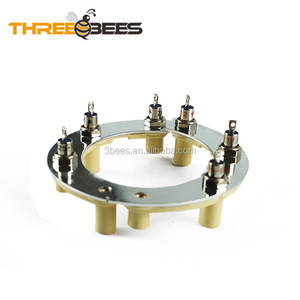
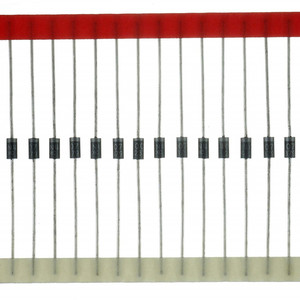
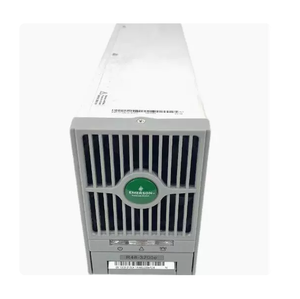
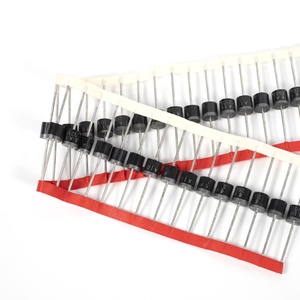
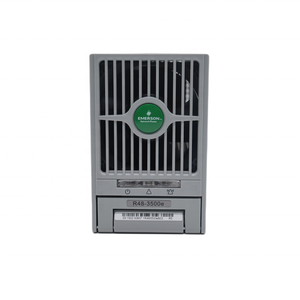
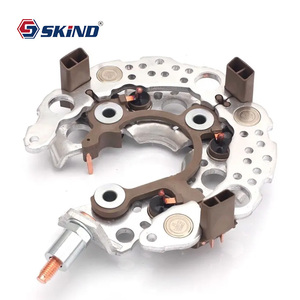
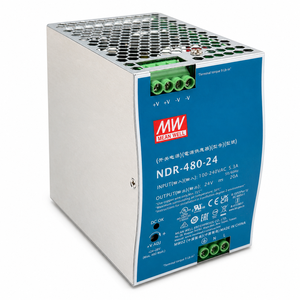
Explore our off-the-shelf and customizable rectifier units, ranging from high-power telecom switch-mode rectifiers to automotive generator bridge diodes and industrial DIN-rail power modules.
The industrial power electronics industry is undergoing a paradigm shift driven by wide-bandgap (WBG) semiconductors, digital control loops, and unprecedented power density requirements.
Traditional silicon-based diode rectifiers and MOSFET switches are reaching physical thermal and switching speed limitations. The industry-wide transition toward Silicon Carbide (SiC) Schottky barrier diodes and Gallium Nitride (GaN) power switches allows custom OEM rectifier modules to achieve switching frequencies above 200 kHz. This dramatically reduces magnetic component volumes, cuts thermal losses by up to 40%, and enables peak efficiency benchmarks exceeding 96.5%.
Cabinet space in modern edge data centers, industrial control panels, and smart substations commands a premium. Future OEM rectifier designs utilize multi-layer PCB planar transformers, direct bonded copper (DBC) substrates, and forced air or cold-plate liquid cooling channels to maximize volumetric power density without compromising Mean Time Between Failures (MTBF).
Analog feedback loops are rapidly being replaced by high-speed Digital Signal Processors (DSP) and ARM Cortex microcontroller architectures. Modern custom rectifiers export telemetry data—including input RMS voltage, power factor, output ripple, component temperature, and operational lifetime estimates—over PMBus, CANbus, or MODBUS RTU interfaces for real-time predictive maintenance integration.
With power quality regulations enforcing strict Total Harmonic Distortion (THD < 5%) limits on commercial and industrial grids, advanced bridgeless totem-pole active PFC topologies are becoming standard. This minimizes reactive power penalties and eliminates severe harmonic pollution on shared distribution transformers.
Whether you require custom 48V telecom switch-mode power supplies, high-current automotive bridge rectifiers, or industrial DIN-rail chargers, our R&D engineering team provides fast-turn turn-key prototype samples tailored to your exact voltage, enclosure, and thermal footprint.
Request OEM Customization ProposalSystem integrators and OEM procurement executives are restructuring their supply chain strategies to mitigate global disruptions and satisfy lifecycle cost metrics.
Procurement teams are shifting focus from initial unit purchasing cost to total lifecycle operating expenditures. A 2% improvement in rectifier efficiency saves thousands of kilowatt-hours annually per cabinet, offsetting capital costs within 18 months.
Global equipment manufacturers are diversifying beyond single-region component sourcing. Partnering with certified manufacturers offering fully integrated in-house magnetic design, PCB assembly, and burn-in testing ensures supply chain resilience.
Environmental standards such as RoHS 3, REACH, and WEEE compliance are non-negotiable procurement criteria. Modern rectifiers utilize lead-free soldering processes and halogen-free substrate materials to simplify global disposal compliance.
Compare standard OEM baseline architectures against custom-engineered power rectifier specifications available for mass manufacturing.
| Electrical & Physical Parameter | Standard Industrial Baseline | Custom OEM Advanced Specification |
|---|---|---|
| Input Voltage Range | 180V – 260V AC Single Phase | 90V – 290V AC Universal Wide Input / 3-Phase 415V AC |
| Peak Conversion Efficiency | 88% – 92% | 94% – 96.8% (SiC Bridgeless Totem-Pole PFC Topology) |
| Power Factor (PFC) & THD | PFC > 0.92, THD < 12% | Active PFC > 0.99 at full load, THD < 3.5% |
| Operating Temperature Range | -10°C to +50°C continuous | -40°C to +75°C (With Intelligent Thermal Derating) |
| Cooling Mechanism | Standard Internal Fan Cooling | Convection conduction cold-plate / Low-noise IP55 fan |
| Communication Telemetry | Dry Contact Relay Alarm Outputs | PMBus v1.3, CAN 2.0B, MODBUS RS485, SNMP Web Management |
| Isolation & Protection | 1.5kV AC Input-to-Output | 3.0kV AC Galvanic Isolation, OVP, OCP, OTP, Reverse Polarity |
Detailed technical answers to common questions asked by electrical engineers, system integrators, and B2B procurement managers.
Contact our application engineering team today to review your electrical schematics, request custom product samples, or obtain factory-direct wholesale quotations for your upcoming project.
Send an Inquiry