
Explore our certified range of wall-mount, desktop, and industrial switching AC/DC power adapters customized for global deployment.
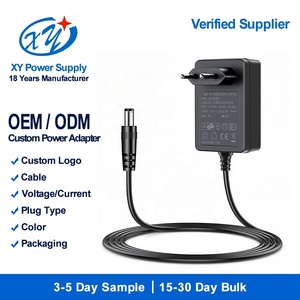
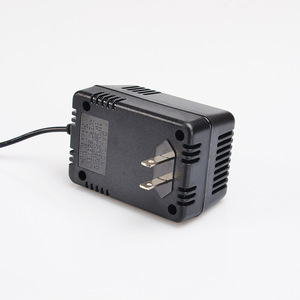
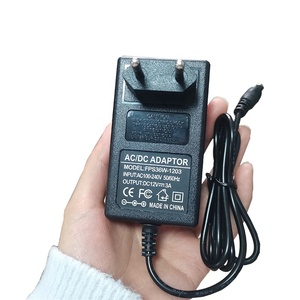
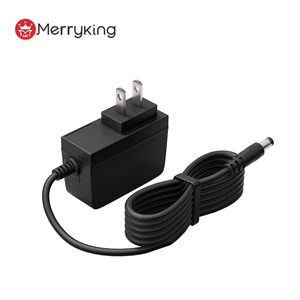
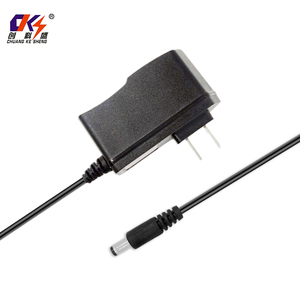
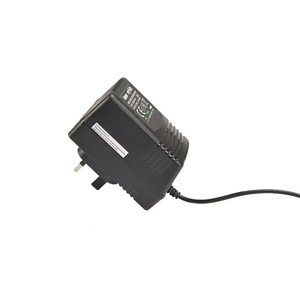
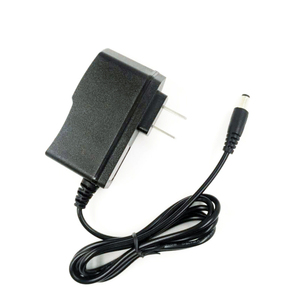
In contemporary industrial, commercial, and consumer electronics manufacturing, the external AC/DC power adapter is no longer viewed merely as a commodity accessory. It stands as the initial line of defense for system stability, overall energy efficiency, and operational safety. Selecting the right Custom OEM AC Adapter Factory and Supplier requires evaluating core engineering capabilities, structural thermal management, electrical protection topologies, and international regulatory compliance frameworks.
As electronic systems grow more compact and power-dense, original equipment manufacturers (OEMs) and original design manufacturers (ODMs) face intense pressure to source AC/DC converters that deliver low idle power loss, minimal ripple voltage, high electromagnetic compatibility (EMC), and robust grid transient protection. A sub-standard power supply introduces systemic risks including premature field failures, fire hazards, radio frequency interference, and multi-market regulatory compliance rejections.
With over 30 years of specialized expertise in switch mode power supply (SMPS) development, our manufacturing ecosystem seamlessly integrates in-house magnetic transformer winding, automated SMT surface mounting, anti-static sub-assembly lines, and rigorous functional testing. Every power adapter produced is engineered around three foundational commitments:
Custom output voltage profiles (3V to 48V DC), tailored wire gauges, barrel connector configurations, and proprietary enclosure tooling tailored to your product aesthetics.
Every batch undergoes 100% full-load thermal burn-in under elevated ambient temperatures, paired with 3750V AC high-voltage isolation testing before dispatch.
Integrated wide-range primary switching ICs accommodate global grid variations, voltage surges, brownouts, and severe electromagnetic spikes common in developing regions.
Choosing between wall-mount and desktop form factors depends on mechanical weight distribution, power rating thresholds, grounding requirements, and user interaction profiles. Below is our engineering technical reference matrix:
| Electrical & Mechanical Parameters | Wall-Mount AC Adapter (EU/US/UK/AU) | Desktop AC Adapter (Class I & Class II) |
|---|---|---|
| Typical Wattage Range | 2.5W to 36W Continuous Output | 36W to 300W High-Density Output |
| Input Voltage Tolerance | 90V – 264V AC (Up to 290V Extended) | 90V – 264V AC with Active PFC (>0.95) |
| Topologies Applied | Quasi-Resonant Flyback / QR SMPS | LLC Resonant / Active Clamp Flyback |
| Energy Efficiency Standard | DOE Level VI / CoC Tier 2 Compliant | DOE Level VI / ErP Lot 6 / 80 PLUS Equivalent |
| Safety Isolation Voltage | 3000V AC to 4242V DC Primary to Secondary | 3750V AC Isolation (Primary-to-Ground/Secondary) |
| Protection Protocols | OVP, OCP, SCP, Auto-Recovery OTP | OVP, OCP, SCP, Latch-Off/Auto OTP, Surge 4kV |
The power electronics landscape is undergoing a structural transition driven by decarbonization policies, silicon carbide (SiC) and gallium nitride (GaN) semiconductor integration, and demanding international energy efficiency mandates. OEMs developing next-generation devices must account for several technical shifts:
Gallium Nitride (GaN) field-effect transistors allow power adapters to switch at significantly higher frequencies (up to hundreds of kilohertz) compared to traditional silicon MOSFETs. This reduction in switching losses allows magnetics (transformers and inductors) to shrink radically while achieving efficiencies exceeding 93%. The result is a compact footprint with high power output, redefining portable power for high-end laptops, medical monitors, and industrial field tools.
Legacy fixed-voltage power supplies are giving way to programmable AC/DC power adapters. Utilizing protocol controller ICs supporting USB Power Delivery (USB-PD 3.1) and Extended Power Range (EPR), dynamic adaptation yields variable voltages from 5V up to 48V DC. Smart voltage negotiation prevents overcharging, balances thermal loads inside host devices, and standardizes multi-device powering standardizations.
Regulatory authorities worldwide—including the US Department of Energy (DOE Level VI), the European Union’s Eco-Design Directive, and China’s CCC mandates—strictly enforce standby power consumption thresholds below 0.075W (75mW). OEM factories must integrate advanced burst-mode controllers and green-mode PWM ICs that throttle switching frequencies under light or zero-load conditions.
Global supply chain volatility has restructured how procurement directors evaluate AC adapter supply partners. Sourcing strategies are moving away from purely low-cost single-country vendors toward resilient, certified manufacturing hubs emphasizing total operational transparency.
Leading buyers require suppliers to maintain unified safety certificates (UL 62368-1, CE, GS, TUV, PSE, KC, BIS, RCM) under a single master engineering framework, eliminating multi-market certification delays.
Enterprise procurement now tracks Scope 3 carbon emissions. Forward-thinking AC adapter factories utilize Post-Consumer Recycled (PCR) poly-carbonate plastics for adapter housings and enforce halogen-free PCB manufacturing.
Enterprise clients demand real-time visibility into raw material safety stocks, transformer copper wire price indexing, and automated production batch traceability linked directly to lot-number barcodes.
Customizing an external power adapter involves a methodical engineering verification pipeline to guarantee compliance, electrical performance, and mechanical integration before tooling mass production:
Step 1: Electrical Parameter Specification: Defining nominal output voltage, max continuous load current, peak surge current handling, load regulation tolerances, and acceptable ripple/noise limits (typically <100mVp-p).
Step 2: Mechanical Housing & Plug Standard Selection: Choosing fixed wall-mount blades (US, EU, UK, AU, CN) or interchangeable AC plug adapters. Outer casing materials are specified as flame-retardant 94V-0 grade UL PC/ABS resins.
Step 3: PCB Topology & Magnetic Transformer Customization: In-house engineering teams calculate transformer core gaps, primary-secondary turn ratios, triple-insulated wire layers, and primary EMI filter stages (X/Y capacitors, common-mode chokes).
Step 4: Golden Sample Prototyping & Laboratory Validation: Engineering samples undergo thermal mapping via infrared thermography, EMI chamber scanning, cold-start surge tests, drop testing (1 meter onto hardwood), and cable flex endurance checks (minimum 5,000 cycles under load).
Step 5: Mass Production & 100% Automated Testing: Mass manufacturing leverages Automated Optical Inspection (AOI), high-voltage dielectric isolation testing, and automated burn-in racking prior to final ultrasonic housing sealing.
Our OEM AC adapters can be customized and delivered with comprehensive international safety certifications including UL/cUL (IEC 62368-1 standard), CE (LVD & EMC Directives), GS, TUV, PSE, KC, RCM, BIS (IS 13252), and RoHS/REACH environmental compliance. Every batch includes full documentation for seamless customs clearance and retail distribution.
We provide comprehensive end-to-end customization, including tailor-made DC output voltages (e.g., 3V, 5V, 9V, 12V, 15V, 19V, 24V, 36V, 48V), non-standard current ratings, custom DC barrel jack dimensions (5.5x2.1mm, 5.5x2.5mm, USB Type-C, DIN connectors), custom cable lengths and wire gauges (AWG), laser-engraved corporate branding, customized color schemes, and tailored box packaging.
Engineered with wide AC input topologies (90V to 264V AC standard, with extended tolerance up to 290V AC), our power supplies integrate heavy-duty metal oxide varistors (MOVs) and advanced primary PWM controller ICs. This architecture mitigates brownouts, voltage surges, and utility grid instability, preventing damage to downstream sensitive electronics.
Every single power adapter undergoes 100% automated testing, including primary-to-secondary high-voltage dielectric isolation testing (Hi-Pot up to 3750V AC), short-circuit protection verification, output voltage precision calibration under zero and full load, and high-temperature thermal burn-in aging under full load conditions.
For standard catalog models, our typical MOQ starts at 500 to 1,000 units per batch. For custom OEM/ODM tooling or non-standard electrical profiles, custom engineering samples are provided within 5 to 7 business days following schematic approval, with mass production lead times ranging between 15 and 25 calendar days.
Ready to upgrade your system’s power efficiency, secure global safety certifications, and optimize your procurement unit economics? Speak directly with our power supply application engineers today.