
Certified AC-DC converters, switched-mode float chargers, DIN-rail automation modules, and high-power industrial power packs for global B2B procurement.
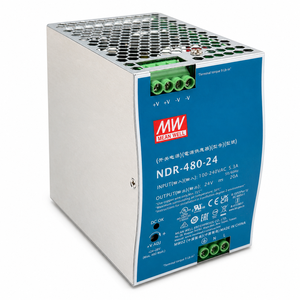
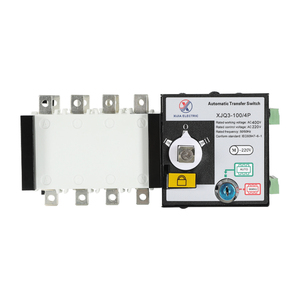
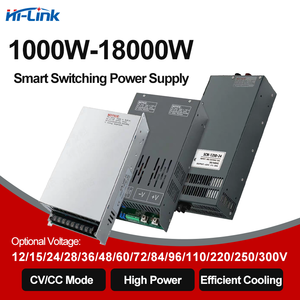
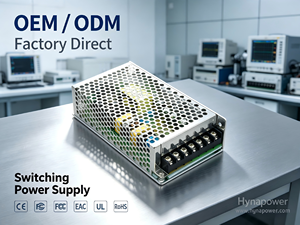
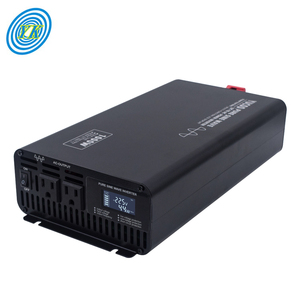
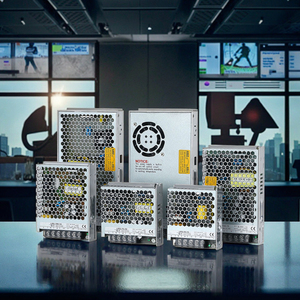
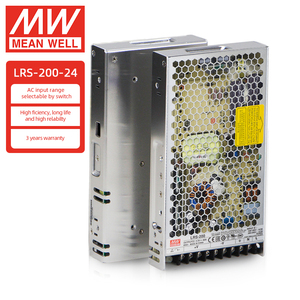

Understanding high-frequency switch-mode float chargers, custom power topology, and thermal protection protocols for mission-critical infrastructure.
In-house designed high-frequency transformers and planar magnetics ensure low electromagnetic interference (EMI), tight voltage regulation, and ripple factor lower than 0.5% RMS under full industrial loads.
Advanced digital microcontrollers dynamically transition between Constant Current (CC), Constant Voltage (CV), and Float Stage, preventing thermal runaway in VRLA, AGM, and LiFePO4 battery banks.
Every industrial unit undergoes 100% automated optical inspection (AOI), high-pot isolation testing (3KVAC input-to-output), and continuous elevated-temperature full-load burn-in screening.
Float chargers serve as the critical power backbone for continuous industrial automation, substation switchgear operation, diesel generator AMF panels, telecommunications backup nodes, and safety surveillance infrastructures worldwide. Unlike standard commercial off-the-shelf AC-DC power adapters, industrial float chargers must deliver continuous power to DC loads while concurrently maintaining secondary storage batteries at an optimal state of charge (SoC) without causing electrolyte gassing, plate sulfation, or thermal runaway.
As global industries transition toward smart grids, renewable micro-grids, and decentralized automation, the technical performance benchmarks required of China wholesale float charger manufacturers have evolved drastically. Industrial buyers and OEM system integrators can no longer rely on legacy linear charging architectures. Modern industrial applications mandate high-efficiency switch-mode power supply (SMPS) topologies featuring active Power Factor Correction (PFC), wide dynamic input voltage tolerance, sub-percent output voltage ripple, and modular redundancy capabilities.
When procuring industrial float chargers in bulk from qualified Chinese manufacturers, engineering procurement managers must evaluate the core power conversion architecture. Historically, phase-controlled thyristor (SCR) chargers dominated sub-station switchgear and power utility sectors due to their brute-force ruggedness. However, modern high-frequency SMPS float chargers have fundamentally displaced SCR units across 90% of industrial applications due to superior efficiency, significantly reduced physical envelope, and ultra-fast dynamic transient recovery times.
| Performance Characteristic | High-Frequency SMPS Float Charger | Legacy SCR / Thyristor Float Charger | Direct Impact on B2B Procurement |
|---|---|---|---|
| Power Conversion Efficiency | 91% – 95.5% Peak | 70% – 82% Typical | SMPS reduces operational thermal dissipation, enabling smaller enclosure footprints. |
| Power Factor (PFC) | > 0.98 (Active PFC) | 0.65 – 0.75 (Lagging) | Lowers utility penalty charges and minimizes harmonic distortion (THD < 5%). |
| Output DC Voltage Ripple | < 0.5% RMS (Tight Regulation) | 2% – 5% RMS (High Noise) | Low ripple extends battery service life by eliminating AC micro-cycling heating. |
| Transient Response Time | < 1 ms for 50% Step Load | 100 ms – 300 ms | Ensures PLC and digital sensor stability during sudden switchgear breaker operation. |
| Enclosure Weight & Volume | Ultra-Compact / DIN Rail Mount | Heavy / Wall-Cabinet Floor Stand | Drastically lowers freight logistics costs from Chinese manufacturing hubs. |
The primary duty of an industrial float charger is maintaining battery health over years of continuous float service. Lead-acid variants (including VRLA, AGM, and Gel) alongside modern Lithium Iron Phosphate (LiFePO4) chemistries possess extremely strict charge voltage windows. Overcharging by as little as 100mV per cell at elevated ambient temperatures accelerates grid corrosion and water loss, reducing battery operational lifespan from a design-life of 10 years down to less than 3 years.
Leading Chinese custom float charger manufacturers integrate analog and digital temperature compensation sensors directly into the feedback control loop. The float voltage is automatically modulated according to the negative temperature coefficient (typically -3mV/°C/cell for VRLA). When ambient temperatures rise within outdoor CCTV enclosures, remote telecom cabinets, or engine room generator control panels, the charger decreases its terminal float voltage to suppress current runaway. Conversely, under freezing ambient conditions, the float voltage is elevated to ensure full battery capacity replenishment.
As international supply chains optimize for sustainability, operational reliability, and digital industrialization (Industry 4.0), the global procurement strategy for industrial battery chargers and SMPS modules is undergoing three massive structural shifts:
The next frontier in OEM float charger engineering centers on the deployment of Wide-Bandgap (WBG) power semiconductors, specifically Silicon Carbide (SiC) MOSFETs and Gallium Nitride (GaN) high-electron-mobility transistors (HEMTs). By replacing traditional Silicon (Si) power switches, Chinese OEM manufacturers are reaching unprecedented levels of power density and energy efficiency.
SiC and GaN devices permit switching frequencies to exceed 200kHz to 500kHz without suffering severe capacitive switching losses. Higher operating frequencies dramatically shrink the physical size of inductors, transformers, and output filter capacitors. The result is a new generation of industrial float chargers that are 40% smaller by volume, emit significantly less heat, and maintain peak efficiency profiles exceeding 95% across a wide load spectrum (from 25% load up to 100% full rating).
Integrating 30+ years of domain expertise in power electronics with an agile enterprise framework, rigorous quality control, and complete OEM/ODM technical customization.
Engineered to operate continuously across fluctuating industrial grid voltages (90V AC to 290V AC), ensuring unbroken power delivery in unstable rural power grids or heavy industrial environments subject to voltage sags and line transients.
Built-in active protections against output short-circuits, continuous overload current limiting, over-voltage clamp protection, reverse battery polarity protection, and thermal shutdown under over-temperature conditions.
Full component traceability from certified tier-1 semiconductor vendors down to passive MLCCs. 100% anti-static shop floor assembly backed by women-led quality inspection teams overseeing incoming material screening.
Direct technical answers addressing international standards, custom engineering, float charge physics, and factory verification procedures.
A standard SMPS (Switch-Mode Power Supply) provides a fixed, single-voltage DC rail designed to power steady resistive or inductive electronic loads. It typically lacks secondary current-limiting loops, battery temperature compensation, and reverse polarity protection. A Float Charger is specifically optimized to charge a standby battery while simultaneously supplying continuous current to connected system loads. When the mains power fails, a float charger setup (or DC-UPS system) seamlessly allows the battery bank to feed the load without a single millisecond of phase interruption or voltage dip.
Our complete power supply catalog, including DIN rail mounting series, aluminum chassis units, and DC-UPS modules, can be manufactured in strict accordance with BIS (IS 13252), CE (EN 62477-1 / EN 61000-6-2/4 for EMC industrial immunity), FCC Part 15, and UL 508 / UL 1236 standards. Every single batch is subjected to 100% full-load high-voltage dielectric isolation testing (hipot) and thermal burn-in screening prior to export shipping.
Yes. Our in-house research & development engineering team specializes in custom OEM/ODM solutions. We routinely design custom non-standard DC output rails (such as 12V, 24V, 36V, 48V, 72V, 110V, and 220V DC), dual redundant charging topologies with built-in active OR-ing diodes, potential-free dry alarm contacts, specialized IP65 outdoor enclosures, and custom mechanical mounting brackets tailored to your panel footprint.
High AC ripple voltage overlaying the DC float rail generates micro-charging and micro-discharging cycles inside the battery cells. This parasitic cycling increases internal battery temperature, accelerates positive plate corrosion, and causes irreversible cell capacity degradation. Our industrial float chargers utilize multi-stage L-C filtering and active high-frequency control loops to ensure output ripple voltage remains strictly under < 0.5% RMS, maximum extending battery service lifetime.
Our industrial power products are designed with wide AC input operating windows (typically 90V to 264V/290V AC universal input). They feature integrated metal oxide varistors (MOVs) for surge suppression against lightning strikes and switching transients, combined with auto-recovery under-voltage lockout (UVLO) and over-voltage protection (OVP) circuits that protect internal semiconductors from severe line surges.
Single-phase input float chargers (110V/220V/230V AC) are ideal for power requirements up to 1.5kW to 3kW, such as CCTV control panels, small telecom sites, fire alarm control units, and low-power automation control cabinets. For higher capacity installations exceeding 3kW up to 50kW (e.g., major electrical substation switchyards, continuous industrial process plants, and large data center generator backup banks), a three-phase input system (380V/400V/415V AC) is required to ensure balanced phase loading and higher operational efficiency.
Standard catalog products and evaluation samples are typically dispatched within 3 to 7 working days. For custom OEM/ODM production runs involving proprietary magnetic transformer winding, specialized PCB layouts, or specific certification compliance documentation, standard mass-production lead time ranges between 2 to 4 weeks depending on batch volume and shipping logistics options.
Partner directly with experienced Chinese power supply designers and wholesale manufacturers. Contact our application engineering team today to review your electrical schematics, thermal specifications, and bulk procurement target pricing.