
Precision-engineered, 100% burn-in tested AC/DC, DC/DC current converters and industrial power modules designed for extreme grid stability and mission-critical applications.
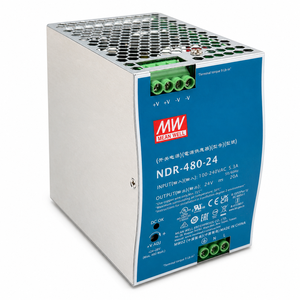
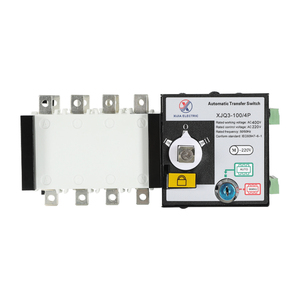
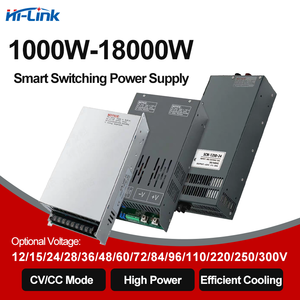
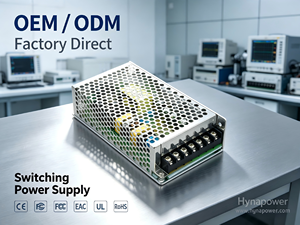
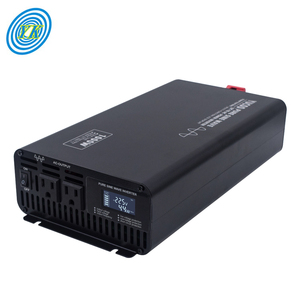
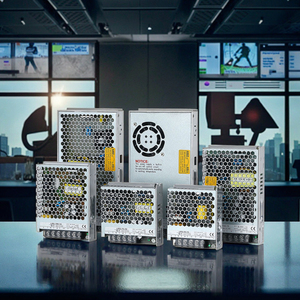
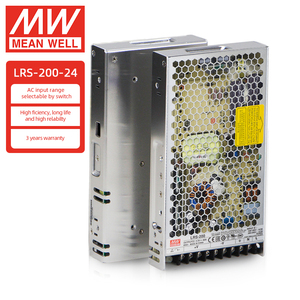

As a leading Chinese manufacturer and global exporter of industrial power supplies and current converters, our operational paradigm is rooted in rigorous engineering standards, complete vertical integration, and continuous power topology innovation. Our state-of-the-art manufacturing campus features fully automated Surface Mount Technology (SMT) assembly lines, automated optical inspection (AOI), and anti-static ESD-protected assembly environments designed specifically to mitigate micro-defect occurrences during high-frequency pulse transformer and switching diode placement.
Every current converter, DIN rail SMPS, and AC/DC module engineered in our facility undergoes a stringent quality control lifecycle. Before any batch moves to fulfillment, units are subjected to 100% full-load thermal burn-in testing under elevated ambient conditions, high-voltage isolation breakdown tests (up to 3KVAC input-to-output isolation), and dynamic step-load transient response verification. This uncompromising commitment guarantees that our equipment operates flawlessly within volatile electrical environments, such as heavy industrial manufacturing plants, telecommunication towers, and smart power distribution grids.
Complete control over core transformer winding, choke coil design, circuit board layout, and firmware tuning for customized DC voltage conversion.
Triple-stage incoming raw component screening, automated SMT inspection, and 100% heat-chamber burn-in protocol for zero-defect shipment.
Fully compliant with UL62368-1, CE EN55032 Class B EMC standards, BIS (IS 13252), FCC Part 15, and RoHS environmental directives.
The global industrial power electronics market is undergoing a seismic shift driven by automation, renewable energy integration, industrial Internet of Things (IIoT), and stringent global energy efficiency mandates. B2B procurement managers and systems integrators are no longer looking purely at unit cost; the focus has radically pivoted toward Total Cost of Ownership (TCO), long-term operational MTBF (Mean Time Between Failures), and environmental resilience.
Traditional silicon-based MOSFET switching devices are fast approaching their physical limits regarding switching frequency and thermal dissipation. Next-generation wholesale current converter sourcing heavily prioritizes Gallium Nitride (GaN) and Silicon Carbide (SiC) power switches. These wide-bandgap materials allow converters to operate at higher switching frequencies (above 500 kHz) while dramatically reducing switching power losses. For system integrators, this translates to power converters that are up to 40% smaller in volume while achieving peak energy efficiencies exceeding 94% to 96%.
Downtime in industrial automation, data center power infrastructure, and telecom base stations incurs exponential costs. Future procurement specifications increasingly demand modular N+1 redundancy architectures. Current converters designed with integrated active OR-ing diodes and hot-swappable rack-mount chassis permit seamless maintenance and capacity expansion without interrupting the continuous DC bus powering PLCs, switchgear relays, or network control cabinets.
With global climate volatility and transitioning power grids, voltage sags, surge transients, and frequency fluctuations are increasingly frequent. Global buyers are favoring current converters capable of handling ultra-wide input voltage envelopes (e.g., 85–305 VAC continuous input) without requiring manual tap-changing or derating. Integrated active Power Factor Correction (PFC) circuitry capable of achieving a power factor of >0.98 across varying load spectra is now a baseline requirement for high-end procurement contracts.
| Performance Metric | Legacy Linear Power Supply | Standard Silicon SMPS | Next-Gen GaN/SiC Current Converter |
|---|---|---|---|
| Typical Conversion Efficiency | 50% – 65% | 80% – 88% | 94% – 97% |
| Power Density (W/in³) | 0.5 – 1.5 W/in³ | 5.0 – 12.0 W/in³ | 20.0 – 45.0 W/in³ |
| Thermal Dissipation Loss | Very High (Requires large heatsinks) | Moderate (Forced air/convection) | Ultra-Low (Passive / Conduction cooled) |
| Input AC Voltage Range | Fixed (±10% narrow tolerance) | 90–264 VAC standard | 85–305 VAC Universal with Active PFC |
| Mean Time Between Failures (MTBF) | ~50,000 Hours | ~150,000 Hours | >350,000 Hours (MIL-HDBK-217F) |
The transformation of AC to DC and DC to DC current converters has evolved from rudimentary linear transformer step-down systems to high-frequency digitally controlled resonance topologies. Modern industrial applications require high current stability, negligible ripple voltage, dynamic thermal protection, and robust Electromagnetic Compatibility (EMC).
Conventional hard-switching Pulse Width Modulation (PWM) topologies experience significant capacitive turn-on losses and inductive turn-off stress. Our advanced power converter series incorporates LLC Half-Bridge Resonant Topologies operating in conjunction with Zero Voltage Switching (ZVS) mechanisms. By soft-switching the primary MOSFETs exactly at the zero-voltage crossing point, electromagnetic interference (EMI) radiated emissions are suppressed at the hardware level, drastically reducing reliance on heavy line-filter inductors while boosting full-load operating efficiency.
Analog feedback loops rely on optocouplers and discrete operational amplifiers which are susceptible to temperature drift and component aging. Modern current converters are transitioning toward micro-controller-driven digital control loops utilizing high-speed Digital Signal Processors (DSPs). Integrated telemetry via standardized communications protocols—such as PMBus, Modbus RTU, or CANbus—enables industrial operators to remotely monitor real-time output current, terminal voltage, internal thermal junction readings, and total operating hours. Predictive maintenance algorithms can detect subtle shift patterns in electrolytic capacitor Equivalent Series Resistance (ESR) before catastrophic field failure occurs.
Thermal stress remains the primary point of degradation for electrolytic capacitors and high-frequency magnetics. Our specialized industrial power converter lines utilize aluminum heat-sink extrusion housings coupled with high thermal conductivity polyurethane or silicone potting materials. This structure provides dual benefits: superior thermal dissipation without requiring noisy mechanical cooling fans (enabling IP67 sealed fanless operation) and absolute mechanical protection against high-vibration environments typical of railway traction power, mining equipment, and heavy machinery automation.
Direct technical and commercial guidance compiled by our senior power application engineers to streamline your sourcing and evaluation workflow.
Choosing the correct power equipment partner directly dictates your downstream equipment reliability, customer satisfaction, and field maintenance expenditures. Over three decades of dedicated power engineering expertise equips our manufacturing hub with unmatched operational resilience and competitive advantages:
Contact our engineering sales engineers today to discuss your target electrical specifications, sample requests, OEM custom requirements, or bulk wholesale pricing structures.
Send an Inquiry