
Heavy-duty online double-conversion architectures, modular power packs, and customized voltage solutions.
Years Power Electronics Mastery
Target Availability Architecture
Full-Load Burn-in Tested
Certified Quality Manufacturing
In modern industrial operations, electrical power quality is directly correlated with operational throughput, process safety, and capital equipment longevity. Unlike commercial IT environments, industrial facilities subject electrical infrastructure to extreme stress vectors: non-linear motor loads, high-inrush inductive currents, severe harmonic distortion (THDi), dynamic voltage sags, phase imbalances, and aggressive ambient particulate contamination.
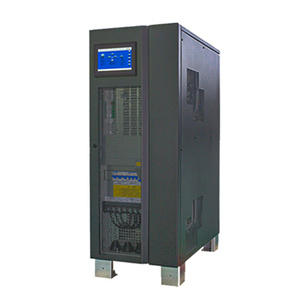
As a leading China Top Industrial UPS Manufacturer & Supplier, our engineering philosophy is built around high-reliability Online Double-Conversion (VFI-SS-111) topology combined with ruggedized galvanic isolation. Operating on over three decades of OEM power electronics heritage, our industrial Uninterruptible Power Supply (UPS) systems act as an infallible power buffer between unstable utility grids and mission-critical assets—such as SCADA nodes, Distributed Control Systems (DCS), Programmable Logic Controllers (PLCs), high-voltage switchgears, and automated assembly lines.
Built-in output transformers isolate sensitive loads from DC bus noise, utility ground loops, and severe common-mode voltage spikes.
Operates seamlessly across ultra-wide AC input ranges (90V–290V AC single phase / 304V–478V AC three phase) without draining energy storage cells.
Advanced dual-core Digital Signal Processor (DSP) regulation guarantees instantaneous voltage correction, ultra-low harmonic distortion (THDv < 1%), and precise active power factor correction.
Selecting the appropriate UPS topology for heavy manufacturing, chemical processing, thermal power stations, or oil & gas refineries requires a detailed comparison of physical physics, fault current dynamics, and operational thermal dissipation.
| Evaluation Parameter | Industrial Transformer-Based UPS | High-Efficiency Modular Transformerless UPS |
|---|---|---|
| Primary Topology | Online Double Conversion + Inverter Isolation Transformer | Modular Hot-Swappable Inverter Modules (SiC/IGBT) |
| Electrical Isolation | Full metallic physical galvanic isolation from DC bus & bypass | Non-isolated (Requires external isolation transformers if needed) |
| Inrush Fault Clearing | Exceptional (Clears high inductive inrush without switching to bypass) | Moderate (Relies on fast electronic bypass switching) |
| Ingress & Environmental Rating | IP31 / IP42 / IP52 with forced-air/convection cooling channels | IP20 / IP30 standard datacenter rack mounting |
| Mean Time to Repair (MTTR) | Component-level repair (30-60 mins by certified technicians) | Modular hot-swappable module replacement (< 5 mins) |
| Optimal Application | Steel mills, chemical plants, substations, marine & offshore platforms | Process control centers, server rooms, cleanroom automation |
The global industrial power electronics market is undergoing a seismic structural transition. Procurement directors, plant electrical engineers, and EPC contractors are moving beyond basic initial purchase price metrics toward total lifecycle energy economics, decarbonization targets, and digital ecosystem integration.
While Valve-Regulated Lead-Acid (VRLA) batteries remain historically prevalent due to initial capital cost, industrial procurement is rapidly pivoting to high-density Lithium Iron Phosphate (LFP) energy storage system (ESS) integrations. LFP systems provide 3x to 5x greater cycle life (3000+ cycles at 80% DOD), a footprint reduction of up to 60%, and ambient operating resilience up to 45°C without severe battery degradation. Integrated Smart Battery Management Systems (BMS) directly communicate over Modbus RTU or BACnet protocols to deliver real-time state-of-charge (SOC) and state-of-health (SOH) analytics.
The substitution of traditional Silicon IGBTs with wide-bandgap Silicon Carbide (SiC) MOSFETs allows industrial UPS systems to operate at significantly higher switching frequencies. This technical evolution reduces physical magnetics volume while pushing double-conversion operating efficiency beyond 97.5%. In ECO operating modes, advanced phase-sensing switches achieve 99% operational efficiency without sacrificing zero-transfer-time static switch response during line power collapse.
Modern industrial UPS installations are transforming from passive backup assets into active revenue-generating grid stability components. Through bidirectional power conversion software, UPS systems connected to localized industrial battery banks can provide frequency regulation, peak shaving, and demand response services to regional electrical grids while preserving reserved autonomy capacity for facility protection.
Procurement criteria now mandate native IoT connectivity. Advanced industrial UPS cabinets incorporate multi-point sensor arrays tracking internal DC bus capacitor ripple currents, IGBT junction temperature trends, fan bearing acoustic vibration, and ambient humidity profiles. Neural networks analyze these parameters in real time to forecast component wear months before an operational failure can occur.
Drawing upon over 30 years of specialized power-electronics R&D and production excellence, our manufacturing facilities combine rigorous European/US compliance standards (CE, UL, BIS) with localized China supply-chain efficiency.
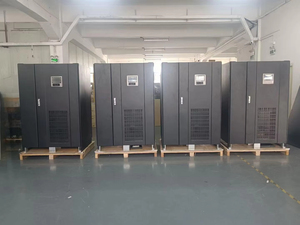
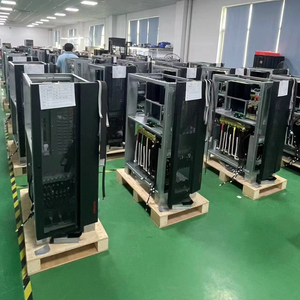
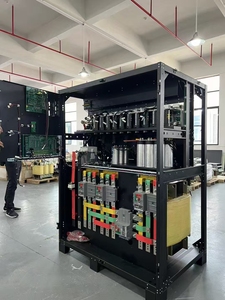
Every industrial UPS unit leaving our facility undergoes a comprehensive 100% full-load high-voltage burn-in testing regime inside environmentally controlled burn-in chambers. From custom magnetics winding to surface-mount PCB assembly (SMT) and anti-static dipping for conformal coating, our manufacturing process eliminates early component mortality and guarantees field performance in dusty, humid, or electrically noisy industrial plants.
Every system undergoes full-load thermal stress testing and high-potential dielectric voltage withstand testing before dispatch.
Tailored input/output transformer ratios, dual-redundant charger topologies, custom IP-rated enclosures, and custom OEM branding.
Fully compliant with IEC 62040 standards, CE directives, BIS certifications, and UL safety specifications for worldwide project deployments.
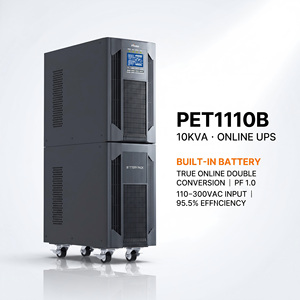
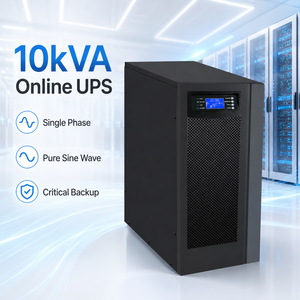
Whether you require a single 10kVA industrial online UPS, an 800kVA transformer-isolated substation system, or custom OEM manufacturing, our senior power application engineers are ready to review your single-line diagrams (SLD) and load specifications.
Contact Us