
Direct export from top-tier Chinese manufacturing facilities. Fully compliant with international ISO9001, UL, CE, BIS, and FCC standards.
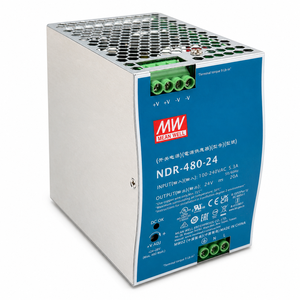
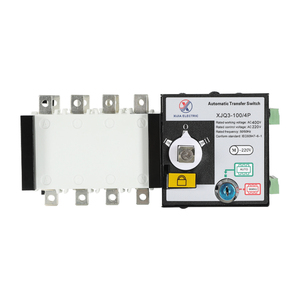
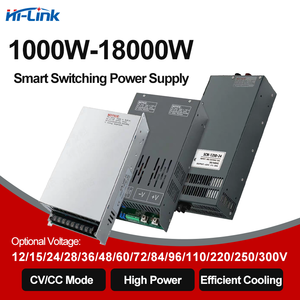
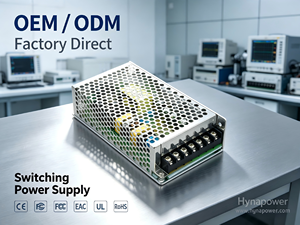
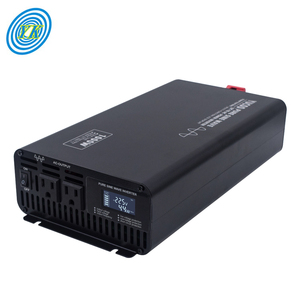
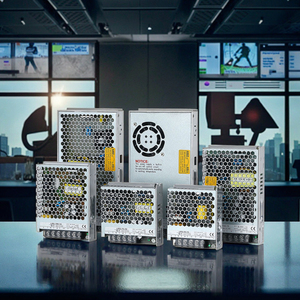
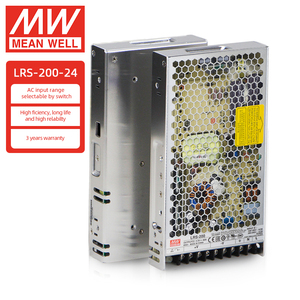
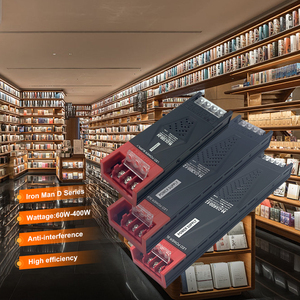
Modern industrial automation, critical security monitoring, telecom head-ends, and smart power grids increasingly rely on uninterrupted direct current (DC) power networks. Traditionally, industrial control panels used AC UPS topologies that converted AC mains to DC for internal battery storage, only to invert it back to AC power, which was then converted again to DC inside the terminal devices (such as PLCs, HMIs, or IP cameras). This triple-conversion chain introduces efficiency losses of 15% to 28%, significantly increases internal heat generation, and introduces mechanical points of failure in cooling fans.
The industry baseline has shifted toward Direct DC UPS Integration. By outputting continuous, highly regulated 12V, 24V, or 48V DC power directly to the system bus, Chinese manufacturing leaders have eliminated unnecessary inversion steps. A dedicated DC UPS buffers power seamless via zero-transfer-time diode OR-ing or MOSFET switching circuits, ensuring that sensitive microprocessors and relay coils never experience phase lag, voltage sags, or zero-crossing interruptions.
To assist system integrators and procurement directors in choosing optimal power topologies, the evaluation matrix below outlines the critical engineering metrics between legacy AC UPS setups and modern Chinese DIN-Rail DC UPS architectures:
| Technical Parameter | Legacy AC UPS System | Industrial Integrated DC UPS (China OEM) | Engineering & Economic Advantage |
|---|---|---|---|
| Overall Energy Efficiency | 70% - 82% (Triple Conversion) | 92% - 96.5% (Direct DC Bus) | Substantial reductions in electricity bills & heat load. |
| Bus Transfer Time | 4ms - 10ms (Relay/Inverter Switch) | 0ms (Seamless Buffer Switching) | Prevents PLC reset and data loss in high-speed lines. |
| Form Factor & Enclosure Size | Bulky Tower / Heavy Transformer | Compact DIN-Rail (Slim 30mm - 60mm Width) | Saves up to 60% panel footprint in control cabinets. |
| Battery Maintenance & Longevity | Fixed charging rate; thermal degradation | Smart Multi-Stage Charging + Temp Comp | Extends LiFePO4 / VRLA battery lifespan by 35%. |
| Mean Time Between Failures (MTBF) | ~100,000 Hours | > 350,000 Hours (MIL-HDBK-217F) | Higher reliability in continuous 24/7 industrial plants. |
As smart manufacturing (Industry 4.0) accelerates globally, procurement teams must align with technical advancements shaping the Chinese DC power supply export sector.
Chinese factories are replacing silicon MOSFETs with Gallium Nitride (GaN) and Silicon Carbide (SiC) power devices. This allows DC UPS modules to operate at switching frequencies above 500kHz, drastically reducing transformer coil size while achieving power densities over 35W per cubic inch.
Lead-acid batteries are rapidly being phased out in favor of Lithium Iron Phosphate (LiFePO4) and emerging Sodium-Ion battery packs. Chinese exporters now embed intelligent BMS modules directly into the DC UPS housing, offering 3,000+ charge cycles and wide operating temperatures (-20°C to +65°C).
Next-generation DC UPS models feature RS-485 Modbus-RTU, SNMP v3, and MQTT connectivity. Maintenance personnel can remotely monitor real-time battery impedance, continuous load current, voltage ripple, and remaining buffer times, enabling predictive maintenance before failures occur.
When global B2B procurement managers source industrial power equipment from China, evaluating technical rigor and quality management systems (QMS) is critical. Premier OEM/ODM suppliers adhere to strict manufacturing protocols that set them apart from low-tier assembly shops:
To accurately size a DC UPS for your control enclosure or security installation, apply the following engineering sizing formula:
Total Load Power (W) = ∑ [Operating Voltage (V) × Max Device Current (A)] × 1.25 (Safety Factor)
Required Battery Capacity (Ah) = [Total Load Power (W) × Autonomy Time (Hours)] / [System DC Voltage (V) × Inverter Efficiency (η)]
For instance, an automated gate system requiring 24V DC operating at 8 Amps (192W) with a desired backup autonomy of 2 hours requires a minimum 24V DC UPS power supply rated at 240W, paired with a 18Ah - 20Ah LiFePO4 battery pack.
Essential guidance for electrical engineers, system integrators, and OEM procurement managers sourcing from China.
A standard SMPS charger primarily supplies voltage to recharge a battery and may temporarily power a load, but it often lacks seamless switchover circuits. A true DC UPS incorporates active power-path management (Diode-ORing or MOSFET switching) to power the load while simultaneously charging the battery. During an AC utility loss, a DC UPS transfers battery power to the load with 0ms delay without voltage interruption.
For North America, UL508 (Industrial Control Equipment) or UL62368-1 is recommended. For the European Union, CE marking (EMC Directive 2014/30/EU and Low Voltage Directive 2014/35/EU) is essential. For export to India, BIS approval under IS 13252 is mandatory. Top Chinese exporters provide complete safety test reports and CB certificates.
In developing markets or industrial environments with heavy inductive loads (motors, welders), grid voltages fluctuate severely. A wide AC input stage ensures the DC UPS regulates output voltage tightly (typically ±1% load regulation) without prematurely switching to battery backup mode, thereby preserving battery life for true blackout emergencies.
Yes. Leading Chinese exporters offer full ODM/OEM customization including custom output voltages (e.g., 12V, 24V, 48V, 110V DC), custom enclosure dimensions (DIN-Rail, 1U/2U Rackmount, Open Frame), potential-free dry alarm contacts (AC OK, Battery Low), and branded front-panel artwork.
Advanced units perform automated periodic battery self-tests by briefly applying a dummy load to verify internal resistance and voltage drop. If impedance exceeds critical thresholds, the unit triggers a visual LED warning and closes a potential-free fault contact connected to the central PLC or SCADA system.
Standard catalog models usually ship within 7 to 14 business days. Custom OEM/ODM designs requiring specialized PCB layout, custom chassis tooling, and specific safety approvals generally require 4 to 6 weeks for mass production following sample approval.
Need custom voltage outputs, high-density DIN-rail power supplies, or certified battery chargers for your next automation or security project? Contact our application engineers today for factory-direct pricing and technical specs.