
Mitigating capacity mismatch, preventing premature cell degradation, and maximizing cycle life across lead-acid, LFP, and NCM multi-cell battery strings through advanced micro-processor dynamic transfer topologies.
High-efficiency active balancers, switching power supply modules, and uninterruptible DC power conversion systems built to ISO9001 and UL/CE standards.
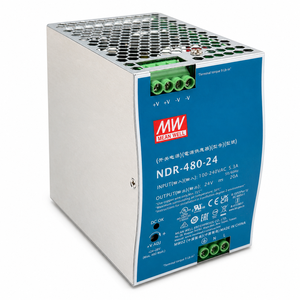
Rugged DIN-rail industrial power converter and balancing stage engineered for 24V control systems, automation cabinets, and battery backup arrays. Features wide 110-230 VAC input to 125 VDC output conversion with high peak load resistance.
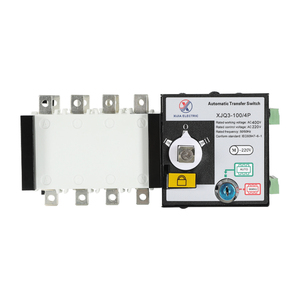
Dual-channel high-amperage switching power unit engineered for heavy-duty DC distribution, high-capacity motive battery banks, and industrial energy storage maintenance. Designed for reliable continuous output under demanding thermal loads.
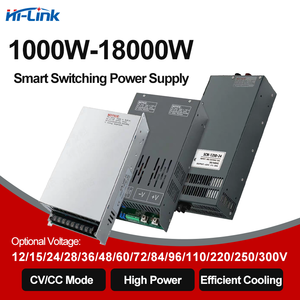
Precision adjustable DC converter module capable of serving as a primary voltage source or forced charge-balancing module for variable-voltage battery packs ranging from 12V to 220V systems.
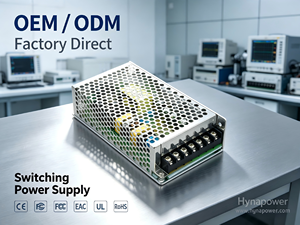
Industrial aluminum chassis power and balancing module built for hostile outdoor environments. Features 90-264VAC wide input range and 12V/10A output, ideal for telecom cabinets, security head-ends, and solar micro-grids.
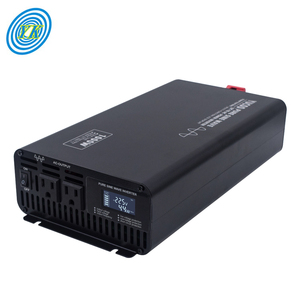
Heavy-duty off-grid inverter system integrating real-time DC voltage stabilization and equalization stages. Protects series-connected battery strings during deep discharge and high surge load cycles.
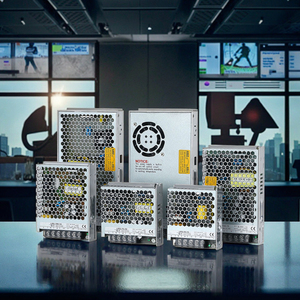
Ultra-compact form factor designed for space-constrained control panels, CCTV enclosures, and automated machinery. Delivers high efficiency with low thermal ripple and intelligent over-voltage protection.
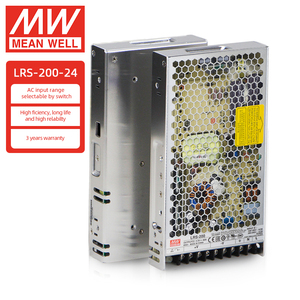
Benchmark industrial 24V 200W switching power supply optimized for switchgear, substation battery backup units, and continuous-duty process automation lines.

Versatile power driver and charger module featuring micro-controller feedback loops for accurate current distribution, pulse charging, and battery state-of-health monitoring.
A comprehensive analysis of cell degradation mechanics, Peukert effect mitigation, and high-frequency active energy transfer efficiency in enterprise battery energy storage systems (BESS).
In any series-connected battery bank—whether Lead-Acid (AGM/Gel), Lithium Iron Phosphate (LiFePO4/LFP), or Nickel Manganese Cobalt (NCM)—individual cell capacities, internal resistances ($R_i$), and self-discharge rates inevitably diverge over operational cycles. This thermodynamic reality stems from micro-manufacturing tolerances, uneven ambient thermal distribution across the enclosure, and chemical aging gradients.
During the charging cycle, the weakest cell (lowest capacity or highest internal resistance) reaches its upper voltage limit first. In un-balanced systems, the charge controller triggers protection, stopping the charge cycle before higher-capacity cells reach 100% State of Charge (SOC). Conversely, during discharge, the weakest cell drops to the cutoff threshold prematurely, causing deep discharge damage, cell reversal, or thermal runaway. Over time, the entire pack's usable energy is constrained by the worst-performing cell, a bottleneck phenomenon known as the "Barrel Effect".
Battery Equalizers supplied by top China manufacturers fall into two distinct architectural paradigms: Passive Bleeding and Active Bi-Directional Energy Transfer.
| Technical Parameter | Passive Dissipative Equalization | Active Inductive Transfer | Active Capacitive Buck-Boost |
|---|---|---|---|
| Operating Principle | Burns excess charge energy as heat through resistors | Transfers energy via high-frequency inductor switching | Transfers charge cell-to-cell via flying capacitors |
| Balancing Current | Low (typically 50mA – 200mA) | High (1A – 10A dynamic continuous) | Medium to High (1A – 5A) |
| Energy Efficiency | Very Low (< 20%, heat dissipation) | Ultra-High (> 92% power conversion) | High (> 88% transfer efficiency) |
| Thermal Impact | High local heat generation inside pack | Negligible thermal signature (< 3°C rise) | Low thermal footprint |
| Operational Window | Charge-end phase only (Top balancing) | Continuous (Charge, Discharge, & Rest) | Continuous active voltage tracking |
| Best Application | Low-cost consumer electronics, small e-bikes | Industrial BESS, EV Fleets, Telecom UPS | Solar Micro-grids, Motive Forklifts |
Implementing active equalization yields direct financial returns by reducing battery replacement frequency and boosting usable kilowatt-hours (kWh). The mathematical life extension factor ($\lambda_{ext}$) can be modeled as:
$$\text{Usable Capacity Gain (\%)} = \left( 1 - \frac{\Delta SOC_{max}}{SOC_{nominal}} \right) \times \eta_{transfer} \times 100$$
By enforcing a static and dynamic differential voltage ($\Delta V$) of ≤ 5mV across all series nodes, China active equalizers eliminate localized over-charging stress, preventing electrolyte drying in AGM batteries and lithium plating in LFP cells. This increases total lifetime throughput energy by up to 35% to 45%.
Key technological transformations driving wholesale purchasing decisions for energy storage system integrators and utility procurement officers worldwide.
Procurement teams are shifting away from standalone blind equalizers toward smart systems featuring RS485, CAN 2.0B, and Bluetooth 5.0 mesh communication. Next-generation equalizers transmit real-time telemetry (individual cell $R_i$, voltage degradation velocity, ambient thermal gradients) to cloud-based edge monitoring systems, leveraging AI algorithms to predict cell failure 30 days before total degradation occurs.
With the rapid expansion of containerized Solar + Storage and Wind BESS projects, equalizers must scale beyond low-voltage 12V/24V/48V packs. High-density multi-channel active balance modules capable of cascading across 700V to 1500V DC high-voltage string architectures are dominating enterprise tender specifications.
As Sodium-Ion (Na-Ion) and Solid-State battery chemistries transition into commercial production, their distinct charge-voltage curves demand adaptive equalizer firmware algorithms. Modern factories are building modular programmable topologies capable of dynamic firmware updates for hybrid chemistry storage plants.
Combining three decades of power electronics engineering with rigorous automated quality control and full original design manufacturing (OEM/ODM) flexibility.
Complete internal engineering covering high-frequency magnetics design, multi-layer PCB layout, thermal management modeling, and firmware validation.
Every single unit undergoes automated full-load high-temperature burn-in testing and dielectric voltage withstand checks prior to packaging.
We utilize automotive-grade ICs, 105°C long-life Japanese capacitors, and heavy copper PCBs to guarantee unyielding field reliability.
Fully compliant with international regulatory safety frameworks including BIS (IS 13252), CE EMC/LVD, UL508, RoHS, and ISO9001 quality standards.
Essential answers regarding sizing, customization, installation, and factory lead times.
Require detailed engineering datasheets, customized voltage balancing schematics, or wholesale tier pricing? Contact our application engineering team today for immediate assistance.
Get Catalog