
Explore our CE, BIS, and UL certified programmable AC/DC power supplies, PLC controllers, and industrial DIN-rail modules built for mission-critical industrial applications.
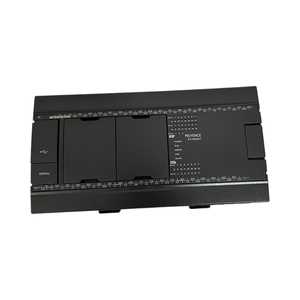
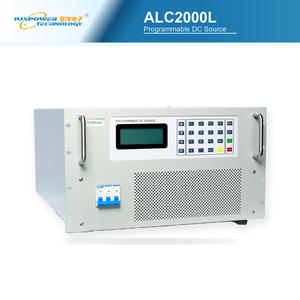
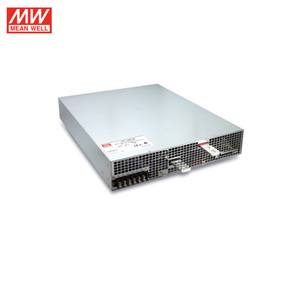
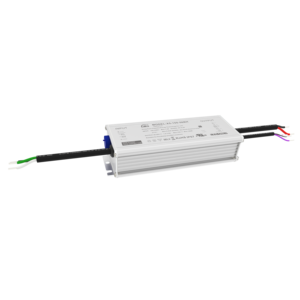
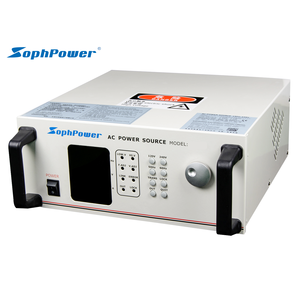
Under the brand legacy of Sanstar Microsystems Pvt. Ltd. (Micro Power India), our engineering infrastructure combines decades of field-proven topology development with strict quality governance.
From custom transformer winding and high-frequency magnetics design to firmware development and thermal analysis, our engineering team builds proprietary SMPS and programmable power topologies tailored to harsh grid variations.
Our Nagpur-based manufacturing campus features anti-static assembly floors, an all-female incoming quality control inspection division, and automated burn-in screening to eliminate infant mortality in power components.
Engineered specifically for volatile electrical environments, our standard power conversion units operate flawlessly across a wide 90V to 290V AC input spectrum, integrated with active overvoltage, short-circuit, and thermal cutoffs.
Modern industrial automation, semiconductor fabrication, automated test equipment (ATE) suites, and battery manufacturing facilities require direct current (DC) and alternating current (AC) power supplies capable of ultra-precise voltage and current manipulation. Unlike legacy fixed-output Linear or Switch-Mode Power Supplies (SMPS), programmable power supplies function as dynamic power sources that accept digital commands or analog control signals to alter voltage waveforms, current limits, and operational profiles in real time.
As industrial processes transition toward Industry 4.0 and smart manufacturing grids, procurement specifications for CE-certified programmable power systems have expanded beyond raw power output (wattage). Buying authorities now evaluate system efficiency, Active Power Factor Correction (PFC), total harmonic distortion (THD), programmable slew rates, digital communication latency, and total cost of ownership (TCO).
Key Engineering Insight: Modern high-density programmable DC power architectures utilize Wide Bandgap (WBG) semiconductors such as Silicon Carbide (SiC) and Gallium Nitride (GaN). This enables switching frequencies exceeding 100 kHz, achieving power conversion efficiencies above 96% while reducing chassis volume by up to 40% compared to legacy silicon MOSFET designs.
Early programmable power supplies relied on analog feedback loops driven by operational amplifiers and precision potentiometer networks. While effective for simple variable benchtop applications, analog architectures suffer from thermal drift, susceptibility to Electromagnetic Interference (EMI), and limited diagnostic capabilities.
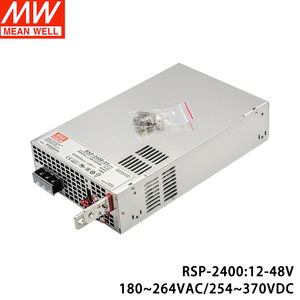
State-of-the-art programmable power platforms—such as high-power systems ranging from 2,400W to 10kW+ (e.g., Meanwell RSP and RST series)—utilize dual Digital Signal Processor (DSP) architectures. The primary DSP manages the high-frequency Pulse Width Modulation (PWM) duty cycles for phase-shifted full-bridge or interleaved forward topologies. The secondary DSP handles digital communication interfaces (Modbus-RTU, CANopen, EtherCAT, Ethernet/IP), safety interlocks, historical fault logging, and system diagnostics.
This digital loop control allows engineers to program complex voltage profiles, simulate transient grid dips, execute battery charge-discharge profiles (CC/CV/CP modes), and adjust dynamic response times directly via software commands without modifying internal hardware parameters.
For international buyers and original equipment manufacturers (OEMs), procuring CE Certified Programmable Power Supplies is not merely a legal requirement for European Union compliance; it serves as a global benchmark for system reliability and electromagnetic compatibility. A compliant programmable power supply must satisfy two core directives:
| Performance Parameter | Linear Programmable Supply | Conventional SMPS | Advanced Digital Programmable Source |
|---|---|---|---|
| Power Efficiency | 35% – 50% (High Dissipation) | 75% – 85% | 92% – 97% (Active PFC) |
| Power Density (W/in³) | Low (Heavy Transformers) | Medium | Ultra-High (Up to 25W/in³) |
| Ripple & Noise (P-P) | Ultra-Low (< 1 mV) | Moderate (30 – 100 mV) | Low (< 10 – 30 mV Filtered) |
| Transient Response Time | < 20 µs | 200 – 500 µs | < 50 µs (DSP Accelerated) |
| Programming Interfaces | Analog 0-10V, RS-232 | Fixed / Analog Potentiometer | EtherCAT, Modbus-TCP, USB, CAN, Web Server |
| Grid Input Flexibility | Narrow (±10% Nominal AC) | Standard Wide Input | Universal Wide (90–290V AC, 1Φ/3Φ) |
Strategic purchasing managers and system integrators must anticipate technological shifts to prevent system obsolescence and maximize operational life cycles.
In battery testing, electric vehicle (EV) emulation, and renewable energy storage development, traditional programmable loads dissipate energy as heat. The market is rapidly shifting toward bidirectional regenerative programmable power supplies capable of returning up to 95% of tested energy back to the local AC grid, drastically lowering operating cooling costs.
Procurement teams are prioritizing modular architectures over large monolithic power cabinets. Standardized 2U/3U rack-mount programmable units (such as 2.4kW, 10kW modules) featuring active diode OR-ing and automatic master-slave current sharing allow engineers to scale system power from 10kW to hundreds of kilowatts without custom redesigns.
Next-generation CE certified programmable supplies now integrate IoT telemetry modules. Internal sensors monitor electrolytic capacitor equivalent series resistance (ESR), MOSFET thermal junction temperatures, ambient fan health, and cumulative operational stress. Predictive maintenance alerts are dispatched via MQTT or Modbus before power degradation occurs.
Direct answers to critical questions asked by system integrators, electrical engineers, and global buyers.
A standard SMPS outputs a fixed DC voltage (e.g., 12V, 24V, 48V) intended to power static loads continuously. A programmable power supply allows users to dynamically adjust voltage, current, and output timing profiles manually or via automated digital command interfaces (such as RS485, USB, EtherCAT, or 0-10V analog signals). Programmable supplies also feature built-in metering, logging, and advanced protection thresholds.
Certifications validate compliance with international safety, environmental, and electromagnetic standards. CE certification guarantees compliance with European LVD and EMC directives. BIS (Bureau of Indian Standards / IS 13252) is mandatory for grid compliance and safety in India. UL certification (such as UL 62368-1) ensures compliance for North American panel builders. Procuring multi-certified power supplies streamlines cross-border distribution and reduces insurance liabilities for OEMs.
Yes. Industrial programmable DC power supplies equipped with active droop current-sharing or digital master-slave communication buses can be paralleled safely. The master unit regulates the system voltage loop while distributing equal load current commands to the slave units via internal OR-ing diodes and control links, preventing thermal imbalance and reverse-current circulation.
Active PFC ensures that the input current waveform closely tracks the sinusoidal AC mains voltage waveform, achieving power factors between 0.95 and 0.99. This minimizes harmonic distortion (THD), prevents localized voltage sags, complies with EN 61000-3-2 standards, and avoids reactive power penalty charges imposed by utility providers on high-power industrial facilities.
Advanced programmable power supplies incorporate adjustable Constant Current (CC) foldback protection and dynamic voltage programming. When feeding motor drives, capacitive banks, or PLC input modules with severe startup inrush currents, the supply automatically transitions from Constant Voltage (CV) mode to CC mode, controlling peak current until load stabilization without latching into a fault shutdown.
Yes. With over 30 years of in-house design and manufacturing experience, our R&D team customizes output voltage ranges, dual redundant battery charging schemes, auxiliary sensor inputs, potential-free alarm contacts, IP-rated enclosures (e.g., IP67 waterproof drivers), and specialized mechanical form factors tailored to specific OEM panel requirements.
Partner with an established manufacturer for your industrial power supply, DC UPS, and programmable power requirements. Submit your technical parameters to our application engineering team today.
Send an Inquiry