
Explore our certified range of off-grid pure sine wave inverters, DIN rail SMPS, dual-channel switching supplies, and OEM battery charging modules engineered for global deployment.

An in-depth technical analysis for industrial procurement directors, system integrators, and OEM panel builders sourcing robust power conversion hardware.
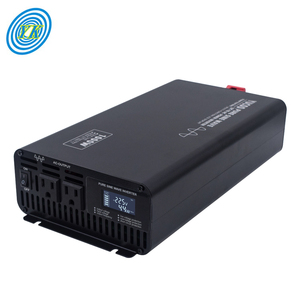
In the contemporary industrial power electronics landscape, the requirement for CE Certified Power Inverter Factories extends far beyond standard regulatory compliance. Modern electrical infrastructure—ranging from off-grid solar microgrids, automation control panels, security surveillance head-ends, to railway switchgear—demands unbroken galvanic isolation, minimal total harmonic distortion (THD), and fault-tolerant continuous duty cycles. Sourcing power supplies and pure sine wave inverters directly from certified manufacturers ensures that critical installations withstand grid transients, severe thermal stress, and electro-magnetic interference (EMI).
A legitimate CE mark on an industrial power inverter or SMPS is not merely a single test report; it encompasses full compliance with the Low Voltage Directive (LVD 2014/35/EU) and the Electromagnetic Compatibility (EMC) Directive 2014/30/EU under EN 62368-1 and EN 55032 Class B standards. Buyers must verify factory-level ISO 9001 quality management alongside batch-specific burn-in records to prevent catastrophic field failures.
As industrial automation advances toward Industry 4.0 and decentralized microgrids become ubiquitous, the design architecture within elite power inverter manufacturing facilities is undergoing a fundamental shift:
Next-generation inverter topologies utilize Gallium Nitride (GaN) and Silicon Carbide (SiC) MOSFETs, reducing thermal dissipation by 35% while increasing switching frequencies up to 500 kHz for ultracompact footprints.
Modern DIN rail power supplies and DC UPS systems now incorporate MODBUS RTU or CAN bus communication, enabling real-time monitoring of capacitor degradation, load currents, and internal temperature profiles.
Critical utility substations and telecom hubs specify active OR-ing MOSFET modules that allow seamless hot-swapping without voltage drops across DC bus lines during system expansion or maintenance.
Selecting the optimal power conversion topology requires matching continuous load parameters against grid resilience. The matrix below outlines operational metrics verified in enterprise laboratory testing:
| Topology / Solution | Typical Efficiency | Input Voltage Range | THD / Output Quality | Primary Industrial Applications |
|---|---|---|---|---|
| Pure Sine Wave Off-Grid Inverter | > 92% | 12V / 24V / 48V DC | THD < 3% (Pure Sine) | Solar Backup, Telecommunications, Remote Cabinets |
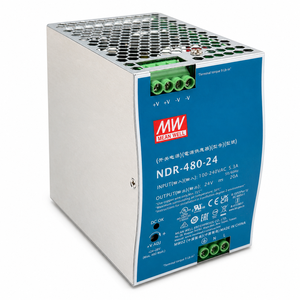
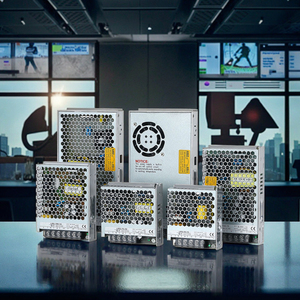
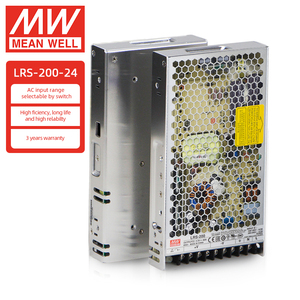
| Industrial DIN Rail SMPS (CE/BIS) | 89% – 94% | 90 – 290 VAC (Wide Input) | Ripple & Noise < 100mVp-p | PLC Enclosures, Process Control, Machine Building |
| DC UPS with Battery Backup | > 90% | 110V / 230V AC Input | Zero Transfer Delay | Fire Alarm Panels, Access Control, Substation VCBs |
| Dual Channel DC Power Supply | > 88% | Universal AC Input | Independent Channel Regulation | Redundant Industrial Controllers, CCTV DVR/NVR Racks |
Behind every reliable power conversion unit lies an uncompromising manufacturing discipline. Manufactured under the banner of Sanstar Microsystems Pvt. Ltd. (Micro Power India) since 1994, our manufacturing infrastructure reflects three decades of specialized engineering evolution:
Access engineered datasheets, CE compliance certificates, mechanical CAD files, and OEM volume pricing directly from our engineering desk.
Global procurement teams must evaluate key operational parameters before finalizing supply agreements with prospective manufacturers:
Ensure primary-to-secondary isolation ratings meet minimum 3000 V AC standards, with PCB creepage distances compliant with IEC 60950-1 and UL 508 safety margins for high-pollution industrial environments.
Review ambient operating curves. High-grade industrial units deliver 100% full power up to 50°C ambient temperatures without forced air cooling, preventing unexpected shutdown in sealed enclosures.
Essential answers regarding certification validation, technical specifications, OEM customization, and global deployment guidelines.
You should request the formal Declaration of Conformity (DoC) explicitly referencing the Low Voltage Directive (LVD 2014/35/EU) and Electromagnetic Compatibility Directive (EMC 2014/30/EU), alongside full lab test reports for EN 62368-1 safety and EN 55032 radiated/conducted emissions.
Yes. Our in-house R&D team regularly engineers custom output voltages (e.g., 12V, 24V, 36V, 48V, 72V, 110V, 220V DC), custom enclosure formats, dual-redundant charging circuits, potential-free alarm contacts, and private-label branding for OEM partners.
Pure sine wave inverters deliver a clean AC output waveform with THD < 3%, identical to or better than grid power. This prevents overheating in inductive loads (motors, transformers, pumps) and eliminates audio/visual noise in sensitive telecom and medical controllers.
In regions with fluctuating electrical grids or remote microgrids, voltage dips and spikes are frequent. A power supply or inverter designed to operate seamlessly across 90V–290V AC prevents nuisance cut-offs and protects downstream sensitive electronics from premature burnout.
Every single unit undergoes automated SMT component screening, high-potential (Hi-Pot) dielectric withstand testing, active burn-in testing under full load, and automated final parameter verification before packaging. Test reports are tied to serial numbers for full traceability.
Whether you require standard DIN rail supplies, custom off-grid DC-AC inverters, or full-scale OEM/ODM contract manufacturing, our engineering team is standing by to deliver tailored solutions.