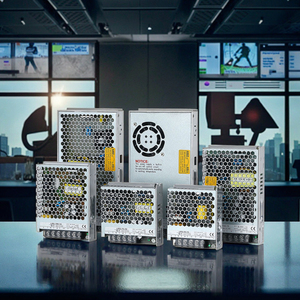
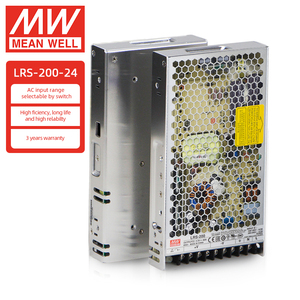
Explore our CE-certified, high-reliability switching and power delivery modules designed for zero-downtime deployment in demanding thermal and electrical environments.
Modern industrial networking and building automation ecosystems demand robust, high-efficiency Power over Ethernet (PoE) switches and switched-mode power supplies (SMPS). As enterprise networks transition toward smart security, edge-computing nodes, pan-tilt-zoom (PTZ) IP surveillance, and Internet of Things (IoT) field gateways, selecting certified hardware backed by proven engineering rigor becomes critical to operational success.
This whitepaper provides procurement directors, systems integrators, and electrical engineers with actionable technical insights, compliance standard evaluations, and procurement criteria for sourcing CE Certified PoE Switch Manufacturers & Suppliers.
CE certification (Conformité Européenne) is not merely a trading mark; it is a rigorous declaration that an electrical product meets European Union safety, health, and environmental protection requirements. When evaluating European market compliance for PoE switches and DIN-rail power modules, technical teams must verify compliance against three core directives:
Ensures that the PoE switch does not emit unacceptable electromagnetic interference (EMI) that disrupts adjacent PLC cabinets or radio communications, while remaining immune to industrial-level electrostatic discharges (ESD) and electrical fast transients (EFT).
Governs electrical equipment operating between 50 and 1000 VAC or 75 and 1500 VDC. Confirms isolation safety, creepage distance standards, dielectric breakdown resistance, and touch-temperature safety thresholds.
Mandates the elimination of hazardous substances including Lead, Mercury, Cadmium, and PBBs. Essential for green procurement policies, sustainable electronic infrastructure, and global environmental safety standards.
Sourcing engineers must match switch power budgets with physical field application needs. Below is a structural comparison of standardized PoE protocols enforced by certified manufacturers:
| Standard Name | Type Designation | Max Output Power / Port | Voltage Range | Target Applications |
|---|---|---|---|---|
| IEEE 802.3af | PoE (Type 1) | 15.4 W (12.95W at PD) | 44.0 – 57.0 VDC | Fixed IP Cameras, VoIP Phones, 802.11n APs |
| IEEE 802.3at | PoE+ (Type 2) | 30.0 W (25.50W at PD) | 50.0 – 57.0 VDC | PTZ Speed Domes, Dual-Band Wi-Fi 6 APs, RFID Readers |
| IEEE 802.3bt | Hi-PoE (Type 3) | 60.0 W (51.00W at PD) | 50.0 – 57.0 VDC | Heated Outdoor PTZ, Digital Signage, Thin Clients |
| IEEE 802.3bt | 4PPoE (Type 4) | 90.0 W (71.30W at PD) | 52.0 – 57.0 VDC | LED Lighting Networks, Wi-Fi 7 Multi-Radio APs, IIoT Displays |
Analyzing global market dynamics and engineering demand vectors reveals several critical shifts shaping how system integrators and procurement agents select PoE switching hardware:
As smart buildings replace separate line-voltage circuits with low-voltage ethernet infrastructure, demand for 60W and 90W 802.3bt PoE switches is escalating rapidly. Sourcing officers are prioritizing manufacturers capable of providing robust internal power supplies with wide AC inputs (90-290V) to feed heavy power budgets without localized thermal throttling.
Legacy PoE switches reserve fixed wattage blocks per port, resulting in power waste. Future-proof switches leverage AI-driven power budget management, dynamic scheduling, and auto-PD reset functions (PoE Watchdog) to automatically reboot unresponsive IP cameras or remote field nodes without physical technician intervention.
Industrial installations—such as roadside traffic cabinets, oil & gas facilities, and solar farms—demand fanless metal enclosures with high mean time between failures (MTBF). Convection-cooled power topologies eliminate mechanical fan wear points while maintaining CE-compliant EMC emissions.
Zero-downtime networks require seamless transition from primary utility AC power to battery backup banks. Procurement trends lean toward switches featuring integrated diode-ORing redundancy modules, high-voltage battery charger outputs, and potential-free alarm contact relay outputs for remote network monitoring (SNMP/BMS).
The convergence of modern power semiconductor technology and network switching silicon has dramatically improved system efficiency. Leading manufacturers are integrating Gallium Nitride (GaN) power stages into switching mode power supplies (SMPS), driving power conversion efficiencies beyond 95% and significantly reducing physical enclosure volumes.
Over 30 Years of In-House R&D, Magnetics Engineering, and Quality Validation
Operating under the recognized Micro Power brand, Sanstar Microsystems Pvt. Ltd. (established in 1994) represents three decades of precision power electronics manufacturing experience. Designed and manufactured in Nagpur, India, our wide-ranging power solutions serve global security integrators, industrial automation machine builders, utility contractors, and telecom operators.
Every transformer, PCB routing scheme, and thermal heatsink layout is engineered entirely in-house. Our state-of-the-art facility features a 100% anti-static shop floor, automated incoming material screening, and continuous burn-in testing chambers to guarantee component longevity.
Unlike third-party white-label aggregators, 100% of Micro Power power supplies and battery charger units undergo full-load high-voltage dielectric isolation testing and dynamic burn-in screening before dispatch, accompanied by batch trace codes.
Addressing core technical, regulatory, and procurement inquiries commonly evaluated during OEM/ODM supplier selection:
Whether you require standard CE-certified DIN-rail power supplies, high-budget PoE switching power units, or tailored OEM/ODM battery backup packs, our application engineering desk is ready to support your technical specifications.
Get Catalog