
Explore our high-performance switch-mode power supplies, automated PLC power interfaces, and robust industrial power units tested under rigorous stress conditions.
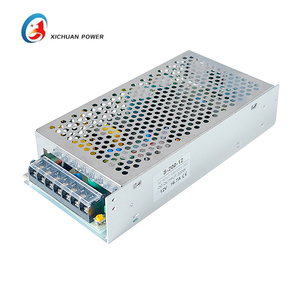
Precision regulated multi-voltage output (5V, 12V, 24V, 36V, 48V DC) power supply engineered for heavy industrial equipment, automation racks, and laboratory test benches.
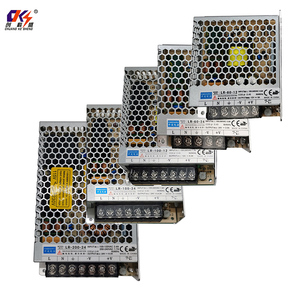
Ruggedized aluminum casing SMPS with universal 100-240V AC input, dynamic load stabilization, and thermal convection dissipation for industrial lighting and motor loads.
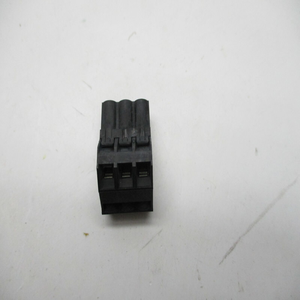
100% original industrial-grade automation PLC hardware components, designed for direct integration with cabinet power supplies and distributed control systems (DCS).
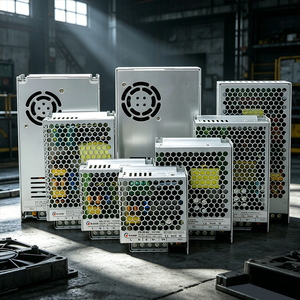
Ultra-wide 90-264V input single output SMPS featuring built-in short circuit, overload, and overvoltage protection for severe utility electrical grid environments.
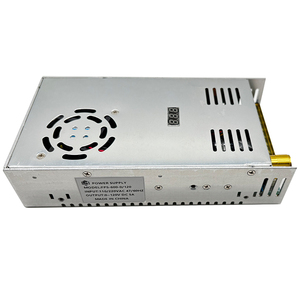
Heavy-duty power units delivering up to 60A output current. Engineered for low output ripple noise, high efficiency, and continuous zero-downtime industrial operation.
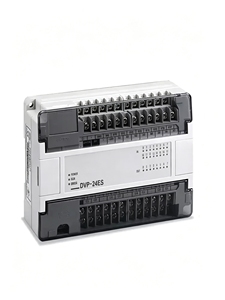
Industrial text display HMI supporting RS485 and RS232 protocols, engineered to monitor SMPS telemetry, system voltage statuses, and automated machinery parameters.
Contract electronics manufacturing and high-precision PCBA assembly for custom power supplies, controllers, and industrial monitoring devices under strict ISO protocols.
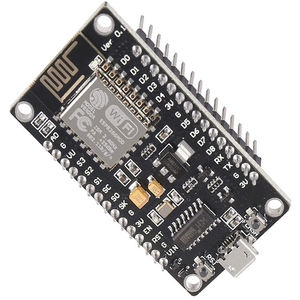
Ruggedized wireless transceiver module for real-time remote telemetry of cabinet SMPS metrics, smart factory automation, and PLC monitoring networks.
Industrial switch-mode power supplies (SMPS) serve as the electrical backbone of automated production environments, process control systems, and mission-critical OEM panels. Unlike consumer-grade AC-DC adapters, an industrial-grade SMPS must continuously deliver clean, tightly regulated direct current (DC) while operating under severe ambient thermal stresses, aggressive electromagnetic interference (EMI), and severe input voltage spikes common to heavy manufacturing plants.
As a leading CE certified industrial SMPS manufacturer with over three decades of in-house design and manufacturing heritage (operating under Sanstar Microsystems Pvt. Ltd. / Micro Power), our engineering framework prioritizes high power density, thermal endurance, and compliance with rigorous international safety benchmarks including EN 62368-1, IS 13252, and UL 508.
Core Technical Baseline: Modern industrial power converters must maintain a minimum hold-up time of 20ms at nominal input line voltages to prevent PLC resets during momentary utility dropouts, alongside an input surge immunity rated up to 4kV (EN 61000-4-5).
The choice of converter topology dictates the efficiency ceiling, EMI signature, and thermal distribution across the PCB layout. The table below outlines the primary conversion topologies engineered into our industrial product lines:
| SMPS Topology | Power Range | Typical Efficiency | Key Advantage | Target Industrial Application |
|---|---|---|---|---|
| Single-Ended Flyback | 10W – 150W | 85% – 89% | Low component count, cost-effective galvanic isolation | Auxiliary PLC supplies, sensor power, lower-wattage DIN rail units |
| Two-Switch Forward | 150W – 400W | 88% – 92% | Reduced MOSFET voltage stress, superior thermal distribution | Medium power automation panels, CCTV head-ends, motor control racks |
| LLC Resonant Converter | 300W – 1000W+ | 93% – 96% | Zero-Voltage Switching (ZVS), minimal EMI, ultra-high density | Heavy automation lines, telecommunication rectifiers, high-power DC UPS |
Industrial facilities operating hundreds of switched loads are subject to strict utility compliance regarding harmonic injection. Uncorrected switch-mode rectifiers draw current in sharp, narrow pulses, creating harmonic distortion on the AC mains line. Our CE certified power supplies above 75W integrate continuous conduction mode (CCM) active Power Factor Correction (PFC) circuits. This brings the system Power Factor (PF) up to 0.98 or higher, fully complying with IEC/EN 61000-3-2 Class D standards and preventing severe voltage degradation within factory microgrids.
The industrial power conversion sector is undergoing a structural transition driven by Industry 4.0 automation, electrification, and aggressive decarbonization directives. Global procurement heads, system integrators, and panel builders must align their component selection strategies with emerging technological vectors to ensure long-term availability and prevent premature system obsolescence.
The transition from legacy Silicon MOSFETs to Gallium Nitride (GaN) and Silicon Carbide (SiC) devices allows switching frequencies to exceed 500kHz while dramatically lowering switching losses. This enables a 40% reduction in magnetics footprint and higher efficiency at elevated ambient temperatures.
Next-generation DIN rail SMPS modules feature onboard microcontrollers outputting real-time telemetry via PMBus, Modbus RTU, or wireless IoT transceivers (such as ESP8266 interfaces). Plant engineers can monitor output current, thermal drift, and capacitor degradation remotely.
Procurement is shifting away from standalone power supplies toward integrated SMPS-cum-Battery Chargers and DC UPS systems with intelligent multi-stage charging (Float, Boost, Equalize) compatible with both VRLA Lead-Acid and Lithium Iron Phosphate (LiFePO4) chemistries.
Thermal stress remains the primary root cause of power supply field failures. The operational lifespan of an electrolytic smoothing capacitor is halved for every 10°C rise in internal operating temperature (Arrhenius Law equation). To mitigate this vulnerability, Micro Power engineers enforce strict component derating guidelines based on IPC-9592 standards:
Established in 1994, Sanstar Microsystems Pvt. Ltd. (under the flagship brand Micro Power) has operated at the forefront of industrial power electronics manufacturing in Nagpur, Maharashtra, India. Our EL-15 Electronic Zone, MIDC Hingna facility is designed specifically for high-reliability SMPS assembly, custom magnetics winding, and automated testing.
Every single manufactured unit undergoes automated 100% full-load thermal burn-in and high-voltage isolation flash testing prior to packaging, eliminating infant mortality rates.
Our shop floor features an all-women incoming component screening team and meticulous assembly line, ensuring unmatched attention to detail during SMT hand-soldering and DIP mounting.
In-house magnetics modeling, custom mechanical enclosure tailoring, potential-free alarm contact designs, and specific output voltage calibrations tailored for specialized OEM clients.
Products carry comprehensive certification profiles covering BIS (IS 13252), CE compliance (EMC & LVD directives), and UL recognized variants for export compliance.
Below are technical answers to common questions raised by power systems design engineers, procurement specialists, and panel fabricators.
CE certification for industrial SMPS requires compliance with two primary directives: the Low Voltage Directive (LVD 2014/35/EU) under safety standard EN 62368-1 / EN 61010-2-201, and the Electromagnetic Compatibility (EMC) Directive (2014/30/EU). EMC compliance involves rigorous testing under EN 55032 Class B for conducted and radiated emissions, alongside EN 61000-6-2 for heavy industrial immunity (ESD, EFT bursts, line surges, and conducted RF resistance).
In developing markets or heavy industrial zones, utility power grids experience severe voltage sags, brownouts, and high-voltage surges caused by large inductive motor switching. An SMPS engineered for a wide 90V–290V AC input range maintains precise DC output regulation without shutting down or overheating, guaranteeing unbroken control power to PLCs, HMIs, and security head-ends during severe grid instability.
A standard SMPS converts AC utility power to a fixed DC output. If AC power fails, output voltage drops to zero. An SMPS cum Battery Charger (or DC UPS) features dual internal control loops: one dedicated to powering the connected DC load, and a second temperature-compensated charging loop dedicated to maintaining a standby battery bank. Upon AC power loss, the system instantly transitions load power to the battery without any switching interrupt (zero transfer time).
Mean Time Between Failures (MTBF) is calculated in accordance with the MIL-HDBK-217F standard or Telcordia SR-332 guidelines at a nominal 25°C ambient temperature under full load conditions. Micro Power industrial units consistently achieve MTBF figures exceeding 250,000 to 350,000 operating hours through conservative component stress derating, premium high-temperature capacitors, and optimized thermal PCB copper planes.
Yes. Our in-house R&D team regularly customizes output voltages (such as non-standard 15V, 30V, 72V DC), dual-redundant charging topologies with integrated diode OR-ing modules, custom mechanical enclosures, and potential-free relay contacts for remote alarm signalling in sub-station switchgear and telecommunication panels.