Choosing a China-based 24V Fire Panel Power Supply Supplier requires more than comparing prices and product photographs. A dependable supplier should demonstrate practical experience with fire alarm control panels, standby batteries, charger circuits, fault reporting, and continuous-load performance. Its documentation should clearly state input range, 24V output stability, battery capacity, charging current, operating temperature, and protection against short circuits or overcharging.
Robert Solomon, a former NFPA director of building and life safety codes, has often emphasized a vital industry principle: “A fire alarm system is only as reliable as its power supply.” That statement deserves careful attention. A panel may look modern, yet a weak power module can create trouble during a mains failure. The small details matter. Check terminal strength, enclosure ventilation, alarm contacts, and battery recovery after discharge. Request test records, factory quality procedures, and evidence of compatibility with the intended fire panel.
Price still matters. It should not lead the decision. An inexpensive 24V Fire Panel Power Supply may appear efficient during a short inspection, but poor heat control can shorten its service life. This is where supplier experience becomes visible. Ask for samples, technical drawings, response-time commitments, and clear warranty terms. Independent verification remains important. Even reputable manufacturers can have inconsistent batches. That possibility is uncomfortable, but realistic. A careful buyer should test before approving large quantities. The right China supplier combines engineering discipline, transparent communication, stable production, and dependable after-sales support.
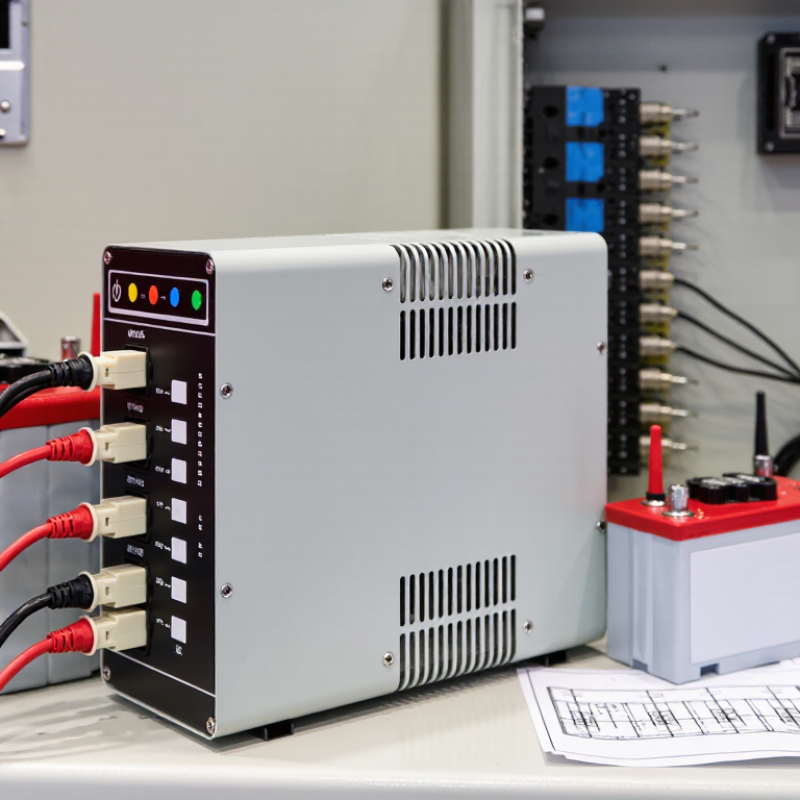
A 24V fire panel power supply converts incoming mains electricity into stable direct current for a fire alarm control panel. It powers detectors, manual call points, sounders, relays, and communication modules. Most units also charge backup batteries during normal operation. If mains power fails, the batteries provide temporary support without interrupting alarm monitoring.
A reliable supply should maintain steady voltage under changing loads. It should also include short-circuit protection, battery supervision, overvoltage protection, and fault reporting. In practical installations, cable distance matters. Long cables can create voltage loss, especially when several sounders activate together. Check the panel’s maximum current, battery capacity, enclosure rating, and operating temperature before selection. A small mismatch may cause nuisance faults or weak alarm output. I have seen installers focus on voltage only, then overlook charging current and standby duration.
Tips: Measure voltage at the farthest device, not only at the panel. Leave sensible capacity for future expansion. Test mains failure and battery operation during commissioning. Keep inspection records clear and dated. A qualified technician should verify wiring, polarity, grounding, and local fire safety requirements. Manufacturer data is useful, but field conditions can still expose assumptions. That is why realistic load testing matters.
A reliable 24V fire alarm power supply must support stable operation during normal and emergency conditions. In China, engineers commonly review requirements under GB 4717 for fire alarm controllers and GB 16806 for fire linkage control equipment. GB 50016 also influences fire system design and emergency power arrangements. The exact standard depends on the system type, installation site, and project authority.
Look beyond the 24V label. Check output tolerance, battery charging control, short-circuit protection, overvoltage protection, and alarm contacts. A practical test should include mains failure, battery operation, overload, and restoration after discharge. Measure voltage at the panel, not only at the power supply terminals. Cable resistance can create unexpected drops. This detail is often missed.
Tips: Ask for current test reports, certification documents, wiring diagrams, and routine inspection records. Confirm whether the unit matches the panel’s charging method and standby-time calculation. Do not rely on a supplier’s statement alone. Verify documents with the relevant Chinese certification or testing body, and confirm the latest applicable editions before procurement. Some installations also require local acceptance. A supplier may look experienced, yet weak after-sales testing can create serious delays. Allow a small design margin, but avoid selecting an oversized unit without checking battery compatibility. Testing is never perfect, so record every result and review unusual readings.
China Top 24V Fire Panel Power Supply Supplier?
How to Evaluate Chinese 24V Fire Panel Power Supply Suppliers
A dependable supplier should understand fire alarm power requirements, not only sell a 24V label. Ask for rated output current, standby capacity, alarm-load performance, and battery-charging limits. Check voltage stability during sudden load changes. A clear datasheet matters.
Request production samples before placing a large order. Test them with realistic fire panel loads, backup batteries, and extended operation. Measure output voltage with a calibrated meter. Also check short-circuit protection, overtemperature response, noise, and recovery after power interruption. Small tests reveal large gaps.
Review factory quality controls and traceability records. Confirm whether incoming components, soldering, burn-in testing, and final inspection are documented. Independent test reports can support evaluation, but one certificate never proves every batch is reliable. Verify the report’s scope and validity.
Ask about applicable regional standards and required documentation. The supplier should provide wiring diagrams, installation guidance, battery recommendations, and change-control procedures. English communication should be precise, especially for alarm and fault signals. Request a written warranty with realistic response times.
In practice, the lowest quotation can hide weak capacitors, limited testing, or unstable production. I have found that sample performance may not represent later batches. Require batch records and periodic inspection. It feels slower, but it reduces avoidable field failures. Their after-sales process deserves equal attention. A reliable contact should explain faults clearly and accept technical responsibility.
| Evaluation Dimension | Recommended Technical or Commercial Benchmark | Evidence to Request from the Supplier | Pass Condition | Suggested Weight |
|---|---|---|---|---|
| Output Voltage | Nominal 24 VDC output. The specified regulated voltage should remain within the tolerance stated in the product datasheet under rated load and input conditions. | Datasheet, tolerance specification, and test report showing no-load and full-load voltage. | The tested voltage is suitable for the connected fire alarm control panel and its notification or auxiliary devices. | 10% |
| Rated Output Current | Common product classes include approximately 2 A, 5 A, 10 A, and higher. The continuous rating must cover the panel load, alarm load, battery charging current, and design margin. | Continuous-load test data, overload protection details, and the product derating curve. | Required current is below the continuous rating after applying the supplier's stated temperature and installation derating. | 12% |
| Battery Compatibility | For a 24 V backup system, two 12 V rechargeable lead-acid batteries are commonly connected in series. Charging voltage and current must match the selected battery type and capacity. | Battery charging profile, maximum battery capacity, charging-current limit, reverse-polarity protection, and low-battery disconnect information. | The supplier provides a clear charging specification and confirms compatibility with the required battery capacity. | 12% |
| Standby-Time Calculation | Battery capacity should be calculated from actual standby current, alarm current, required duration, battery efficiency, aging allowance, and temperature effects. A simplified starting formula is: Ah ≈ (standby current × standby hours + alarm current × alarm hours) ÷ efficiency factor. | A completed load and battery calculation based on the customer's actual connected devices. | The proposed battery capacity includes an appropriate engineering margin and is not based only on the maximum power rating. | 10% |
| Input Power and Frequency | The unit should clearly state its permitted AC input range, nominal frequency, maximum input current, and inrush current. Models for international projects commonly support a wide input range such as 100–240 VAC, but this must be verified for each model. | Electrical specification, input-range test record, fuse rating, and inrush-current information. | The input specification matches the installation country and the upstream protection design. | 8% |
| Fire Alarm Standards | For European projects, EN 54-4 is the relevant standard for power supply equipment used in fire detection and fire alarm systems. Other markets may require different national or regional approvals. | Valid certificate, certificate scope, factory address, model list, standard edition, and certification-body verification link or document. | The certificate covers the exact model and intended application; marketing statements alone are not accepted as proof. | 15% |
| Electrical Safety and EMC | The design should address insulation, protective earthing, dielectric strength, leakage current, electromagnetic emissions, and immunity appropriate to the target market. | Safety test report, EMC test report, insulation diagram, earthing arrangement, and protection-circuit description. | Reports identify the same model, rated input, output, enclosure, and production location being offered. | 10% |
| Protection Functions | Important functions may include short-circuit protection, over-current protection, over-voltage protection, thermal protection, battery reverse-polarity protection, and AC or battery fault indication. | Circuit description, protection thresholds, fault simulations, and alarm or relay interface details. | Fault conditions do not create an unsafe condition or permanently damage the power supply when tested according to the specification. | 8% |
| Environmental Performance | The supplier should specify operating temperature, storage temperature, relative humidity, altitude limitations, cooling method, and enclosure protection rating where applicable. | Environmental test report, operating limits, thermal test data, and enclosure drawings. | The stated environmental range is suitable for the intended cabinet, electrical room, or field installation location. | 7% |
| Manufacturing Quality Control | A reliable production process should include incoming inspection, PCB assembly controls, functional testing, high-voltage testing, burn-in or aging where specified, and final inspection. | Quality manual, inspection records, sample test results, calibration certificates, and production-line photographs or audit access. | Critical tests are documented, repeatable, and linked to batch or serial-number traceability. | 8% |
| Customization and Integration | Useful options may include dry-contact fault relays, remote status outputs, cabinet integration, terminal customization, battery cabinets, and regional input configurations. | Interface drawings, communication or relay specifications, mechanical drawings, and engineering-change procedure. | The supplier can provide controlled drawings and a sample confirming compatibility with the target fire panel. | 5% |
| Lead Time and Minimum Order Quantity | Standard models generally have shorter lead times than customized models. The supplier should separate sample, pilot-batch, and mass-production lead times. | Formal quotation, production schedule, sample lead time, minimum order quantity, packaging specification, and delivery terms. | Commercial terms are written clearly and do not conflict with the required project schedule. | 5% |
| Warranty and After-Sales Support | The warranty period, exclusions, replacement process, spare-parts policy, technical response time, and failure-analysis procedure should be defined before purchase. | Warranty document, service process, troubleshooting guide, spare-parts list, and response-time commitment. | Support responsibilities are contractually documented for the sales region and project duration. | 5% |
| Sample and Site Acceptance Testing | Before volume purchasing, test the sample at no load, rated load, battery mode, AC-failure mode, battery-fault mode, short-circuit recovery, and alarm-load conditions. | Approved test plan, inspection checklist, sample test report, and corrective-action records. | The sample passes documented acceptance tests and matches the final production configuration. | 3% |
| Total Evaluation Weight | 100% | |||
Note: Certification, electrical ratings, battery requirements, and installation conditions must be verified against the exact model, target country, applicable fire-alarm regulations, and the latest edition of the required standard.
China Top 24V Fire Panel Power Supply Supplier?
When comparing a 24V fire panel power supply supplier, start with real electrical performance. Check output voltage tolerance, ripple, charging current, and recovery after a sudden load change. A stable unit should support alarm loads without visible voltage sag. Ask for test data under both standby and full-load conditions. Datasheets alone are not enough.
Safety circuits deserve close attention. Look for protection against short circuits, overvoltage, overheating, reverse battery connection, and deep battery discharge. The enclosure should resist dust and accidental contact near terminals. Clear wiring labels reduce installation mistakes. They matter. Battery charging should be controlled, not simply continuous. Confirm alarm and fault signals, relay behavior, and compatibility with the fire panel.
Reliable suppliers provide traceable production records, component inspection results, and repeatable final testing. Request samples from normal production, not specially prepared units. A load-bank test, thermal test, and extended burn-in can reveal weak components. Verify certifications for the target market and check whether reports match the exact model. During commissioning, measure voltage at the panel, not only at the power supply. Cable losses are easy to overlook. No comparison is perfect; even experienced engineers may miss installation conditions, aging batteries, or poor ventilation. A careful supplier will discuss these limits instead of promising impossible performance.
Rated output power comparison for common 24V fire-panel power supply capacity classes. Values are calculated using the nominal relationship P = V × I at 24V; actual continuous output depends on thermal limits, battery charging load, certification requirements, and installation conditions.
Choosing a top China 24V fire panel power supply supplier requires more than comparing prices. A reliable supplier should explain voltage tolerance, charging behavior, backup battery compatibility, and protection features clearly. Ask for the product datasheet, wiring diagram, inspection report, and applicable safety certifications. Documents should match the exact model, not a similar unit.
Request samples before placing a large order. Check the output under normal load, battery charging, overload, short-circuit recovery, and high-temperature conditions. For a 24V fire panel, confirm the standby charging voltage matches the panel manufacturer’s requirements. Measure ripple with suitable test equipment. Listen for unusual buzzing.
Small details matter. I once trusted a clean sample label without checking terminal tightness. That shortcut was a mistake.
Review production controls as well. Ask how incoming components are inspected, how serial numbers are traced, and how failed units are recorded. An experienced supplier should provide a repeatable test procedure, not only attractive photographs.
Verify inspection records through an independent laboratory when the application is critical. Clarify warranty coverage, replacement timing, packaging strength, and technical support before payment.
A factory audit can reveal loose cable glands, poor labeling, or inconsistent soldering. These findings may not appear in a polished quotation. Leave room for doubt, and test again.
It converts mains electricity into stable DC power for the fire alarm control panel.
Backup batteries should support the system temporarily without stopping alarm monitoring.
Look for short-circuit, overvoltage, overtemperature, and battery supervision features.
Long cables create voltage loss, especially when several sounders activate together.
Check panel current, alarm load, battery capacity, charging current, and standby duration.
Use realistic alarm loads, backup batteries, and extended operation.
Request records for incoming components, soldering, burn-in testing, and final inspection.
Ask for wiring diagrams, battery guidance, fault explanations, and written warranty terms.
Not always. Lower prices may reflect weaker components or limited testing.
A 24V Fire Panel Power Supply is a critical component that provides stable, continuous power to fire alarm control panels, detectors, notification devices, and backup batteries. When sourcing from China, buyers should understand the applicable safety and performance standards, including requirements for electrical protection, battery charging, output stability, electromagnetic compatibility, temperature resistance, and reliable operation during power interruptions. Suppliers should be evaluated through their manufacturing capabilities, quality management systems, technical documentation, testing procedures, production experience, and after-sales support.
A thorough comparison should cover output capacity, voltage tolerance, charging performance, short-circuit and overload protection, monitoring functions, enclosure quality, installation options, and compatibility with the intended fire alarm system. Before purchasing, verify product specifications, certifications, test reports, sample performance, factory inspection results, traceability records, warranty terms, and delivery consistency. Clear communication about operating conditions and project requirements helps ensure that the selected 24V Fire Panel Power Supply is safe, dependable, and suitable for long-term fire protection applications.