
Choosing an SMPS Battery Charger in 2026 means looking beyond its advertised wattage. The right unit must match the battery chemistry, voltage range, charging current, and real operating conditions. A lithium battery and a lead-acid battery do not share the same charging profile. That difference matters.
Professor Robert W. Erickson’s published power-electronics work offers a useful design principle. Paraphrased for charger selection: evaluate operating limits, not headline ratings. Treat that as guidance, not a direct quotation. Check the datasheet for constant-current and constant-voltage behavior, thermal derating, input tolerance, and protective functions. Then compare those figures with the battery manufacturer’s requirements. A charger rated for 20 amps may deliver less inside a hot cabinet. Small details matter.
For a practical comparison, note the input supply, output range, efficiency, cooling method, and isolation requirements. Look for clear documentation on overvoltage, overcurrent, and temperature protection. Confirm that connectors fit your setup and that ventilation is adequate; a compact metal enclosure still needs room to shed heat. Ask the supplier for test data when specifications are vague. Avoid choosing on price alone. In 2026, product labels can look reassuring, while installation conditions tell a less tidy story. This guide explains how to assess those trade-offs, spot missing information, and select an SMPS Battery Charger suited to the battery and workload—not merely the most impressive listing.
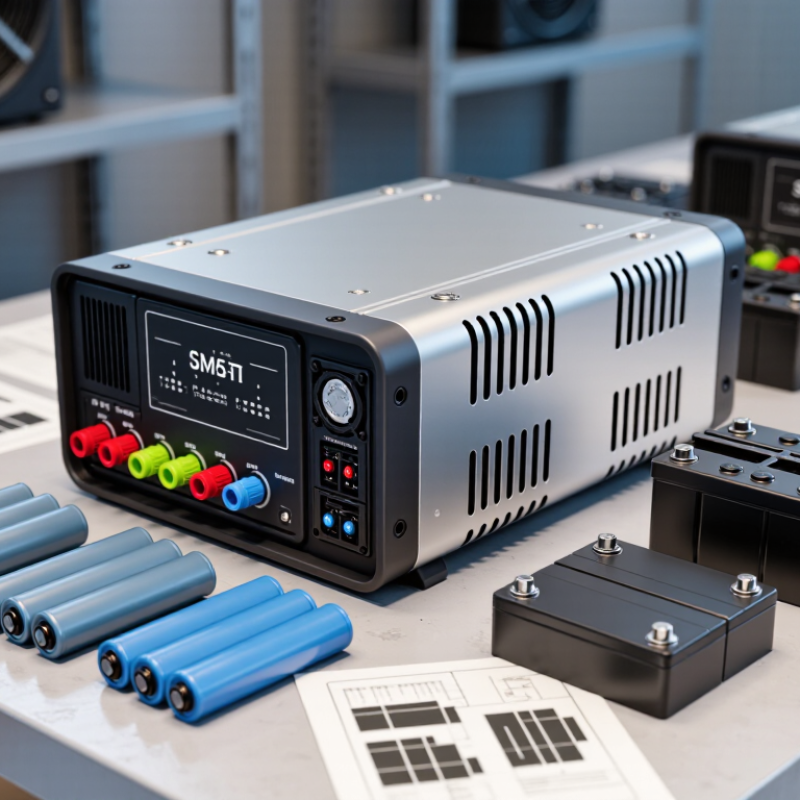
An SMPS battery charger should match the battery, not just its voltage label. Identify the chemistry, nominal voltage, and number of cells in series. Lead-acid and lithium batteries need different charging profiles, so one charger may not safely serve both. Check the battery documentation for its recommended charging voltage and current. Capacity, measured in amp-hours, helps set a sensible charging rate, but it does not replace the manufacturer’s limits.
Decide how quickly the battery must recharge and what equipment may run during charging. A higher current can shorten charging time, but only if the battery and its battery management system support it. Consider the charger’s input voltage, operating temperature, and ventilation needs, too. Small details matter. A common mistake is choosing by amp-hours alone; I would recheck the specified charging limits before ordering, even when the voltage seems right.
Tips: Compare the charger’s voltage and current ratings with the battery specifications. Confirm that its charging stages match the chemistry, and check any temperature limits. If the battery documentation is unclear, pause and ask a qualified supplier rather than guessing.
Match the charger’s output voltage to the battery chemistry and series-cell count, not just its “12 V” label. Battery University’s technical guides BU-303 and BU-409 list typical limits of 4.20 V per cell for standard lithium-ion and 3.65 V per cell for lithium iron phosphate. For a four-cell pack, that is 16.8 V versus 14.6 V. The numbers look close. They are not interchangeable. Lead-acid batteries use a different charging profile; a common 12 V unit may reach about 14.4 V during absorption, depending on its design and temperature. Check the battery maker’s specified charge voltage before selecting an SMPS charger.
Current needs the same care. A battery rated at 20 Ah with a permitted 0.2C charge rate accepts 4 A; that calculation is capacity multiplied by the allowed C-rate. The permitted rate varies by battery, so do not treat 0.2C as a universal rule. IEC 62619 addresses safety requirements for industrial lithium batteries, while the battery datasheet gives the practical charging limits for the specific pack. Leave room for real conditions. A warm battery or long cable run can change performance, and an undersized charger may take longer than expected. Measure at the battery terminals, not only at the charger. One detail is easy to overlook: some chargers advertise peak current, not continuous current. Check both ratings.
| Battery chemistry / configuration | Nominal battery voltage | Typical full-charge voltage | Common current-sizing guide | SMPS charger selection notes |
|---|---|---|---|---|
| Flooded lead-acid, 6 cells (12 V class) | 12 V nominal | About 14.4–14.7 V during absorption; typically 13.5–13.8 V for float | Often around 0.1–0.2C, subject to the battery specification | Choose a charger with a lead-acid charging profile, absorption timing, and float mode. Flooded batteries may require ventilation and periodic maintenance. |
| AGM lead-acid, 6 cells (12 V class) | 12 V nominal | Commonly about 14.4–14.7 V during absorption; typically 13.5–13.8 V for float | Often around 0.1–0.2C; confirm the battery’s maximum charge current | Use an AGM-compatible profile. Avoid equalization unless the battery manufacturer explicitly permits it. |
| Gel lead-acid, 6 cells (12 V class) | 12 V nominal | Often about 14.1–14.4 V during absorption; follow the battery specification | Use the battery maker’s limit; many gel batteries call for a conservative charge rate | Select a gel-specific profile and avoid excessive voltage, which can permanently damage the battery. |
| LiFePO₄, 4 cells in series (12.8 V class) | 12.8 V nominal | Typically 14.2–14.6 V, depending on the battery specification | Set current within the battery and BMS limits; 0.2C is a useful example, not a universal limit | Use a LiFePO₄ CC/CV profile. Do not use lead-acid equalization or continuous float unless the battery maker allows it. |
| LiFePO₄, 8 cells in series (25.6 V class) | 25.6 V nominal | Typically 28.4–29.2 V | Set current within the battery and BMS limits; calculate from capacity in amp-hours | Match the charger’s output range to the pack’s specified CC/CV charge voltage and confirm the BMS supports the charge current. |
| LiFePO₄, 16 cells in series (51.2 V class) | 51.2 V nominal | Typically 56.8–58.4 V | Set current within the battery and BMS limits; check thermal and wiring limits too | Verify that the charger’s maximum output voltage is suitable for the complete series pack, not just one cell. |
| Lithium-ion NMC/NCA, 3 cells in series (about 11.1 V class) | About 10.8–11.1 V nominal | Typically 12.6 V for cells rated to 4.20 V maximum | Use the pack’s specified charge rate and BMS limit | Use a charger designed for the exact cell chemistry and series count. Do not substitute a LiFePO₄ or lead-acid profile. |
| Lithium-ion NMC/NCA, 4 cells in series (about 14.4–14.8 V class) | About 14.4–14.8 V nominal | Typically 16.8 V for cells rated to 4.20 V maximum | Use the pack’s specified charge rate and BMS limit | The charger must regulate the correct per-cell maximum voltage and provide controlled constant-current/constant-voltage charging. |
Current example: For a 100 Ah battery, 0.1C equals 10 A and 0.2C equals 20 A. These are calculation examples, not universal recommended currents; the battery datasheet and BMS limits take priority.
Before choosing: Confirm chemistry, series-cell count, charge-voltage range, maximum charge current, temperature limits, and BMS requirements. Allow for charger output tolerance, cable voltage drop, and any load that will operate while charging.
Choosing an SMPS battery charger in 2026 means checking performance across the loads you actually use. A charger rated at peak output may behave differently when a battery is nearly full. Compare output-voltage accuracy, current limits, ripple, thermal protection, and recovery after a brief input drop. The U.S. Department of Energy’s battery-charger test procedure measures active charging and standby energy separately, a useful reminder that idle draw matters too. Ask for test conditions, not just a headline efficiency figure.
Efficiency figures need context. The 80 PLUS Gold criteria for internal computer power supplies specify at least 87%, 90%, and 87% efficiency at 20%, 50%, and full load, respectively, at 115 volts. This is a helpful partial-load benchmark, not a battery-charger certification. For a charger, request an efficiency curve at your battery voltage and typical charge current. Check whether cooling noise rises near full load. A neat datasheet can still leave important gaps.
Tips: Test with the battery type and cable length you plan to use. Review charge-stage controls, temperature compensation, and fault indicators. Confirm that the charger reduces current smoothly near full charge; abrupt behavior may shorten battery life. Small details count. A field log of voltage and temperature over several cycles can reveal issues that a single bench test misses.
Compare efficiency across the charger’s operating range, rather than relying on a single peak-efficiency figure. The chart shows an illustrative bench-test profile, not a universal specification or product measurement; actual results depend on input voltage, battery chemistry, charge stage, temperature, and load.
When evaluating a charger, check efficiency at several load levels alongside output-voltage regulation, thermal performance, and control features such as current limiting, over-voltage protection, and temperature compensation.
When choosing an SMPS battery charger, verify that its protections match the battery chemistry, voltage, and charging current. Look for documented overvoltage, overcurrent, short-circuit, and over-temperature protection. Reverse-polarity protection matters too, especially when users connect removable battery packs. Ask for test reports, not just a printed compliance logo. Check whether the charger’s safety standard fits its intended use: IEC 60335-2-29 covers household and similar battery chargers, while IEC 62368-1 applies to many audio, video, and information-technology power supplies. A battery’s own safety requirements are separate; IEC 62133-2 addresses portable sealed lithium cells and batteries. Details matter.
The scale of charging makes careful verification practical, not fussy. The International Energy Agency’s Global EV Outlook 2024 reports nearly 14 million electric cars sold worldwide in 2023, about 18% of all car sales. That figure describes vehicles, not charger failures, but it shows how quickly battery charging is expanding. Confirm that the supplier’s test documents identify the exact model, input range, output limits, and protection functions. Also check whether testing covers abnormal conditions, such as blocked ventilation or a shorted output. A neat label cannot show how a charger behaves under stress. Standards and test scope can vary by market, so some uncertainty remains until the documentation is reviewed.
Choosing an SMPS battery charger starts with its operating environment, not its headline power rating. Check the site’s temperature range, dust, moisture, ventilation, and expected input-voltage variation. A charger installed in a warm, sealed cabinet may need substantial thermal derating. Match its charging profile to the battery chemistry and capacity; confirm the specified voltage limits, current, and temperature compensation. Small details matter. A fan blocked by a cable can become a reliability problem.
For reliability, compare protection features, output ripple limits, thermal behavior, and service access. Ask for test conditions behind efficiency and lifetime claims, rather than treating a single laboratory figure as a field guarantee. Total cost includes energy use, downtime, replacement labor, and disposal—not just purchase price. The IEA’s Global EV Outlook 2024 reports that lithium-ion battery pack prices fell 14% in 2023; that trend does not mean chargers became cheaper, but it makes protecting the battery investment especially important. For lead-acid systems, the U.S. EPA reports a recycling rate close to 99%, though local collection access still affects practical end-of-life planning. I would still compare measured standby consumption: small losses can add up over years, and published figures may not match the actual installation.
Check the battery chemistry, nominal voltage, and number of cells in series. Lead-acid and lithium batteries need different charging profiles. Small details matter.
Use the battery’s recommended charging current. Capacity in amp-hours helps guide the rate, but it does not replace the battery’s limits.
Possibly, if both the battery and its management system support it. I would double-check before choosing a faster charger.
Confirm the charging stages match the battery chemistry. Also check the recommended voltage, temperature limits, and charger input range.
Check the operating-temperature range and ventilation needs. Keep vents clear; blocked airflow can cause overheating.
Check for documented overvoltage, overcurrent, short-circuit, over-temperature, and reverse-polarity protection. Polarity protection is useful with removable packs.
Ask for reports covering the exact model, input range, output limits, and protection functions. A printed logo is not enough.
IEC 60335-2-29 covers household and similar battery chargers. IEC 62368-1 applies to many information-technology power supplies. IEC 62133-2 addresses portable sealed lithium cells and batteries.
Yes. Ask whether testing covered blocked ventilation or a shorted output. Standards and test scope can vary by market, so review the documents carefully.
Choosing an SMPS Battery Charger in 2026 starts with understanding the battery’s chemistry, capacity, and charging requirements. Confirm that the charger’s output voltage matches the battery and that its current is appropriate for the battery’s size and recommended charging rate. A good match supports dependable charging while helping prevent unnecessary stress on the battery.
Next, assess the charger’s efficiency, output stability, and control features, including whether it can adjust charging as the battery approaches full capacity. Check for suitable protections against overvoltage, overcurrent, overheating, and short circuits, along with relevant safety certifications for your intended use. Finally, consider the operating environment, expected service life, maintenance needs, and total cost—not just the purchase price. Comparing these factors helps you select a charger that balances safe operation, reliable performance, and long-term value.