
Choosing a China Best 24VAC PTZ Camera Power Supply Supplier requires more than comparing prices and catalog photos. A reliable supplier must understand how PTZ cameras behave during startup, zooming, infrared activation, and continuous rotation. The right 24VAC PTZ Camera Power Supply should deliver stable voltage under changing loads. It should also match the camera’s wattage, cable distance, connector type, and installation environment.
Experienced installers usually check transformer capacity before reviewing appearance or packaging. For example, a camera may work normally on a short test cable but restart repeatedly after a 100-meter outdoor installation. This problem often indicates voltage drop, insufficient current, or poor cable selection. A professional supplier should provide measured output data, protection features, wiring guidance, and clear technical documents. Certifications and factory inspection records add confidence, but they should be verified carefully.
No supplier is perfect. A polished website does not prove consistent production quality. Buyers should request samples, test units under realistic loads, and confirm batch-to-batch performance. Ask how the supplier handles overheating, short circuits, surges, and after-sales claims. The enclosure should feel solid, with secure terminals and sensible ventilation. Small details matter.
The best supplier is not always the cheapest. It is the one that communicates clearly, supports practical testing, and accepts technical questions without vague promises. A careful evaluation reduces camera downtime and costly field replacements. Some specifications may still need confirmation. That deserves a closer look. Reliable cooperation begins with evidence, not assumptions.
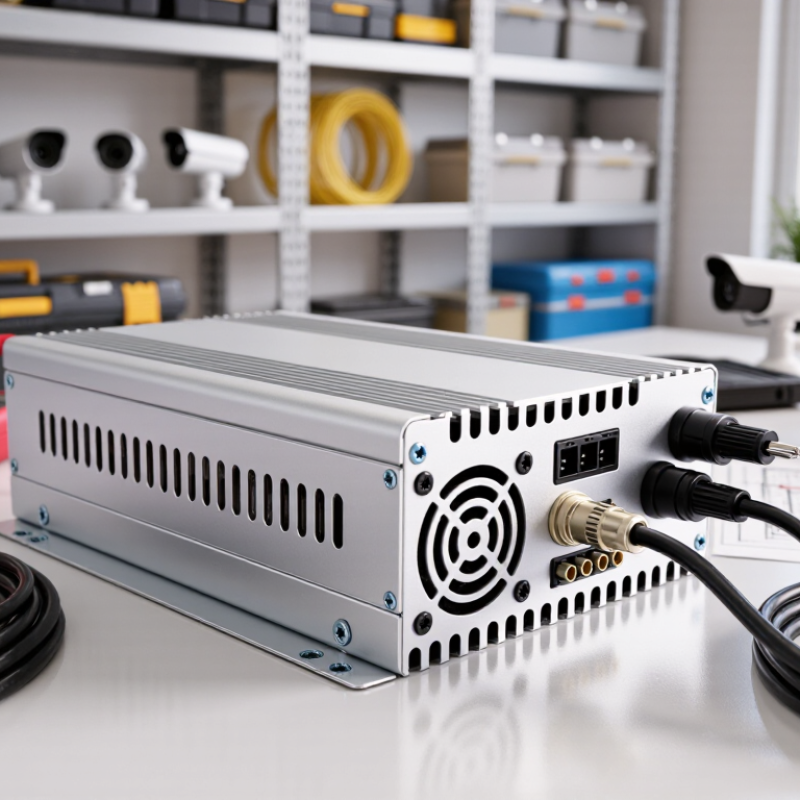
A 24VAC PTZ camera power supply converts mains electricity into low-voltage alternating current for pan, tilt, zoom, and infrared functions. It keeps the camera operating when motors start or lighting changes. A stable supply also reduces image loss and unexpected restarts.
MarketsandMarkets reports that the global video surveillance market may grow from about USD 53.7 billion in 2023 to USD 83.3 billion by 2028. This expansion increases demand for dependable PTZ infrastructure. However, camera growth does not remove basic power problems. Long cable runs create voltage drop, especially with thin conductors. Installers should check the camera’s rated voltage, maximum current, and startup load. A 24VAC supply rated only for average consumption may fail during movement.
Small details matter. A practical installation includes short-circuit protection, surge protection, and a weather-resistant enclosure. The transformer should provide adequate capacity without running continuously at its limit. The Electrical Safety Foundation International highlights grounding and overcurrent protection as essential parts of safe electrical systems. Field testing should measure voltage at the camera, not only at the supply cabinet. That distinction is often missed. I have also seen systems pass bench testing but restart outdoors during cold mornings. Temperature, cable length, motor load, and infrared activation should be tested together. A supplier’s technical credibility depends on documented calculations, traceable test procedures, and honest limits. Perfect predictions are uncommon. Verification remains necessary.
China Best 24VAC PTZ Camera Power Supply Supplier?
Key Specifications for Selecting a Reliable 24VAC PTZ Power Supply
When selecting a 24VAC PTZ camera power supply, verify its real output under load. A reliable unit should maintain stable voltage during camera movement, zooming, and infrared activation. Calculate the required VA rating from the camera, heater, illuminator, and startup surge. Adding a 20–30% reserve helps prevent random restarts. Do not trust the label alone.
Outdoor systems need more than electrical capacity. Check the enclosure rating, operating temperature range, surge protection, thermal cutoff, and grounding design. Cable distance matters too. A long cable can create voltage drop, especially with thin conductors. Use a clear terminal layout and confirm polarity before installation. Small details prevent expensive field visits.
A dependable China supplier should provide load-test records, wiring diagrams, inspection data, and consistent batch specifications. Ask for output measurements at low, normal, and peak loads. Sample testing is valuable, even when documents look complete. I have seen good-looking supplies fail after repeated heating and cooling cycles. That possibility deserves attention. Check fuse access, connector strength, and replacement support before placing a large order. A lower price can hide weak insulation or poor thermal design. Reliability is measured in the camera’s quiet, uninterrupted operation.
| Selection Dimension | Recommended Specification | Why It Matters for a 24VAC PTZ Camera | Verification Method |
|---|---|---|---|
| Output Voltage | 24VAC nominal; preferably regulated or tightly controlled under rated load | Maintains stable camera electronics, pan/tilt motors, zoom functions, heaters, and infrared illuminators. Excessive voltage drop may cause rebooting or motor malfunction. | Measure the voltage at the power supply and at the camera end while the PTZ is moving and all accessories are operating. |
| Output Capacity | Select the camera manufacturer's rated VA requirement, plus at least 20–30% reserve | PTZ cameras can draw more power during motor movement, maximum zoom, heater operation, or night-mode activation than during standby. | Compare the camera's maximum VA or current rating with the supply's continuous VA rating; do not size from idle consumption only. |
| Typical Capacity Classes | 40VA, 60VA, 100VA, 150VA, and 200VA classes are commonly used | The correct class depends on camera model, cable length, environmental heater load, infrared lighting, and the number of cameras connected. | Confirm the actual load calculation for every connected camera and avoid assuming that all PTZ models have the same demand. |
| Output Current | Output current should be at least the maximum camera current multiplied by 1.20–1.30 | For 24VAC systems, current is calculated as VA ÷ 24. For example, a 100VA supply provides approximately 4.17A at 24VAC. | Use the formula: maximum output current ≈ rated VA / 24V, then compare it with the camera's maximum current requirement. |
| Input Voltage | Match the local mains supply; a universal 100–240VAC, 50/60Hz input is useful for international installations | Correct input compatibility reduces installation risk and makes the same power supply design suitable for multiple electrical markets. | Check the input label, datasheet, terminal markings, and required protective devices before connection. |
| Voltage Regulation | Low no-load to full-load voltage variation; the datasheet should state the regulation or tolerance | Stable output improves PTZ positioning reliability and helps prevent undervoltage at the end of long cable runs. | Measure output at no load and at rated load, then repeat at the far end of the installed cable. |
| Protection Functions | Short-circuit, overload, over-temperature, and input over-voltage protection | Protection limits damage caused by wiring faults, stalled motors, excessive load, blocked ventilation, or abnormal input conditions. | Review the protection list in the technical datasheet and confirm whether recovery is automatic or requires a manual reset. |
| Surge Protection | Suitable input and output surge protection for the installation environment | Outdoor PTZ cameras and long cable routes are exposed to transient surges from nearby switching events and lightning-induced disturbances. | Check the stated surge test level, grounding requirements, and whether an external surge protective device is required. |
| Electrical Isolation | Isolated 24VAC output with clearly specified insulation and dielectric-strength ratings | Isolation helps separate the low-voltage camera circuit from the mains side and can reduce unwanted ground-related problems. | Review the insulation class, dielectric test rating, creepage, clearance, and applicable safety documentation. |
| Ingress Protection | Indoor enclosure for protected locations; an appropriately rated weather-resistant enclosure for outdoor installation | Water and dust protection are essential when the supply is installed near an outdoor PTZ camera or in an exposed equipment cabinet. | Confirm the enclosure rating and cable-entry method; the rating applies only when the enclosure is installed and sealed correctly. |
| Operating Temperature | A stated operating range that covers the installation site, with margin for seasonal extremes | Temperature affects transformer heating, electronic component life, output capacity, and the reliability of outdoor installations. | Compare the rated operating range with the actual ambient temperature inside the cabinet, not only the outdoor air temperature. |
| Cooling and Thermal Design | Adequate ventilation or correctly rated fanless thermal design; no blocked air path | Continuous operation at high load creates heat. Poor ventilation can trigger thermal protection or shorten component life. | Check derating curves, ventilation clearances, fan service life if applicable, and cabinet heat accumulation. |
| Cable Compatibility | Cable size and length selected to keep voltage drop within the camera's allowable range | Low-voltage AC circuits are sensitive to cable resistance. Long runs or undersized conductors can reduce the voltage available at the camera. | Calculate voltage drop using cable length, conductor resistance, and maximum current; verify voltage under worst-case operation. |
| Connection Method | Secure screw terminals, barrier terminals, or appropriately rated plug connections with clear polarity and grounding markings | Although 24VAC has no DC polarity, secure terminals prevent intermittent operation caused by vibration, loose wiring, or poor contact. | Inspect terminal torque, conductor size range, strain relief, and separation between mains and low-voltage wiring. |
| Noise and Electromagnetic Compatibility | Low electrical noise and documented EMC performance where sensitive video or communication equipment is used | A well-designed supply helps minimize interference that could affect video transmission, control communication, or nearby equipment. | Review EMC test information and install power and signal cables separately where practical. |
| Safety and Compliance | Applicable electrical safety, EMC, and environmental compliance documentation for the destination market | Traceable test reports and complete technical documentation support safe installation, approval, maintenance, and project acceptance. | Request the declaration of conformity, test reports, wiring diagram, user manual, and product identification information. |
| Reliability Information | Clear warranty terms, production traceability, inspection records, and documented test procedures | Reliable supply selection depends on repeatable manufacturing quality, not only on nominal VA or output voltage. | Ask for sample inspection data, burn-in or load-test procedures, serial-number traceability, and after-sales response terms. |
| Installation and Maintenance | Accessible terminals, clear status indicators, replaceable protection components where appropriate, and serviceable enclosure design | Good serviceability reduces downtime during troubleshooting and makes periodic inspection safer and faster. | Review the installation manual and confirm access, mounting method, fuse or breaker requirements, and maintenance instructions. |
Practical selection rule: Always size the 24VAC power supply from the PTZ camera's maximum rated VA, including heater and illuminator loads, then verify voltage drop at the camera during the highest-load operating condition.
A China-based supplier can offer practical advantages for PTZ installations. Many manufacturers operate close to component factories and assembly lines. This often shortens sourcing time and supports more flexible production. A 24VAC supply must handle camera movement, heater loads, and outdoor temperature changes. Experienced engineers check voltage stability under these real operating conditions. They may also review cable length, current demand, enclosure rating, and installation position.
Clear technical communication matters. A reliable supplier should provide output tolerances, wiring diagrams, protection details, and test records. Look for safeguards against overload, short circuits, surges, and excessive temperature. Factory testing should include continuous operation, insulation checks, and load simulation. Photographs of test benches and traceable inspection documents can reveal more than polished sales language. Small details matter.
Customization is another reason to consider China-based production. The supplier may adjust connectors, mounting holes, cable length, or enclosure materials. This helps when a project uses unusual cabinets or long outdoor cable runs. Still, distance can create delays. Time zones, translation, and sample approval need careful management. I have seen projects lose time because the buyer confirmed a drawing too quickly. A written specification and one tested sample can prevent that mistake. Price is useful, but dependable testing and responsive engineering support deserve equal attention.
China Best 24VAC PTZ Camera Power Supply Supplier?
Choosing a 24VAC PTZ camera power supply requires more than comparing prices. Experienced installers check voltage stability during camera startup and movement. A reliable unit should maintain output under load, with minimal transformer hum and heat. Inspect terminal screws, cable entry points, fuse access, and enclosure strength. These details matter in dusty control rooms and outdoor cabinets.
Certifications should be verifiable, not simply printed on a product label. Request current test reports, factory quality records, and documents matching the exact model. Electrical safety requirements can differ by destination, so generic certificates may not be enough. Customization is equally important. Confirm options for input voltage, connector types, surge protection, fuses, mounting holes, and cable length. Ask for an engineering drawing and a sample before placing a large order. A polished datasheet can still miss a practical issue. I have seen small connector changes create installation delays.
Tips: Test the supply with the real PTZ load. Measure voltage at the camera end. Ask about startup current. Check response times for technical support and warranty claims. Good suppliers provide clear troubleshooting steps, replacement procedures, and stable spare-part availability. Support quality is often revealed after the first problem, not during the sales conversation.
Reference output-capacity comparison for evaluating 24VAC PTZ camera power supplies
The apparent power values are calculated using the standard formula VA = V × A at a nominal output of 24VAC. When selecting a supplier, confirm continuous-load capacity, voltage regulation, surge protection, electrical-safety certification, customization capability, production testing, warranty terms, and after-sales support. A 30% capacity margin is commonly used to reduce the risk of overload caused by PTZ movement, infrared illumination, cable loss, and startup current.
Start with a complete load schedule. Confirm 24VAC output, rated VA capacity, input voltage, frequency, enclosure rating, and operating temperature. Add at least 25% spare capacity for motor startup and heater activation. A 24VAC, 100VA unit may not support a camera drawing 4A continuously. Cable resistance can reduce voltage at the camera. Measure it under load.
Request samples before mass ordering. Check terminal labeling, grounding, fuse access, and cable strain relief. Ask for insulation, dielectric-strength, temperature-rise, and surge-test records. IEC 62368-1 alignment is useful, but certificates must match the exact model. Generic documents are not enough.
Factory quality assurance should include incoming component inspection, controlled assembly, full-load testing, and traceable serial records. A 4–8 hour burn-in test can reveal weak capacitors or loose terminals. I once focused too heavily on enclosure thickness and overlooked voltage drop. That was a poor assumption. Field testing matters more than attractive specifications. Photograph test meters, load settings, and carton labels during inspection. Small details prevent expensive replacements.
It should maintain stable voltage during camera movement, zooming, heating, and infrared activation. Labels alone are not enough.
Add the camera, heater, illuminator, and startup loads. Keep at least 20–30% spare capacity. More reserve is safer.
No. A camera drawing 4A continuously already needs about 96VA. Cable loss and startup demand may require more.
Long cables create voltage drop, especially with thin conductors. Measure voltage at the camera while the system is operating.
Check enclosure rating, temperature range, surge protection, thermal cutoff, grounding, and short-circuit protection. Outdoor conditions can be harsh.
Request wiring diagrams, load-test records, inspection data, protection details, and consistent batch specifications. Traceable records are useful.
Samples reveal weak terminals, poor insulation, unclear labels, or voltage instability. Documents can look complete and still miss problems.
Useful tests include full-load operation, insulation checks, temperature-rise testing, dielectric strength, and four-to-eight-hour burn-in testing.
Some suppliers can adjust connectors, mounting holes, cable length, or enclosure materials. Confirm every drawing in writing.
I once focused too much on enclosure thickness and overlooked voltage drop. That assumption was poor. Field testing matters more.
A 24VAC PTZ Camera Power Supply is designed to deliver stable alternating-current power to pan-tilt-zoom surveillance cameras, supporting reliable motor movement, zoom functions, infrared systems, and continuous video monitoring. When selecting a suitable power supply, buyers should evaluate output voltage stability, sufficient wattage, current capacity, surge protection, operating temperature range, enclosure design, and compatibility with the camera and installation environment. Proper cable distance and voltage-drop considerations are also essential for dependable performance.
A China-based supplier can offer flexible production capacity, competitive pricing, and practical customization options for different project requirements. Supplier evaluation should focus on manufacturing quality, product testing, safety certifications, technical expertise, delivery capability, and after-sales support. A dependable ordering process typically includes confirming specifications, reviewing samples or test reports, approving packaging and labels, conducting pre-shipment inspections, and maintaining clear communication throughout production. These steps help ensure that each 24VAC PTZ Camera Power Supply meets performance expectations and provides consistent, long-term service.