
Export & OEM Desk: +91 9765557595 [email protected] Manufactured in Nagpur, India
0%

Choosing the 2026 Best 48V Industrial PoE Switch Power Supply requires more than comparing wattage and price. In factories, ports may power cameras, wireless access points, sensors, and access-control terminals across long cable routes. A supply must remain stable beside motors, vibration, dust, and sudden temperature changes. Small weaknesses become visible quickly.

David Tremblay, a recognized IEEE Ethernet standards expert and former chair of the IEEE 802.3bt Task Force, has emphasized, “Power delivery must be reliable, interoperable, and safe across the entire Ethernet system.” That principle remains practical for every 48V Industrial PoE Switch Power Supply evaluation. Buyers should examine output regulation, overload protection, surge immunity, operating temperature, efficiency, and certified PoE compatibility. Check the details.

Field experience also changes the decision. A laboratory-tested unit may perform well at 25°C, yet behave differently inside a sealed control cabinet near a variable-frequency drive. Thermal headroom matters. So does service access. Some products advertise high efficiency but provide limited derating data, which makes comparison difficult. That is an uncomfortable gap.

This guide will assess power supplies through measurable specifications and realistic industrial conditions. It will consider continuous load capacity, start-up behavior, connector quality, electromagnetic performance, and manufacturer support. No single model fits every installation. A compact supply may suit a small cabinet, while a redundant design may better protect remote infrastructure. The best choice depends on actual load, environment, expansion plans, and verified documentation—not impressive marketing language.
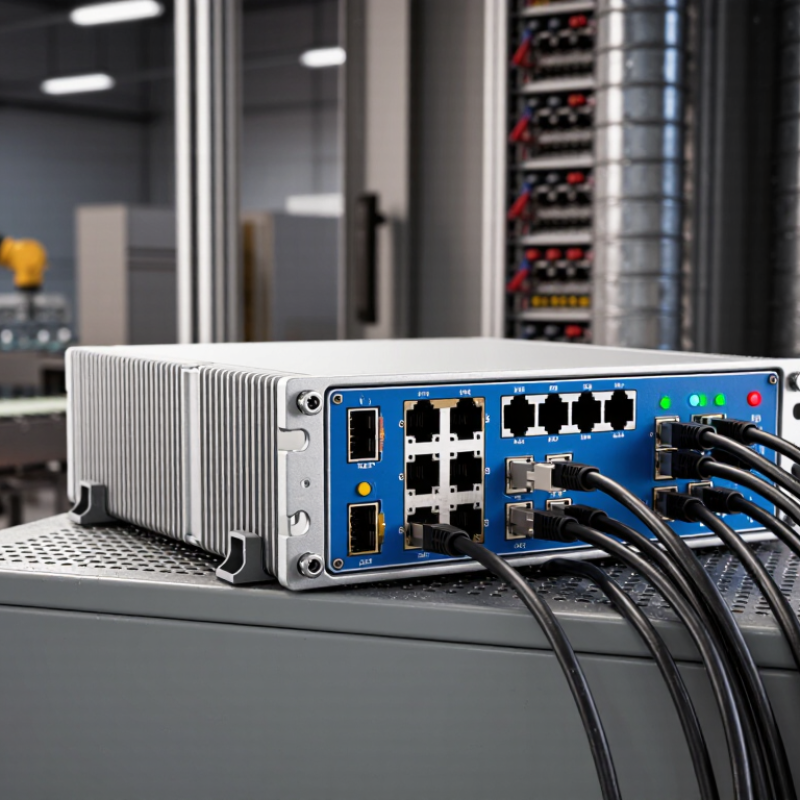
2026 Best 48V Industrial PoE Switch Power Supply?

What Is a 48V Industrial PoE Switch Power Supply?

A 48V industrial PoE switch power supply is the electrical source that feeds both network data equipment and powered devices through Ethernet cables. It converts available AC or DC input into a stable 48V DC output. The switch then delivers controlled power to cameras, wireless access points, sensors, or industrial terminals.

In practical installations, the supply must handle more than its rated voltage. Engineers check total PoE wattage, startup current, cable resistance, and heat inside the cabinet. A 48V output can drop under heavy load. That small detail matters. A six-port switch may need far more capacity when every device starts simultaneously. Input isolation, overcurrent protection, short-circuit protection, and surge control improve reliability near motors and frequency drives.

Industrial models usually support wide temperature ranges and vibration-resistant construction. DIN-rail mounting can simplify replacement beside a control system. The enclosure should also allow airflow, because a crowded cabinet raises internal temperature quickly. I have seen power calculations look correct on paper, yet fail after long cable runs and winter heater activation. Leaving a practical reserve helps, although too much reserve increases cost and cabinet space. The “best” 48V supply depends on verified load data, environmental conditions, connector quality, and the switch’s actual PoE standard—not only its label.

How 48V PoE Power Supplies Deliver Reliable Industrial Power

2026 Best 48V Industrial PoE Switch Power Supply?

How 48V PoE Power Supplies Deliver Reliable Industrial Power

A dependable 48V PoE supply begins with stable voltage, not a marketing label. IEEE 802.3bt permits up to 90 watts from the power sourcing equipment and 71.3 watts at the powered device. That distinction matters. Cable resistance, connector condition, and cabinet temperature can reduce usable power before equipment starts.

In a factory cabinet, a 0.5-ohm copper loop carrying 10 amps wastes 50 watts as heat. Shorter cable paths, low-resistance terminals, and proper conductor sizing therefore protect both uptime and efficiency. The U.S. Department of Energy reports that motor-driven systems consume roughly 70% of industrial electricity. Nearby motors can create electrical noise and voltage disturbances, so an industrial supply needs isolation, surge protection, controlled startup, and adequate filtering.

Thermal design is equally important. A supply rated for 480 watts at 25°C may deliver less inside a sealed cabinet at 50°C. Engineers should check derating curves, overload recovery, short-circuit behavior, and redundant input options. Practical testing should include cold starts and long cable runs. Do not test only on a clean workbench.

A 48V PoE system can remain reliable when grounding, airflow, and load calculations are treated as one design. IP-rated enclosures and vibration-resistant terminals also matter near dust, pumps, and conveyors. Yet one weakness remains: field conditions are rarely predictable. A larger power margin is often wiser than a perfect spreadsheet.

2026 Best 48V Industrial PoE Switch Power Supply? — How 48V PoE Power Supplies Deliver Reliable Industrial Power

Industrial 48V PoE Power Supply Selection and Performance Reference
PoE Class IEEE PoE Type Nominal PSE Output per Port Maximum PD Input Power Typical PSE Voltage Range Approx. Current at 48V Suitable Industrial Loads
Class 0 802.3af, Type 1 15.4 W 12.95 W 44–57 V DC 0.32 A Basic cameras, access points, sensors and VoIP endpoints
Class 4 802.3at, Type 2 30 W 25.5 W 50–57 V DC 0.63 A PTZ cameras, higher-power wireless access points and industrial terminals
Class 5–6 802.3bt, Type 3 60 W 51 W 50–57 V DC 1.25 A Multi-radio access points, compact displays and powered industrial devices
Class 7–8 802.3bt, Type 4 90–100 W 71.3–71.5 W 50–57 V DC 1.88–2.08 A High-power cameras, thin clients, lighting and advanced edge equipment
Power Supply Parameter Recommended Industrial Design Target Why It Matters for PoE Reliability Selection Notes
Nominal DC output 48 V DC Provides the normal voltage platform used by IEEE PoE power sourcing equipment. Use a regulated output and verify the switch input tolerance before installation.
Output power sizing Calculated PoE budget plus at least 15–25% reserve The reserve supports startup current, thermal derating and future port expansion. For 24 ports at 30 W each, the PoE budget is 720 W before reserve and system losses.
Input voltage Common industrial range: 18–60 V DC Supports nominal 24 V and 48 V control cabinets, vehicles and battery systems. Confirm the actual operating range, polarity and transient requirements of the installation.
Efficiency 90% or higher at rated load is a practical target Higher efficiency reduces cabinet heat and lowers cooling requirements. Check the efficiency curve at the expected load rather than relying only on the peak value.
Operating temperature At least −40°C to +70°C ambient for harsh sites Maintains operation in outdoor cabinets, factories, transport systems and unconditioned enclosures. Review the derating curve; full rated power may not be available at the highest temperature.
Protection functions Overvoltage, overcurrent, short-circuit and overtemperature protection Limits damage caused by wiring faults, blocked airflow and abnormal load conditions. Prefer automatic recovery where uninterrupted operation is required.
Redundancy Dual DC input or parallel-redundant supply arrangement Allows maintenance or a single supply fault without shutting down the PoE switch. Use independent upstream circuits where continuous networking is critical.
Cooling method Passive cooling for lower power; monitored fan cooling for high power Reduces heat stress while balancing acoustic noise, dust exposure and service life. Keep ventilation clear and follow the enclosure manufacturer’s thermal calculation.
Mounting format DIN-rail or panel mounting Simplifies installation inside control cabinets and industrial distribution panels. Check clearance, terminal orientation, vibration resistance and enclosure space.
Protection and compliance Applicable EMC, safety, surge and industrial-environment requirements Helps prevent interference and improves resilience against electrical disturbances. Verify the exact approvals required by the target country, industry and installation type.
Power-sizing formula: Required supply rating ≈ (total PoE port budget + switch electronics consumption) ÷ supply efficiency. For example, a 24-port switch with a 720 W PoE budget and 40 W of internal consumption at 90% efficiency requires approximately 845 W before adding an engineering reserve.

Key Specifications for Selecting a 2026 Industrial PoE Supply

2026 Best 48V Industrial PoE Switch Power Supply?

Key Specifications for Selecting a 2026 Industrial PoE Supply

Selecting a 2026 industrial PoE supply starts with the real load map, not the switch label. IEEE 802.3bt-2018 permits up to 90 watts from the power sourcing equipment and 71.3 watts at the device. Older 802.3af and 802.3at classes provide less power. Check every camera, access point, sensor, and heating element separately. Startup current can overload an apparently adequate 48V unit. A practical design should reserve about 20% capacity for aging, cable loss, and expansion.

Efficiency deserves attention. The International Energy Agency’s Electricity 2024 report estimates data-center electricity use could exceed 1,000 TWh in 2026, up from about 460 TWh in 2022. Industrial networks are smaller, but wasted conversion energy still becomes cabinet heat.

Request efficiency figures at 25%, 50%, and full load. Also verify output regulation, isolation, short-circuit protection, and thermal derating. A 48V label alone proves little.

Check the operating temperature, airflow, DIN-rail mounting, vibration resistance, and surge immunity. IEC 62477-1 supports power-conversion safety evaluation, while IEC 61000-4 series tests address electromagnetic immunity.

In field commissioning, I have seen ventilation ignored until summer faults appeared. That mistake is avoidable.

Published MTBF values also need careful reading; they are calculated estimates, not guaranteed service life. Ask for test conditions, maintenance records, and power-budget evidence before approval.

Comparing Industrial 48V PoE Power Supply Types and Features

2026 Best 48V Industrial PoE Switch Power Supply?

Industrial 48V PoE power supplies differ in topology, capacity, and protection. AC-to-DC DIN-rail supplies suit fixed cabinets with stable mains input. DC-to-DC converters work better in vehicles, solar systems, and battery-backed sites. Choose isolated conversion when ground loops or sensitive sensors are concerns. Non-isolated models can reduce cost, but installation becomes less forgiving.

Check the PoE standard before selecting a supply. 802.3af and 802.3at support common access points and cameras. 802.3bt needs higher power and stronger thermal management. Calculate the total PoE budget, then add practical headroom. A 480-watt load should not run from a 480-watt supply continuously. Heat builds inside a sealed enclosure. Output derating above 50°C is easy to overlook. Surge protection, short-circuit recovery, reverse-polarity protection, and dual-input redundancy also matter. A higher wattage is not automatically better. Oversizing can increase heat and standby losses.

Tips:

Measure voltage at the switch, not only at the supply terminals. Long cable runs create voltage drop. Confirm the supply accepts the local input range. Check its operating temperature, ripple, efficiency, and alarm contacts. A small test load can reveal startup problems before deployment. I have seen systems pass bench testing but fail after cabinet heating. That gap deserves attention. Some specifications look impressive, yet the installation environment decides reliability.

Installation, Safety, and Maintenance Best Practices

A 48V industrial PoE switch needs disciplined installation, not just a correctly rated adapter. IEEE 802.3bt permits up to 90 watts from the power-sourcing equipment, while the powered device receives less after cable losses. Confirm the switch budget, cable length, and startup current before energizing the panel. Leave practical headroom.

Mount the supply inside a ventilated enclosure, away from heaters, water pipes, and heavy vibration. Use correctly rated overcurrent protection, bonded protective earth, and separated low-voltage and mains wiring. IEC 62368-1 emphasizes energy-source classification, insulation, and protection against electric shock and fire. Measure polarity before connection. A reversed pair can destroy equipment quickly. The 2024 Uptime Institute Global Data Center Survey continues to identify power-related problems as a major source of operational outages, reinforcing the value of careful commissioning.

Maintenance should be visible and repeatable. Record output voltage, load current, cabinet temperature, and alarm status during monthly inspections. Check terminal torque, discoloration, dust buildup, and fan noise. Clean filters without forcing debris into the enclosure. Replace damaged cables immediately. IEEE 802.3bt also requires attention to connector heating and pair resistance, especially at high power. One overlooked weakness is voltage drop under load; an unloaded 48V reading can look perfect. Test during peak operation. My practical preference is to keep a maintenance log, although logs are often incomplete and deserve review. Test backup power transfer twice yearly, and isolate the circuit before service.

FAQS

What does a 48V industrial PoE switch power supply do?

It converts AC or DC input into stable 48V DC power. The switch carries electricity and network data through Ethernet cables. Connected devices may include cameras, sensors, access points, or industrial terminals.

How much power capacity does the supply need?

Add the switch load, connected device loads, startup current, and cable losses. A six-port switch may demand much more during simultaneous startup. Leave practical room. Too much reserve, however, increases cost and cabinet space.

Why can a measured 48V output still cause problems?

Voltage may fall during peak operation or across long cables. An unloaded reading can look perfect while equipment struggles under load. Test the supply during maximum activity. This step is easy to forget.

Where should the power supply be installed?

Mount it inside a ventilated industrial enclosure. DIN-rail mounting can simplify replacement beside control equipment. Keep it away from heaters, water pipes, and strong vibration. A crowded cabinet becomes hot quickly.

What safety measures are important during installation?

Use suitable overcurrent protection and a bonded protective earth. Separate mains wiring from low-voltage network wiring. Check polarity before connection. A reversed pair can damage equipment quickly. Isolate the circuit before service.

Which environmental conditions should engineers check?

Review temperature range, vibration, dust, moisture, and airflow. Motors and frequency drives may create electrical disturbances. Surge control and input isolation can improve reliability. The enclosure still needs sensible ventilation.

How should the system be maintained?

Record output voltage, load current, cabinet temperature, and alarm status monthly. Inspect terminal torque, discoloration, dust, and unusual fan noise. Check connectors for heating, especially at higher power. Replace damaged cables immediately. Clean filters carefully.

How often should backup power transfer be tested?

Test backup power transfer twice each year. Record the result and investigate failed or unclear transfers. Maintenance logs help, but incomplete logs need review. Paperwork alone does not prove reliability.

Conclusion

A 48V Industrial PoE Switch Power Supply is designed to provide stable electrical power for industrial Ethernet switches and connected PoE devices in demanding environments. It converts incoming AC or DC electricity into regulated 48V output, helping support network equipment such as sensors, cameras, access points, and control systems. Reliable designs typically include wide input ranges, efficient power conversion, overload protection, short-circuit protection, surge resistance, and sufficient power capacity for continuous operation.

When selecting a 2026 industrial PoE supply, consider total PoE budget, output voltage tolerance, efficiency, operating temperature, mounting method, enclosure protection, and compatibility with the intended switch. DIN-rail, wall-mounted, and enclosed power supplies may suit different installation conditions. Proper wiring, grounding, ventilation, and circuit protection are essential for safe operation. Regular inspection should check terminals, cables, dust buildup, and abnormal heat, while preventive maintenance helps maintain dependable performance and extend service life.

Olivia

Olivia

Olivia is a dedicated marketing professional with a strong understanding of the company’s products, customers, and evolving industry landscape. Through clear, practical, and well-researched content, she regularly contributes expert articles to the company website, helping readers better understand......