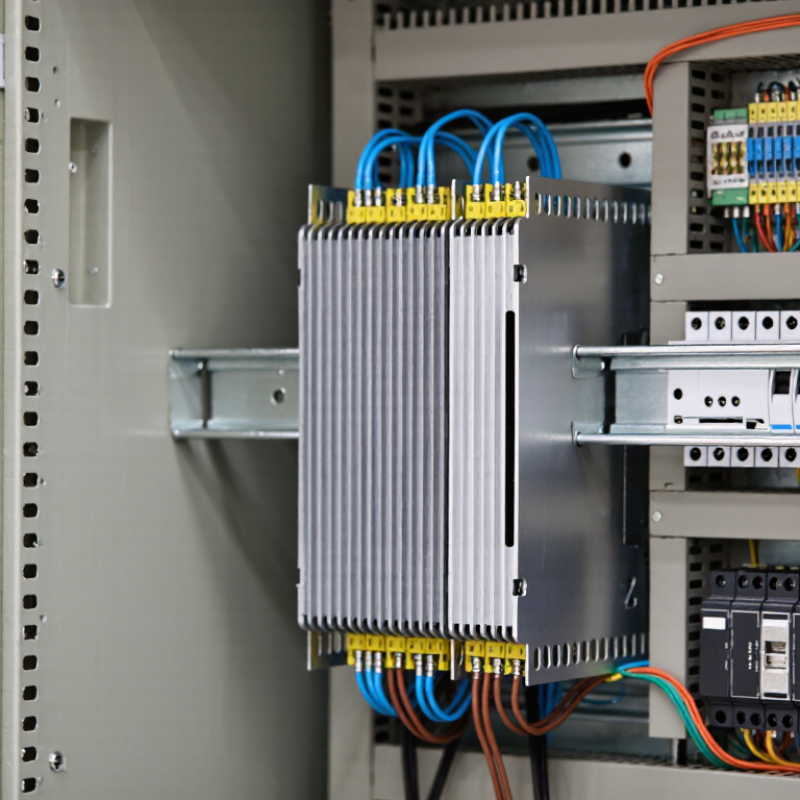
A 24V DIN rail power supply converts incoming AC electricity into stable 24V DC power. It clips onto a metal DIN rail inside a control cabinet. This compact shape keeps wiring organized and leaves space for circuit breakers, relays, and controllers.
Inside the unit, AC power passes through input protection and a rectifier. The rectifier changes alternating current into pulsating direct current. A high-frequency switching circuit then adjusts the voltage through a small transformer. The output stage filters and regulates it, producing a cleaner 24V DC supply for connected equipment. Terminals normally identify line, neutral, protective earth, positive, and negative connections.
The power supply feeds devices such as PLCs, sensors, solenoid valves, and indicator lights. Its output current must exceed the combined demand of these loads. Startup surges can be easy to miss, especially with valves and motors. Heat also matters. A crowded cabinet or high ambient temperature may reduce the practical output capacity, even when the label looks sufficient.
Good installation includes a suitable fuse or breaker, secure terminals, and correct polarity. Protective earth should connect according to local electrical requirements. Short-circuit protection may shut the output down temporarily, then recover after the fault is removed. That behavior is useful, but it should not replace careful fault finding. In real panels, neat wiring can still hide a loose connection or an underestimated load.