Choosing a reliable 24V Battery Backup Power Supply is not simply a matter of comparing wattage or price. Global buyers must examine battery chemistry, output stability, recharge time, protection features, and regional support. A unit may perform well in a cool warehouse but struggle inside a hot control cabinet. Small details matter, including terminal quality, cooling airflow, cable length, and alarm visibility.
Thomas Edison, an early storage-battery pioneer, observed, “The storage battery is, in my opinion, a far greater problem than the electric light.” His comment remains relevant. Battery storage still demands careful testing, honest specifications, and practical judgment. In this 2026 guide, we assess 24V Battery Backup Power Supply options for industrial controls, security systems, networking equipment, and emergency communication devices. We consider usable capacity rather than advertised capacity alone. We also examine voltage regulation, transfer behavior, battery replacement, enclosure strength, and operating temperature.
Real-world experience exposes weaknesses.
A dependable system should protect sensitive loads during outages without creating a new hazard. Buyers should verify certifications, warranty terms, shipping restrictions, and compatibility with local electrical standards. These requirements vary by market, so one purchasing strategy may not fit every country. That is easy to overlook.
Our comparison is based on measurable specifications, manufacturer documentation, and practical installation concerns. Still, no product is perfect. Some models offer stronger surge handling but larger dimensions. Others provide excellent monitoring yet cost more. The right choice depends on load priority, outage duration, maintenance access, and the consequences of failure. Consider this guide a careful starting point, not a substitute for site testing.
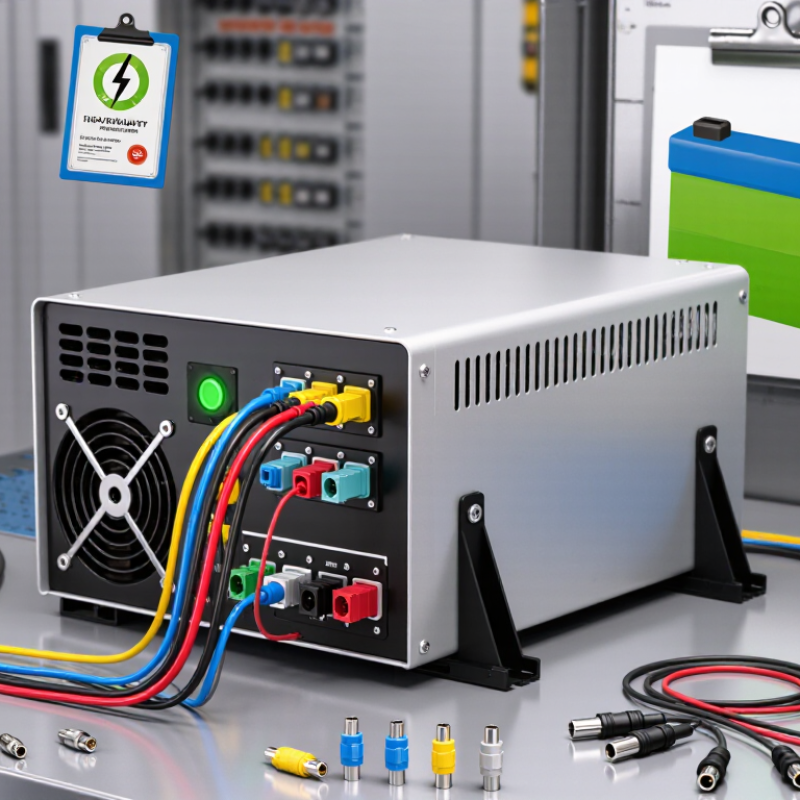
A 24V battery backup power supply stores energy for equipment during outages or unstable utility service. In many systems, the 24V bank uses two 12V batteries connected in series. The positive terminal of one battery connects to the negative terminal of the other. The remaining terminals deliver 24V, while the amp-hour rating stays the same. For example, two 12V 100Ah batteries provide approximately 24V and 100Ah, or 2,400Wh before efficiency losses.
Connection mistakes can damage equipment. Do not connect the batteries in parallel when the system requires 24V. Parallel wiring increases capacity but keeps the voltage at 12V. Both batteries should have matching voltage, capacity, age, and chemistry. A lithium battery needs a suitable protection and balancing system. Lead-acid batteries require ventilation and careful charging. Small details matter. Check terminal polarity with a meter before powering the load.
For global buyers in 2026, compare usable watt-hours, charging time, transfer performance, operating temperature, and replacement access. Estimate runtime by dividing usable watt-hours by the equipment’s wattage. A 240W load may run for about eight hours from 2,400Wh under ideal conditions, but inverter losses reduce that figure. Real results vary. I would also confirm input voltage, output waveform, connector type, and frequency compatibility before purchase. Product sheets can look complete, yet battery performance often changes in cold rooms or after repeated deep discharges. A slightly larger capacity may be wiser than a perfect calculation.
| Data Dimension | Specification / Explanation | Why It Matters to Global Buyers |
|---|---|---|
| System voltage | 24 V nominal, normally built with two 12 V batteries connected in series. | A higher DC voltage reduces current for the same power, helping limit cable losses and voltage drop. |
| How two 12 V batteries work | Connect the positive terminal of one battery to the negative terminal of the other. The remaining terminals provide approximately 24 V. | Series connection increases voltage while the amp-hour capacity remains the same as that of one battery. |
| Typical battery capacity | Common matched pairs include 12 V 50 Ah, 12 V 100 Ah, and 12 V 200 Ah batteries. | Capacity determines how long essential equipment can operate during a power interruption. |
| Stored energy | Approximate energy is calculated as: volts × amp-hours. A 24 V 100 Ah bank stores about 2,400 Wh, or 2.4 kWh, before losses. | This provides a consistent way to compare backup capacity across different battery sizes. |
| Estimated runtime example | For a 24 V 100 Ah battery bank powering a 240 W load: theoretical runtime is about 10 hours; practical runtime is lower because of inverter, battery, temperature, and load effects. | Runtime estimates should include an efficiency and usable-capacity allowance rather than relying only on theoretical watt-hours. |
| Supported output types | Depending on the power-supply design, outputs may include regulated 24 V DC, lower-voltage DC outputs, or AC output through an inverter. | The output voltage and waveform must match the equipment being protected. |
| Recommended battery chemistry | Lead-acid batteries are widely used; lithium iron phosphate batteries can offer lower weight and greater usable capacity when supported by a suitable battery management system. | Chemistry affects weight, service life, charging requirements, safety, transport, and total cost of ownership. |
| Battery matching requirement | Use two batteries with the same voltage, chemistry, capacity, model specification, age, and similar state of charge. | Mismatched batteries can charge unevenly, reduce performance, and increase the risk of premature failure. |
| Charger requirement | The charger must be designed for a 24 V battery bank and must match the battery chemistry and charging profile. | A 12 V charger is not suitable for charging a complete 24 V series battery bank. |
| Protection functions | Important protections include overcharge, over-discharge, short circuit, overload, over-temperature, reverse polarity, and battery low-voltage shutdown. | Protection improves operational safety and helps prevent damage to batteries, loads, and connected wiring. |
| Power rating selection | Select continuous output power above the normal load and verify the short-term surge requirement of motors, pumps, compressors, and other inductive loads. | A unit sized only for average watts may shut down when equipment starts. |
| Transfer time | Backup systems may have an interruption during changeover, while online designs can provide continuous conditioned power. | Sensitive computers, networking equipment, and control systems may require a very short or zero transfer interruption. |
| Operating temperature | Battery capacity and service life vary with temperature. Avoid excessive heat, freezing conditions, moisture, and poor ventilation. | Temperature control is especially important for warehouses, outdoor cabinets, and remote installations. |
| Installation orientation | Sealed batteries are generally easier to install than flooded batteries; follow the battery manufacturer’s ventilation and orientation instructions. | Installation requirements affect enclosure design, shipping, maintenance, and site approval. |
| International input compatibility | For AC-powered chargers or inverters, confirm the input voltage, frequency, plug type, grounding arrangement, and applicable local requirements. | Electrical standards and mains conditions differ between regions. |
| Cable and fuse sizing | Use appropriately sized DC cables and place suitable overcurrent protection close to the battery positive terminal. | Correct cable and fuse selection helps reduce voltage drop and limits fault-current hazards. |
| Best-fit applications | Telecommunications equipment, security systems, access control, network devices, automation controls, emergency lighting, and small off-grid systems. | These applications commonly need stable DC backup and predictable operation during outages. |
| Buyer checklist | Confirm load watts, surge watts, required runtime, battery chemistry, charger voltage, enclosure conditions, certifications, shipping rules, and after-sales support. | A complete specification review reduces compatibility problems and unexpected installation costs. |
Note: Runtime, charging time, service life, and usable capacity are estimates and vary according to battery chemistry, temperature, load profile, inverter efficiency, maintenance, and installation conditions.
Lithium iron phosphate offers a strong balance of safety, service life, and usable capacity. A typical pack delivers about 25.6V nominally. It fits communication, security, and small solar equipment.
Many quality batteries provide about 2,000–5,000 cycles. Actual life depends on discharge depth, temperature, charging voltage, and current. Not magic. Repeatedly reaching zero can shorten service life.
A properly validated system monitors voltage, current, temperature, and charge status. It can stop overcharging, excessive discharge, overheating, and cell imbalance. Sensor or firmware problems can still create risk. That deserves checking.
Request the exact safety standard edition, test scope, and certificate holder. Transport testing should include altitude simulation, vibration, shock, and external short-circuit tests. Installation safety needs separate evidence. A generic compliance statement is weak evidence.
IP65 generally means dust-tight protection and resistance to water jets. It does not guarantee submersion protection or chemical resistance. Damaged seals can reduce protection quickly. Inspect the enclosure.
Check usable energy, continuous output, surge tolerance, transfer time, and voltage stability. A listed capacity may fall under heavy loads, cold temperatures, or battery aging. A brief interruption can stop sensitive controllers or network equipment.
Compare recharge time, maximum charging current, float voltage, and battery compatibility. Check whether charging adjusts for temperature. Confirm communication between the charger and battery management system. Measure performance, not only promises.
Connect the battery to the intended load during a controlled outage. Record starting voltage, runtime, load percentage, and surface temperature. Repeat the test after several months. Laboratory data may not match a dusty cabinet at 45°C.
A 24V Battery Backup Power Supply is a dependable energy system designed to keep essential equipment operating during power interruptions. In many configurations, it uses two 12V batteries connected in series to produce a 24V output. Buyers should evaluate capacity in amp-hours (Ah) and watt-hours (Wh), while considering an 80% depth of discharge (DoD) to estimate practical runtime without placing unnecessary stress on the batteries.
For 2026 applications, LiFePO4 chemistry is a strong choice because it can provide approximately 2,000–5,000 cycles, stable performance, and improved safety when managed correctly. A reliable system should include a suitable battery management system (BMS), charging protection, and clear compliance information, including IEC 62040, UN 38.3, and appropriate IP ratings. Global buyers should compare output requirements, charging speed, operating temperature, enclosure protection, service life, documentation, and regional certification before selecting a model that balances safety, performance, and total ownership cost.