A 12V Battery Backup Power Supply stores electrical energy and provides a 12-volt output when the usual power source fails. It can keep selected equipment running during an outage or support portable setups away from a wall outlet. The basic idea is simple. The details matter.
A typical system includes a battery, charging circuit, protection features, and output connections. Some models also include an inverter, but that changes the output from 12-volt DC to household-style AC. That distinction is important: a device designed for DC may not work correctly with an AC outlet, or vice versa. Check the equipment label before connecting anything. A router, security camera, or small lighting system may have different voltage, current, and connector requirements, even when each is described as “12V.”
Runtime depends on battery capacity, the power drawn by connected devices, battery condition, and conversion losses. A printed capacity figure is not a promise of a fixed number of hours. Heat, age, and repeated deep discharges can also reduce useful performance. Small choices add up. For example, a loose connector or an undersized cable can cause trouble that a larger battery will not solve.
This guide explains common system types, key specifications, and practical selection considerations. It also looks at charging, maintenance, and safe use. One point deserves care: backup power is not automatically uninterrupted power. Understanding the limits of a particular unit helps set realistic expectations and avoid mismatched equipment.
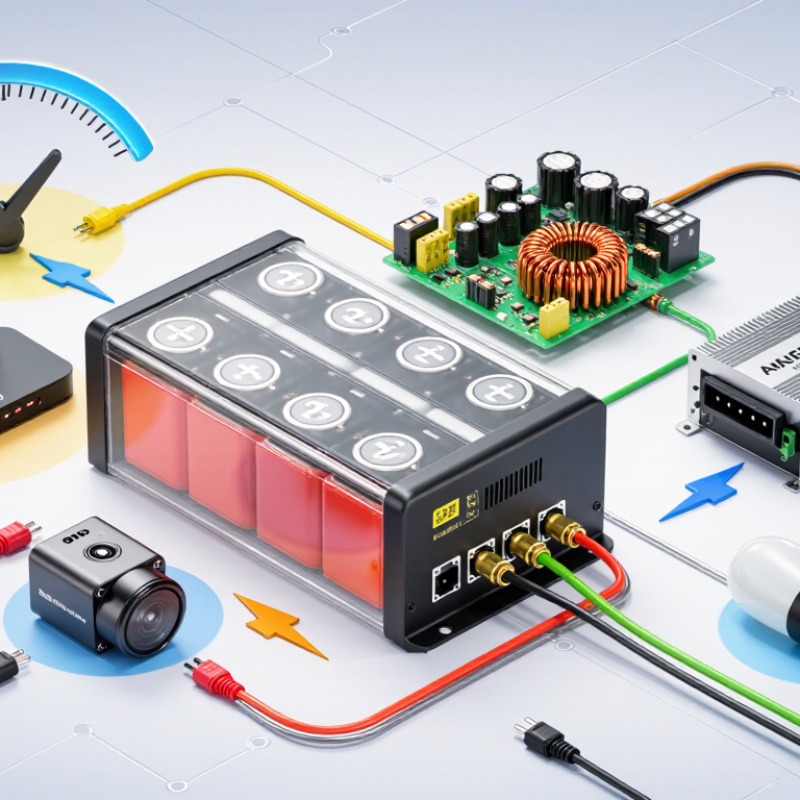
Definition and Purpose of a 12V Battery Backup Power Supply
A 12V battery backup power supply is a system that stores electrical energy in a rechargeable battery and provides power when the normal source fails. Its output is usually 12-volt direct current, suitable for compatible devices such as small routers, security sensors, or emergency lights. The system may include a charger, voltage controls, and protection against faults. That sounds simple. It isn’t always.
Its purpose is to keep selected equipment running through a power interruption, not necessarily to power an entire home. When utility power is available, the charger replenishes the battery. During an outage, the supply switches to battery power, either automatically or through a manual setup. A router might stay online for a while, while a brighter lamp may drain the same battery much faster. Runtime depends on battery capacity, device demand, battery condition, and conversion losses.
Some systems provide only 12V DC, while others include an inverter for household AC devices. That distinction matters: connecting a device with the wrong voltage or polarity can damage it. I used to think a larger battery alone guaranteed longer backup, but load and system efficiency matter too. Check the equipment’s voltage and current requirements, and allow for ventilation and safe charging conditions. A simple label can be easy to misread.
What Is a 12V Battery Backup Power Supply?
A 12V battery backup power supply stores energy to keep compatible devices running when their primary power source is unavailable. The chart estimates runtime for a 12V, 100Ah battery at different power loads.
Estimates assume 80% of the battery’s nominal 1,200Wh capacity is usable, or 960Wh, and exclude conversion losses, battery aging, and other operating conditions. Actual runtime may vary.
Core Components and How the System Works
A 12V battery backup power supply combines a battery, charger, protection devices, and a control circuit. The battery stores energy as direct current (DC). During normal operation, the charger replenishes it and keeps it ready. When mains power fails, a transfer switch or controller redirects power to the connected load. A fuse near the battery helps limit damage if a cable shorts.
The output stage depends on the equipment. DC devices can draw power directly, while an inverter converts 12V DC into household-style AC. Conversion losses reduce runtime, so the battery’s label capacity is not the whole story. A battery management system in many lithium batteries monitors cell voltage and temperature; lead-acid designs typically use different monitoring and charging controls. Battery Council International’s 2023 National Recycling Rate Study estimated a 99% U.S. recycling rate for lead batteries, based on 2021 data. That matters. Still, recycling figures do not tell you whether a particular battery suits your load.
Tips: Estimate runtime from the load’s watts and the battery’s usable capacity, then allow for inverter losses, temperature, and battery age. Check the manufacturer’s discharge limits and charger settings. A small detail is easy to miss: long, thin cables can cause voltage drop, especially under heavy loads.
Battery Types and Backup Configurations
A 12V battery backup power supply stores energy for devices when mains power is unavailable. It may power a router, lighting, or a small control system directly. Larger loads usually need an inverter, which converts battery power to household AC. Conversion wastes some energy, so real runtime is shorter than a simple capacity calculation suggests.
Battery type affects weight, maintenance, and usable capacity. Sealed lead-acid batteries, including AGM and gel, are widely used and often cost less upfront. They are heavy, and frequent deep discharge can shorten their service life. Lithium iron phosphate batteries are lighter and typically support more usable capacity, but they need a compatible charging system and battery management system. Check the equipment manual; “12V” alone does not guarantee compatibility. Batteries in parallel increase capacity while keeping nominal voltage near 12V. Series connections raise voltage and may damage equipment designed only for 12V. I would not assume a stated amp-hour rating predicts runtime exactly. Temperature, battery age, and load all matter.
Tips: Match the charger to the battery chemistry. Check polarity before connecting cables, and use suitable fuses near the battery. Estimate runtime from watt-hours, then allow for inverter losses and a safety margin. Test the setup with the actual device; the first estimate may be optimistic.
Key Specifications and Factors Affecting Runtime
A 12V battery backup supplies stored energy when mains power is unavailable. Its label shows voltage, but voltage alone does not reveal how long equipment will run. Check capacity in amp-hours (Ah) and watt-hours (Wh); watt-hours make it easier to compare batteries.
For example, a 12V, 20Ah battery holds about 240Wh under rated conditions.
The usable amount is usually lower because of conversion losses and the battery’s discharge limits. Small loads last longer. A router drawing 12W may run far longer than a lamp and several devices drawing 100W together.
Runtime depends on the actual load, battery chemistry, age, temperature, and backup system efficiency. An inverter also uses energy, even while converting 12V DC into household AC.
A rough estimate is usable watt-hours divided by load watts, then reduced for conversion losses. Treat this as a planning estimate, not a promise.
Real rooms vary. Motors and other devices can briefly draw more power at startup, so check both continuous and surge ratings. Cold conditions can reduce available capacity, while an older battery may no longer deliver its original rating.
If the system displays a low-voltage cutoff, that setting also affects how much energy you can use. Record the connected devices and their power draw; one overlooked charger can change the runtime noticeably.
Common Applications and Essential Safety Practices
What Is a 12V Battery Backup Power Supply?
Common Applications and Essential Safety Practices
A 12V battery backup power supply stores energy for devices that need power during an outage or away from an outlet. Common uses include keeping a modem and router online, powering security equipment, running LED lights, or supporting small DC appliances in a vehicle or workshop. Some systems use an inverter for AC devices, but conversion losses reduce available runtime. Check the device’s voltage, current draw, and connector before connecting it. A plug that fits may still have the wrong polarity.
Safety starts with the battery and charger. Use a charger designed for that battery’s chemistry and voltage; settings for one type may damage another. Place an appropriate fuse close to the battery’s positive terminal, and cover exposed terminals to prevent accidental shorts. Keep the unit dry and away from heat, and follow the battery maker’s guidance on ventilation and storage. Small details matter.
Inspect cables for cracks, loose connections, or unusual warmth. Stop using a battery that is swollen, leaking, or damaged, and do not attempt to charge it. Keep metal tools and spare screws away from terminals. Estimate runtime from the actual load, not just the battery’s advertised capacity; age and cold can shorten it. Even careful sizing is only an estimate, not a promise.
What Is a 12V Battery Backup Power Supply? - Common Applications and Essential Safety Practices
A 12V battery backup power supply stores energy in a rechargeable battery and provides nominal 12-volt DC power when another power source is unavailable. Actual runtime depends on battery chemistry, usable capacity, load, temperature, and conversion losses.
| Common application |
Typical load (approx.) |
Planning considerations |
Essential safety practice |
| Wi-Fi router or modem |
About 5–15 W |
Check the device label for its voltage, polarity, and current requirement. A DC output can avoid inverter losses when compatible. |
Confirm connector polarity and output voltage before connecting; incorrect polarity can damage equipment. |
| LED lighting |
About 3–10 W per lamp |
Add the wattage of all lamps used at the same time when estimating the total load. |
Use correctly rated wiring and connectors, and keep connections protected from moisture. |
| Small security camera |
About 5–15 W |
Night-vision lighting, recording equipment, and network devices may increase the combined load. |
Protect outdoor cables and battery terminals from water, abrasion, and accidental short circuits. |
| Small aquarium air pump |
About 5–20 W |
Allow for continuous operation if the pump is needed to maintain aeration. |
Keep the battery and electrical connections away from splashes and standing water. |
| Portable medical device |
Varies by device; some CPAP units draw roughly 30–90 W, depending on settings and accessories. |
Use only a backup solution approved for the device. Heated humidifiers and heated tubing can substantially increase energy use. |
Follow the device maker’s power instructions and maintain a separate backup plan for essential medical equipment. |
| Battery-powered radio or emergency receiver |
About 1–5 W, depending on the device and volume |
A low-power device may run longer than a larger appliance, but actual runtime still depends on usable battery energy. |
Store the battery in a dry, moderate-temperature location and inspect it periodically for damage or swelling. |
| Battery charging and general use |
Depends on charger, battery, and connected loads |
Use a charger matched to the battery’s chemistry and manufacturer-specified charging limits. A “12V” battery’s actual voltage varies during charging and use. |
Install an appropriately rated fuse close to the battery’s positive terminal. Prevent short circuits, observe polarity, and never charge a damaged battery. |
| Battery placement and maintenance |
Not applicable |
Runtime can be estimated by dividing usable battery energy in watt-hours by load in watts; allow for conversion losses and avoid assuming the full rated capacity is usable. |
Secure the battery against tipping. Provide ventilation where required, especially for lead-acid batteries, and keep batteries away from heat, flames, and children. |
Load figures are approximate examples, not guaranteed ratings. Check each device’s label and the battery and charger instructions before use.
Conclusion
A 12V Battery Backup Power Supply is a system that stores electrical energy and provides a temporary source of 12-volt power when the main supply is interrupted or unavailable. It typically includes a battery, charging circuit, and output connections, with some systems also using monitoring or protection features. During normal operation, the battery is charged; when power is lost, it supplies energy to compatible equipment.
Backup systems may use different battery chemistries and configurations, each with trade-offs in cost, capacity, weight, and maintenance. Runtime depends on battery capacity, the power demand of connected devices, conversion losses, battery condition, and environmental temperature. When choosing a system, consider the required voltage, load, expected backup duration, recharge time, and compatibility. Use suitable cables and protective devices, keep the unit in a well-ventilated, dry location, and follow the manufacturer’s instructions to reduce risks such as overheating, short circuits, or battery damage.